Hitler and the Nazi Party in January 1933 (OCR GCSE History B (Schools History Project)): Revision Notes
📚Revision Notes
Hitler and the Nazi Party in January 1933
Historical context
Note
Aside from the economic downfall, the depression also fuelled political extremism in Germany. German workers felt anger and bitterness, which persuaded them to support and join the Nazis and other extremist groups. Some workers turned to communism.
The Great Depression and the rise of the Nazis
During the Stresemann Years, Germany was able to recover economically through domestic policies, foreign investments and US loans. The consequence was that the German economy relied heavily on the US economy and the Great Depression hit the Germans in 1929. In October 1929, the US Stock Exchange dramatically crashed, which brought on an economic depression in many parts of the world. It came to be known as the Wall Street Crash and it greatly affected the German economy due to American investments and loans after WWI.
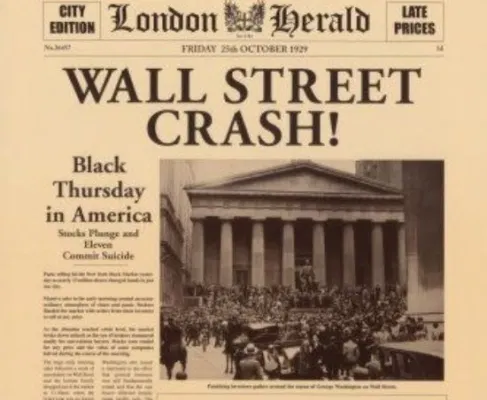
The London Herald's headline of the Wall Street Crash
In the winter of 1929-1930, the most obvious manifestation of economic depression was the rise in German unemployment from 1.4 million to 2 million. By 1933, the number had tripled, hitting 6.1 million. Millions of unemployed and desperate Germans believed that the solution to their plight was to join extreme political parties like either the right-wing Nazis or the left-wing Communists.
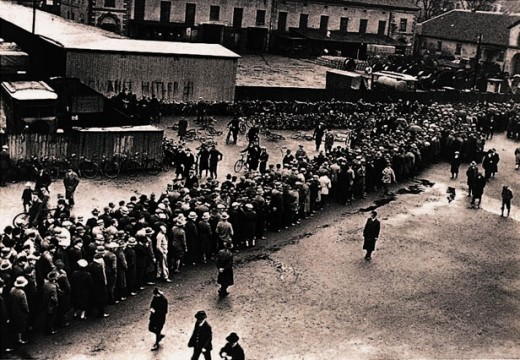
A long line of unemployed Germans between 1929-1933
In 1928, only 12 seats in the Reichstag were held by the Nazi Party, but by 1932, they had become the largest party, with 230 seats.
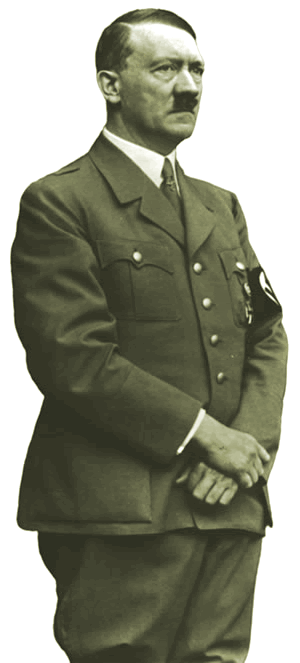
Adolf Hitler's 25-Point Programme
Note
Unification of all German-speaking nations and the abolition of the Treaty of Versailles.
Note
A single leader, or Führer, instead of a democracy.
Note
The belief that the Aryan race was superior to all others, Social Darwinism.
Note
Public industries, like electricity and water, should be owned by the state.
Note
Stronger central government and ownership of newspapers.
Note
Lebensraum, or the expansion of living space for Germans.
Note
The belief of danger from the Communists and Jews.
Note
Autarky, or the idea that Germany should be economically self-sufficient.
Chancellorship and Hitler
Note
In 1932, President Hindenburg discharged Chancellor Brüning for his inability to stabilise the chaotic German government. Franz von Papen replaced him for 6 months followed by Schleicher who lasted for 2 months.
With Nazi dominance in the Reichstag, Hindenburg and Papen came up with a plan in 1933. They offered Hitler vice chancellorship but were rejected. Instead, Hitler demanded to be chancellor and Hindenburg agreed thinking that he could control Hitler and the Reichstag.

By January 1933, Hitler was appointed as Chancellor of Germany. Many believed that he rose to power due to the following reasons:
- he was a persuasive speaker;
- due to the Great Depression, Germans lost confidence in the democratic system;
- the SS intimidated Nazi enemies;
- Hitler gained financial support from industrialists. In April 1932, Hindenburg beat Hitler in the presidential election with 53% of the votes.
Franz Von Papen
Franz von Papen became the Chancellor of Germany through the support of General von Schleicher. As a member of the German aristocracy, von Papen had a small political following. In July 1932, when the Nazis won more seats in the Reichstag, von Papen attempted to seek their support. However, Hitler refused.
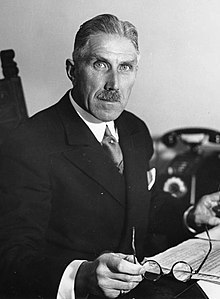
von Papen in 1933
Kurt von Scheicher
Kurt von Schleicher was the chancellor of Germany between December 1932 and January 1933. He attempted to control the Nazis by offering Hitler chancellorship, but von Schleicher would take over the defence. Similar to his response to von Papen, Hitler refused. Out of frustration with von Schleicher, President Hindenburg asked his chancellor to resign.
Note
On 30 January 1933, a new government was formed with Hindenburg as president, Hitler as chancellor and von Papen as vice-chancellor.
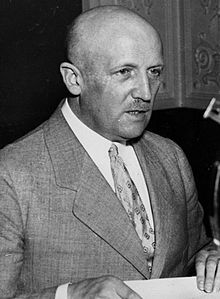
Schleicher in 1932