Disputes, delays and the journey to Jerusalem (OCR GCSE History B (Schools History Project)): Revision Notes
📚Revision Notes
Disputes, delays and the journey to Jerusalem
Note
After capturing Antioch in June 1098, the crusaders began debating their next step with some content to establish themselves in the captured lands, while others deciding to call for a march on Jerusalem.
On 13 January, 1099, Raymond of Toulouse began moving south towards Jerusalem assisted by Tancred and Robert of Normandy who would then be followed by Godfrey of Bouillon's army. As they advanced down the Mediterranean coast, they were fortunate to have met little resistance from local leaders who were recently conquered by Fatimids.
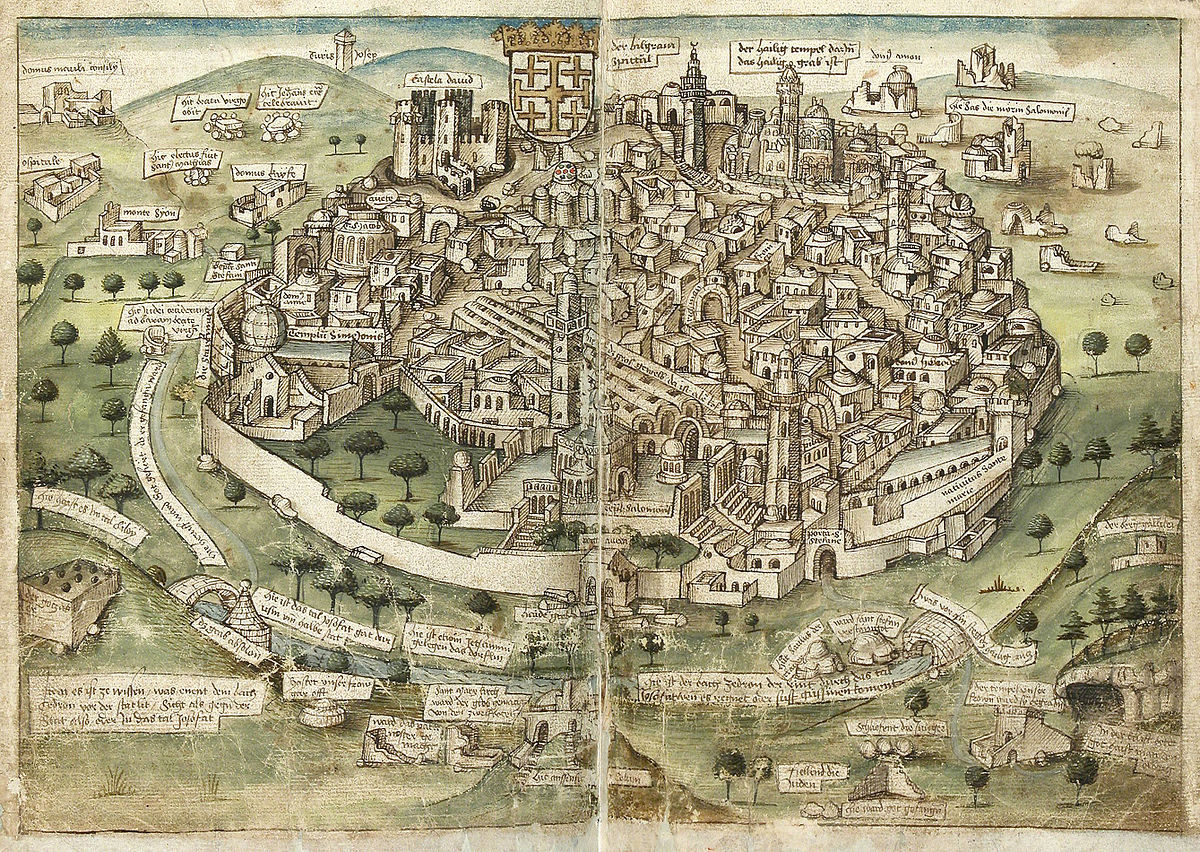
Medieval map of Jerusalem

Iftikhar ad-Daula
Raymond laid siege to the city of Arqa upon arrival. After breaking off the siege on 13 May, the crusaders then moved south with the Fatimids still attempting to consolidate their hold on the region. Afterwards, the Fatimids approached crusader leaders with a peace offering in exchange for halting their advance, but they were rebuffed.
Note
The crusaders moved through Beirut and Tyre before turning inland at Jaffa. On 3 June, they reached Ramallah where they found an abandoned village. Iftikhar ad-Daula, Fatimid governor of Jerusalem, began to prepare for a siege, aware of the intentions of the crusaders. While Tancred was dispatched to capture Bethlehem, the crusaders arrived outside Jerusalem on 7 June.