Pressures on the Byzantine Empire (OCR GCSE History B (Schools History Project)): Revision Notes
📚Revision Notes
Pressures on the Byzantine Empire
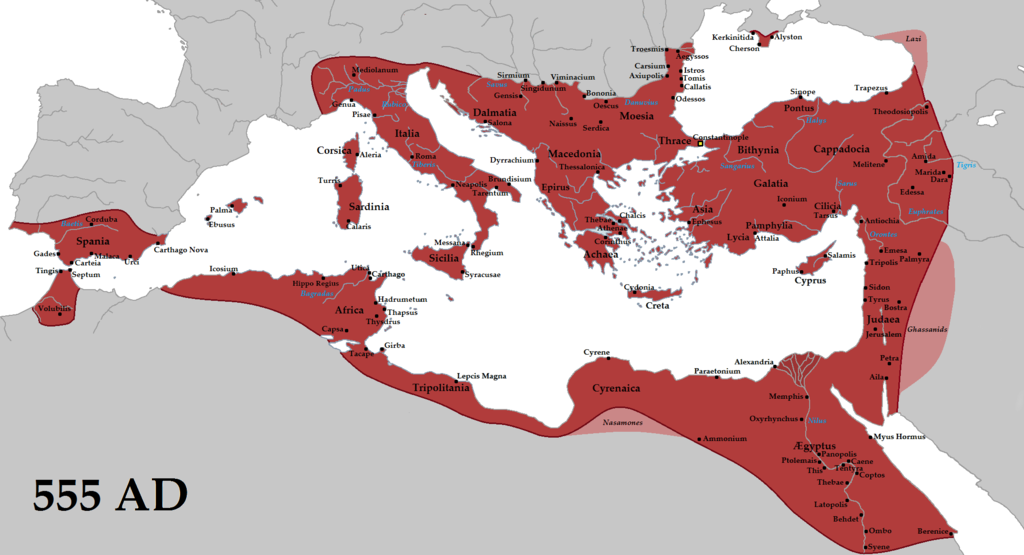
The Byzantine Empire at its greatest extent in 555 CE under Justinian the Great (its vassals in pink)`
The Byzantine Empire was an area that remained after the fall of the Roman Empire and into the Middle Ages.
- Its capital was Constantinople, which is in modern-day Istanbul, Turkey.
- In 324, the Roman Emperor Constantine I moved the capital of the Roman Empire to the city of Byzantium. It was renamed Constantinople.
- 150 years later, Constantinople was the only remaining capital of the Roman Empire. This Eastern empire had a smaller territory than the original Roman Empire.
- The Byzantine Empire was at war to the east and west between 476–717 AD as it tried to take back Rome and Italy from the invading Germans. It was successful between 530–555 AD and temporarily took back Rome.
- In the 560s, invading Avar and Slavic people took much of the Balkans.
- The Byzantine Empire controlled modern-day Egypt, Greece, Palestine, Syria and Turkey, but the Persians tried to take these regions between 224–628 AD. The Persians were eventually defeated in 627 AD.
- Another enemy soon followed: Arabs. The empire was financially weakened, having fought the Persians for so long, and couldn't withstand the Arabs. Palestine, Syria and Egypt were lost between 635-645 AD.
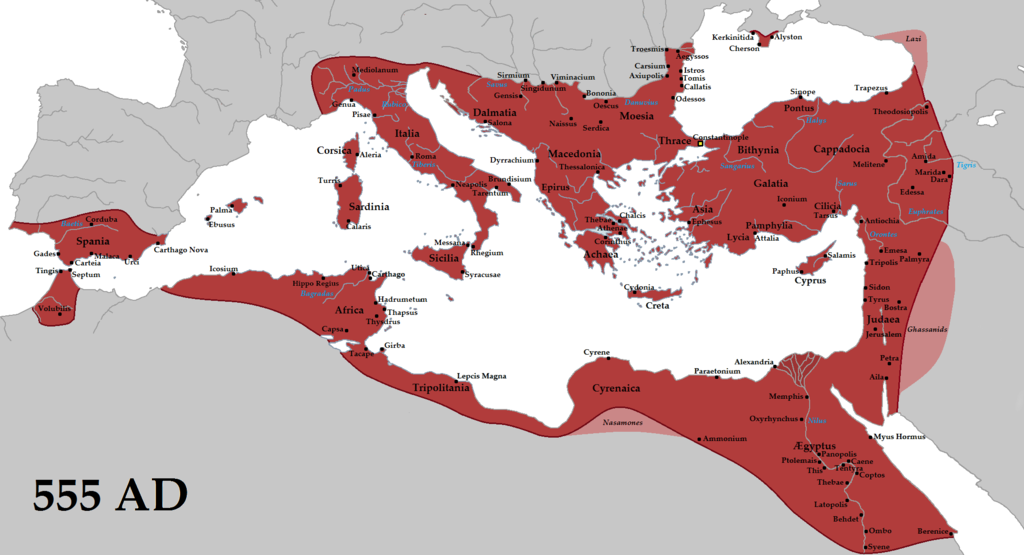
In 718 AD, the Byzantine Empire was able to recover with the defeat of the Arabs outside Constantinople. The Arab threat was now over but the Empire was severely weakened. Attempts to win back territory from the Bulgarians were sometimes successful, other times not.
From 1025–1071, the Byzantine Empire started to fall into decline. After Emperor Basil II died, he was succeeded by many unskilled emperors who wasted money and reduced the army, meaning the empire could not defend itself well. Rather, the Byzantines came to rely on mercenaries for defence.
Serious trouble came knocking between 1071–1091 when the Seljuk Turks decided to invade. The Turks rode in on horseback from Central Asia and attacked the Byzantine Empire. They took over all of Turkey by 1091. The Byzantines called on Europe for help, and this gave rise to the First Crusade.
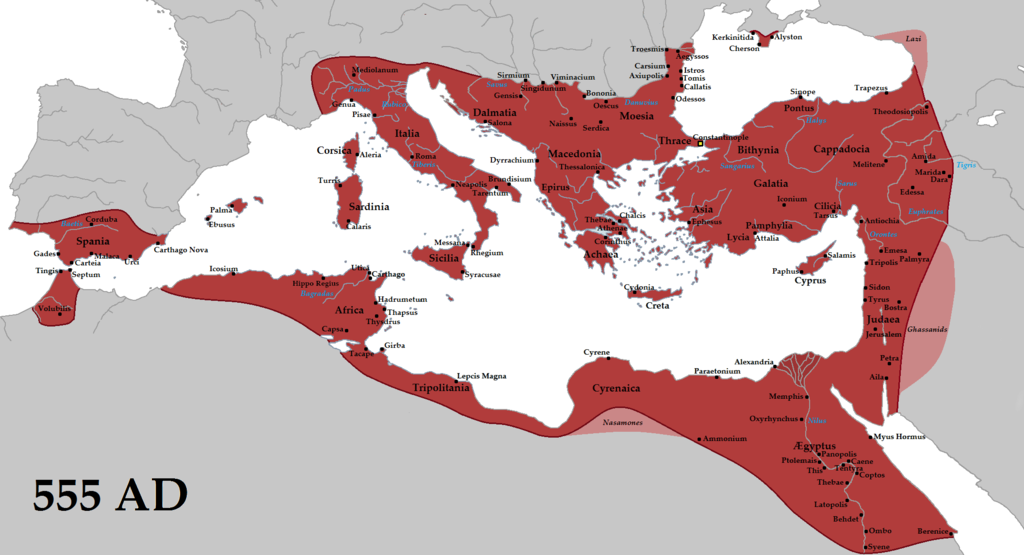
The Birth of the Crusades
In the late 10th century, Turkish tribes including the Seljuks started invading Western Asia. The Seljuk Turks won the battles against Karakhanids and Ghaznavids, two of the most powerful dynasties in Central Asia. As a result, they gained an empire stretching from Western China up to the Mediterranean.
The Seljuks took over several Samanid cities and occupied Baghdad. They established themselves as the new protector of the Abbasid caliphate and Sunni Islam, which created the empire in Persia and Mesopotamia.
They entered the Byzantine Empire territory after taking Syria from the Fatimids. After the defeat of the Byzantine Emperor at the Battle of Manzikert, they conquered Anatolia and established the Sultanate of Rum.
Note
The Byzantine Emperor requested aid from Pope Urban II in battling the Seljuks. Urban II responded and the birth of the Crusades began.