Aurangzeb’s campaigns against the Marathas in the Deccan from 1681 (OCR GCSE History B (Schools History Project)): Revision Notes
📚Revision Notes
Aurangzeb's campaigns against the Marathas in the Deccan from 1681
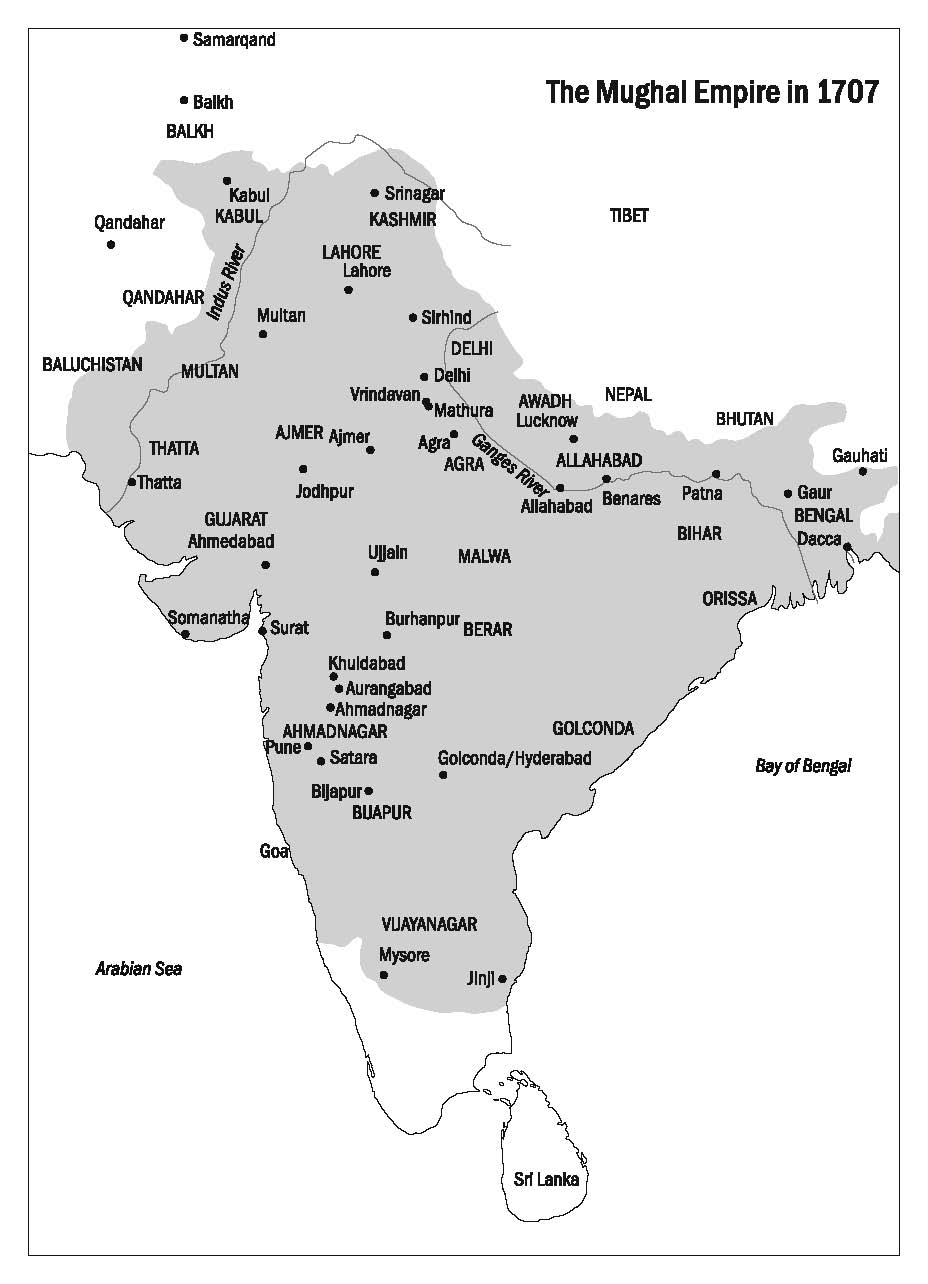
Map of the Mughal Empire during Aurangzeb's reign
Mughal-Maratha Wars
In September 1681, Aurangzeb began his journey to conquer the small Maratha Empire, which sheltered his rebel son Sultan Muhammad Akbar.
Note
With about 500,000 Mughal contingents, Aurangzeb made the Deccan his capital. By December of the same year, Aurangzeb ordered the first Mughal attacks on Janjira and Northern Konkan.
After failed attempts, Aurangzeb moved to Ahmednagar in late 1683 where he divided his force into two, headed by his two sons, Shah Alam and Azam Shah. These divisions planned to attack the Marathas from the north and south.
Aurangzeb's Military Campaigns Against the Marathas and the Deccan Sultanates
In 1684, Shahabuddin Khan, one of Aurangzeb's generals, attacked Raigad, the Maratha capital. However, Maratha commanders were able to defend their city and defeat the contingent sent by Aurangzeb in the Battle at Patadi.
For the second time in early 1685, Shah Alam led a failed attack against the Marathas from the south. In April, in response to consecutive defeats, Aurangzeb changed his strategy.
By September 1686, Aurangzeb broke his treaties with Golkonda and Bijapur (both allies of Marathas) and conquered them.
The fall of the kingdoms of Golkonda and Bijapur to the Mughals, and the capture and later execution of Sambhaji weakened the Marathas.
With the death of Sambhaji, his brother, Rajaram, gained the title Emperor. In March 1690, Maratha forces attacked the Mughal army killing Aurangzeb's private force. In the south, the Marathas were able to defend fort Panhala against the Mughals. As advised, Rajaram escaped to Jinji. Aurangzeb then changed his plans, which finally captured Jinji, but incurred heavy Mughal losses in the process.
The impact of the Mughal campaign against the Maratha
The Marathas were peasant warriors of western Deccan. They ruled the regions of Bijapur and Ahmadnagar.
- The Maratha Confederacy dissolved into warring fragments.
- Amidst the victory of Aurangzeb, Maratha bands challenged the authority whenever opportunity arose.
- The Mughal Empire expanded south to more than 3.2 million square kilometres.
- Great Maratha leader Sambhaji was captured and executed in December 1688 after refusing to convert to Islam.
- In 1706, Aurangzeb exhausted himself and his army with the war against the Marathas. The Marathas largely contributed to the decline of the empire in the coming years.