Viking beliefs and rituals (OCR GCSE History B (Schools History Project)): Revision Notes
📚Revision Notes
Viking beliefs and rituals
Note
The Vikings were known for their mythological stories of gods and giants. The Viking sagas were a collection of stories usually of creation. As per their mythology, there were nine worlds connected to one another through the branches of the world tree called Yggdrasil.
The Nine Worlds:
ALFHEIM
Home of the Light Elves
ASGARD
Home of Odin and Aesir, the warrior gods
VANAHEIM
Home of Vanir, fertility gods who battled the gods of Asgard
MIDGARD
Note
Also known as the Middle Earth, home of humans, which was connected to Asgard by a rainbow bridge.
SVARTALFHEIM
Home of the Dark Elves
JOTUNHEIM
Home of Rock Giants led by Thrym, a frost giant
NIDAVELLIR
Home of Fire Giants, led by Sutr, who set Asgard on fire
MUSPELHEIM
Home of the talented Dwarfs
HELHEIM
The underworld, home of Hel, daughter of Loki

Viking Gods
Note
The Vikings believed that their gods were responsible for their daily lives. Some of them are described below.

Who were the Viking Gods?
ODIN, also known as Wodin, was the Viking king of the gods, husband of Frigg, and god of poetry and war.
THOR god of storms and thunder who caused lightning using his hammer.
LOKI, the trickster god, father of Hel.
FREYA goddess of beauty and love, who rode a chariot drawn by two cats.
FREYR goddess of fertility, harvest, and peace, twin brother of Freya.
The days of the week:
Numbers and names of the days of the week are derived from Norse and Old English culture including the following:
| English | Meaning |
|---|---|
| Sunday | Sun's Day |
| Monday | Moon's Day |
| Tuesday | Tiw's' Day |
| Wednesday | Wodin's Day |
| Thursday | Thor's Day |
| Friday | Freya's Day |
| Saturday | Saturn's Day |
Similar to the ancient Greeks, the Vikings did not believe in the bipolarity of the afterlife. They believed that Helheim, or the underground, was the place for the dead.
The worship of the dead
Note
In addition to a variety of gods, Vikings also worshipped their dead ancestors. They believed in sorcery and divination, which they applied in burial practices. Throughout the Viking Age, history was passed down orally rather than written. Some accounts were written by outsiders who did not fully understand their traditions and practices. Here are some Viking rituals and beliefs:
Cremation and burial rituals:
One of the main ways of disposing of their dead was through cremation. Ashes were buried under piles of rocks, in graves, or with grave goods. For high-ranking members of society, ashes were burned along with ships.
Note
Archaeological finds show that the Vikings' burial rituals included grave goods and animal or human sacrifices. They also honoured their dead ancestors through food and gift offerings.
A chamber burial was a complex inhumation place for individuals of high status.
According to Ibn Fadlan's account, the Vikings spent ten days feasting, drinking and engaging in sexual intercourse prior to a cremation. A funerary drama of animal sacrifices was performed as found in Viking chamber burials.
"They then brought two mounts, made them gallop until they began to sweat, cut them up into pieces and threw the flesh onto the ship. They next fetched two cows, which they also cut up into pieces and threw on board, and a cock and a hen, which they slaughtered and cast onto it."
Ibn Fadlan's account on Vikings animal sacrifice
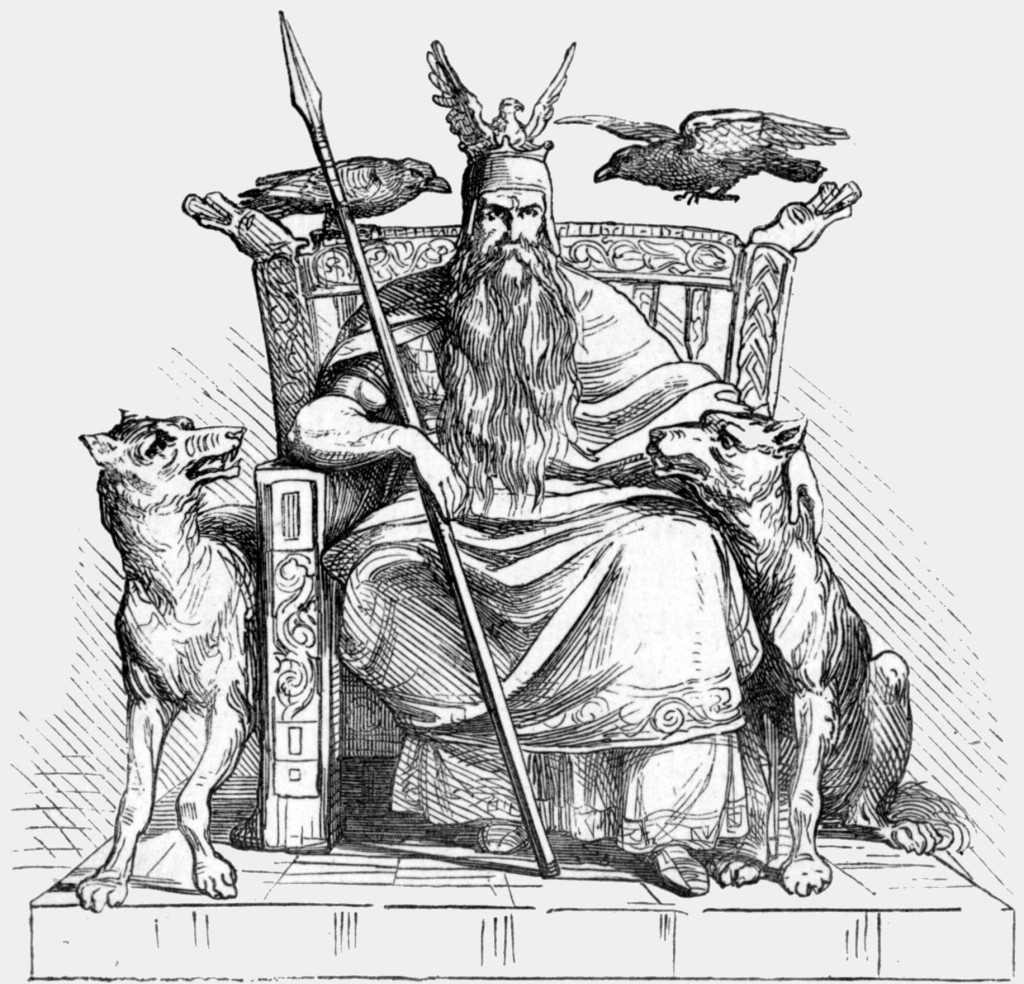
Depiction of Odin
Magical Battle Practises:
In order to ensure success, Viking warriors consulted omens and participated in ritual preparations before battle. Weapons were marked with symbols, and animal sacrifices were made.
Blood Eagle:
In Norse literature, the Blood Eagle is described as a ritualised form of execution and sacrifice to Odin. This gruesome ritual is still contested by some historians with little proof that the Vikings really did such a ritual.
Sacrifice for Yule:
Every ninth year, kings offered nine heads to the gods for nine consecutive days, totalling 81 human sacrifices during the Yule.
Blot:
Multiple times a year and participated in by the public, blood sacrifices were performed to show the gods their gratitude. Over an altar of stones, animals were slaughtered, blood was collected, passed around, and sipped by the Vikings while chanting.
Glossary of Terms
LONGSHIPS
Were narrow and long boats built by the Vikings to navigate strong sea currents and shallow rivers. Designed with a sail and keel, longships were among the most stable naval technology in ancient times.
NORSE MYTHOLOGY
The central religion of the Vikings which included gods and belief in the nine realms.
LONGHOUSE
A long, narrow building made of timber, thatched roof, and walls of wattle.
SCANDINAVIA
A group of countries in northern Europe (Sweden, Denmark, Norway) and the homeland of the Vikings.
VIKING
The term 'vik' in Old Norse means bay or creek and is often associated with 'vikinger' meaning pirates.
BURIAL SHIP
A small boat grave was used in the funerals of wealthy Vikings. It usually came with grave goods.

Source analysis:
Note
Among the beliefs and rituals of the Vikings included sacrifices. Read and analyse the account of human sacrifice at Old Uppsala in Sweden by Adam of Bremen from 1075. Make an inference on the process and significance of such a ritual.
"The sacrifice is of this nature: of everything living thing that is male,
they offer nine heads, four with the blood of which it is customary to
gods of this sort. The bodies they hang in the sacred grove that adjoins
the temple…Feasts and sacrifices of this kind are solemnised for [nine
days]. On each day they offer a man along with other living beings in
such a number that in the course of the nine days they will have made
offerings of seventy-two creatures."