Viking life in Jorvik (OCR GCSE History B (Schools History Project)): Revision Notes
📚Revision Notes
Viking life in Jorvik
Note
In 866, Jorvik, present-day York, became the capital of the Norse Kingdom of York. The fortress town was founded by the Romans in 71 AD and lasted until the end of Roman rule in England. At the time of the Anglo-Saxons, York served as a royal, ecclesiastical and trading centre.
Jorvik as an economic hub:
During its height, all Viking coins were minted in Jorvik, which showed the glorious economic status of the capital. The port of Jorvik also flourished given the Viking knowledge of seafaring and trade connections. Such status was proven by several excavations in York. By the 20th century, archaeologists had found artefacts of silk from China, coins from Samarkand, amber from the Baltis, and cowrie shells from the Persian Gulf.
Note
In 1984, the Jorvik Viking Centre was first opened to show how the Vikings lived in the Kingdom of York. It was refurbished in 2001 to provided better displays.
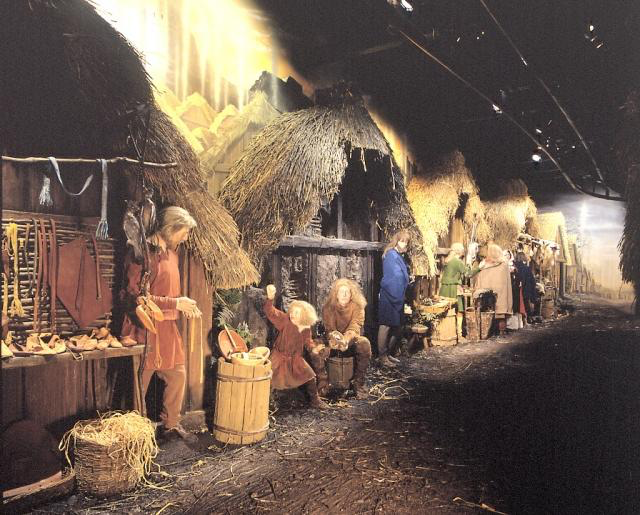
Reconstruction of a typical Viking street in Jorvik
Excavations in Coppergate, Skeldergate, Walmgate and others suggest that dwellings in Jorvik were built with backyard wells and cesspits. A traditional Viking house in Jorvik was single-storey with wattle. Roofs were thatched, while floors were trampled earth.
Housing in Jorvik
House construction was generally standardised. Regular plots measured 5.5 metres, while a rectangular house measured 4.44 metres wide and about 14.85 metres in length.
In Coppergate, about four houses with an extra storey underground were excavated. The basement was furnished with strong oak beams, posts and planks.
Recitation of sagas was a common form of Vikings entertainment. Others forms included playing games with dice and pieces of bones or stones.
The Conditions of Houses
According to archaeologists, the damp environment of Jorvik caused the preservation of ancient remains. Vulnerable materials such as wood, leather and cloth were protected from total decay. Moreover, animal and plant remains were found more or less intact after a thousand years.
Evidence also shows that Vikings in Jorvik were prone to intestinal parasites due to the close proximity of waste pits and water wells.
Note
Skeldergate was the street of shield-makers during the Viking Age in England.
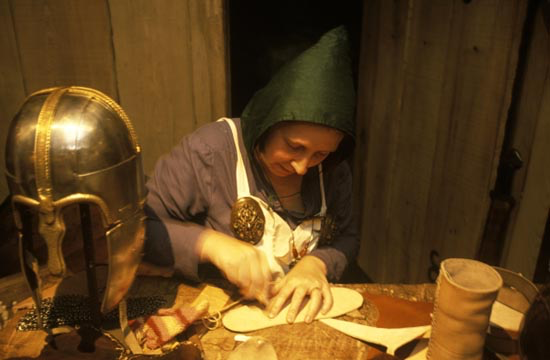
Tableaux showing a Viking woman making shoes, Jorvik Centre in Coppergate
Dwellings in Viking Jorvik were incorporated with workshops. There were weavers, spinners, blacksmiths, toolmakers, farmer, animal herders, traders and silver and goldsmiths.
Carpentry and traders in Jorvik
Tools including drawknives, chisel axe heads, augers, sickles and sharpening stones and knives were excavated in houses at Jorvik. In addition, items made of bone, such as combs, pins and whorls were also found. Coppergate was the centre of carpentry.
Note
From raiders, Vikings in Jorvik became traders. Artefacts suggest that the Vikings had a wide-ranging network of trading contacts in Scandinavia, Dublin, the Mediterranean, Middle East, Asia, Russia, China, and the Byzantine Empire.
The title King of Jorvik
In 960, the title King of Jorvik was replaced by Earl of York. By the year 1000, Jorvik came second to London as the most significant settlement in England. It was Henry II who abolished the Earldom of York, and the title Duke of York was created in 1341. The title was usually granted by the King or Queen of England to the second son.
Note
In 954, the last Scandinavian king, Eric Bloodaxe, was expelled from ruling Jorvik. Afterwards, the settlement was regained by the English and was ruled by appointed earls and archbishops. In 1066, upon the death of Edward the Confessor, King of England, Harald Hardrada, King of Norway, made a bid for the throne and fought against King Harold II at the Battle of Fulford. Harald Hardrada thought of Jorvik as a strategic base for attacks, however, he and his army was defeated by the English at nearby Stamford Bridge.