Required Practical: Determining Density (OCR GCSE Physics A (Gateway Science Suite)): Revision Notes
📚Revision Notes
3.1.3 Required Practical: Determining Density
Density
Note
The density of a material tells us the mass for a given volume.
Note
Formula:
- = density (kg/m³)
- = mass (kg)
- = volume (m³)
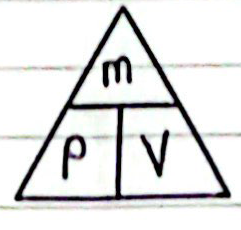
Density by States of Matter**:**
- Solids: very high density
- Liquids: high density
- Gases: low density
Example
Example: Polystyrene
- Polystyrene is a solid with low density.
- It has a very open structure and is full of air spaces.
- This results in a small mass for its volume.
Required Practical
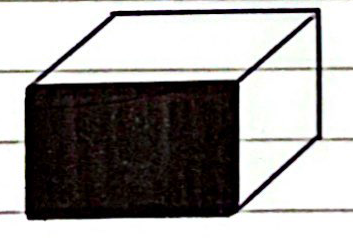
Regular Objects:
- Mass: Use a balance.
- Volume: Use a ruler to measure dimensions.
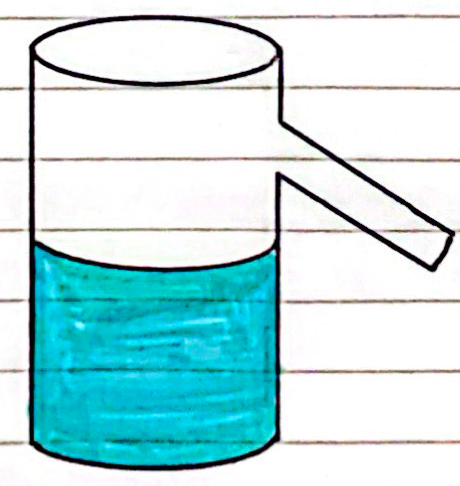
Irregular Objects:
- Mass: Use a balance.
- Volume: Fill a Eureka can with water. Place the object in the water.
- The water will be displaced and flow out of the can through the spout.
- The volume of water displaced is equal to the volume of the object.
Table of Methods for Measuring Density (Required Practical)
| Type of Object | Method for Mass | Method for Volume |
|---|---|---|
| Regular Objects | Balance | Ruler to measure dimensions |
| Irregular Objects | Balance | Eureka can (volume of water displaced = volume of object) |
Note
Processes:
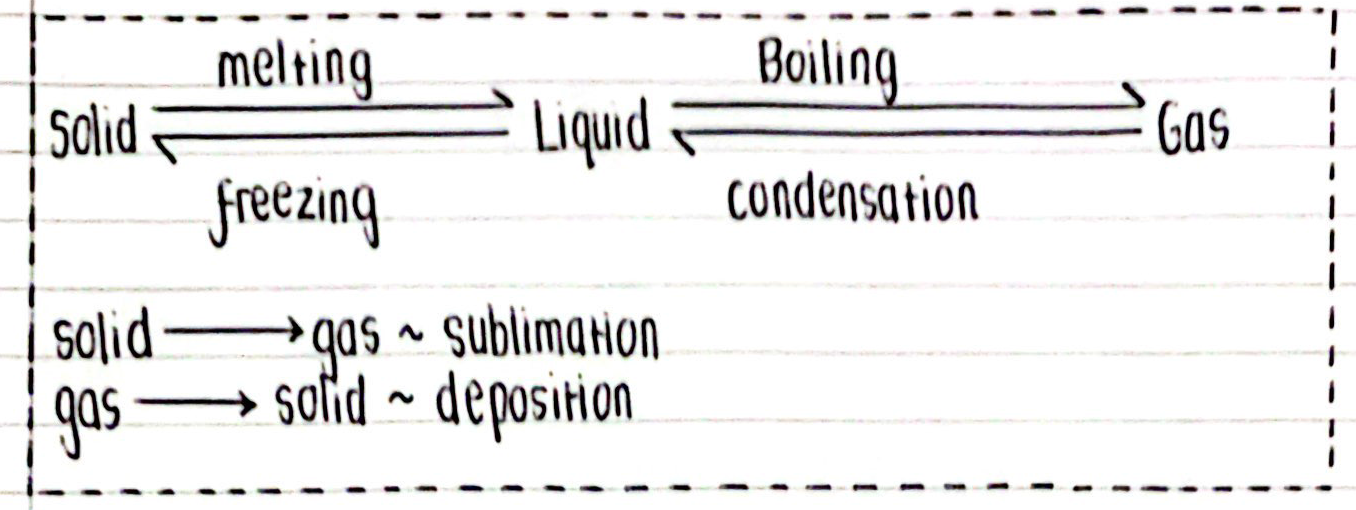
- Melting: Solid to Liquid
- Freezing: Liquid to Solid
- Boiling: Liquid to Gas
- Condensation: Gas to Liquid
- Sublimation: Solid to Gas
- Deposition: Gas to Solid