Heating & Cooling Graphs (OCR GCSE Physics A (Gateway Science Suite)): Revision Notes
📚Revision Notes
3.2.5 Heating & Cooling Graphs
Note
For your exams, you must be able to interpret heating and cooling graphs.
Note
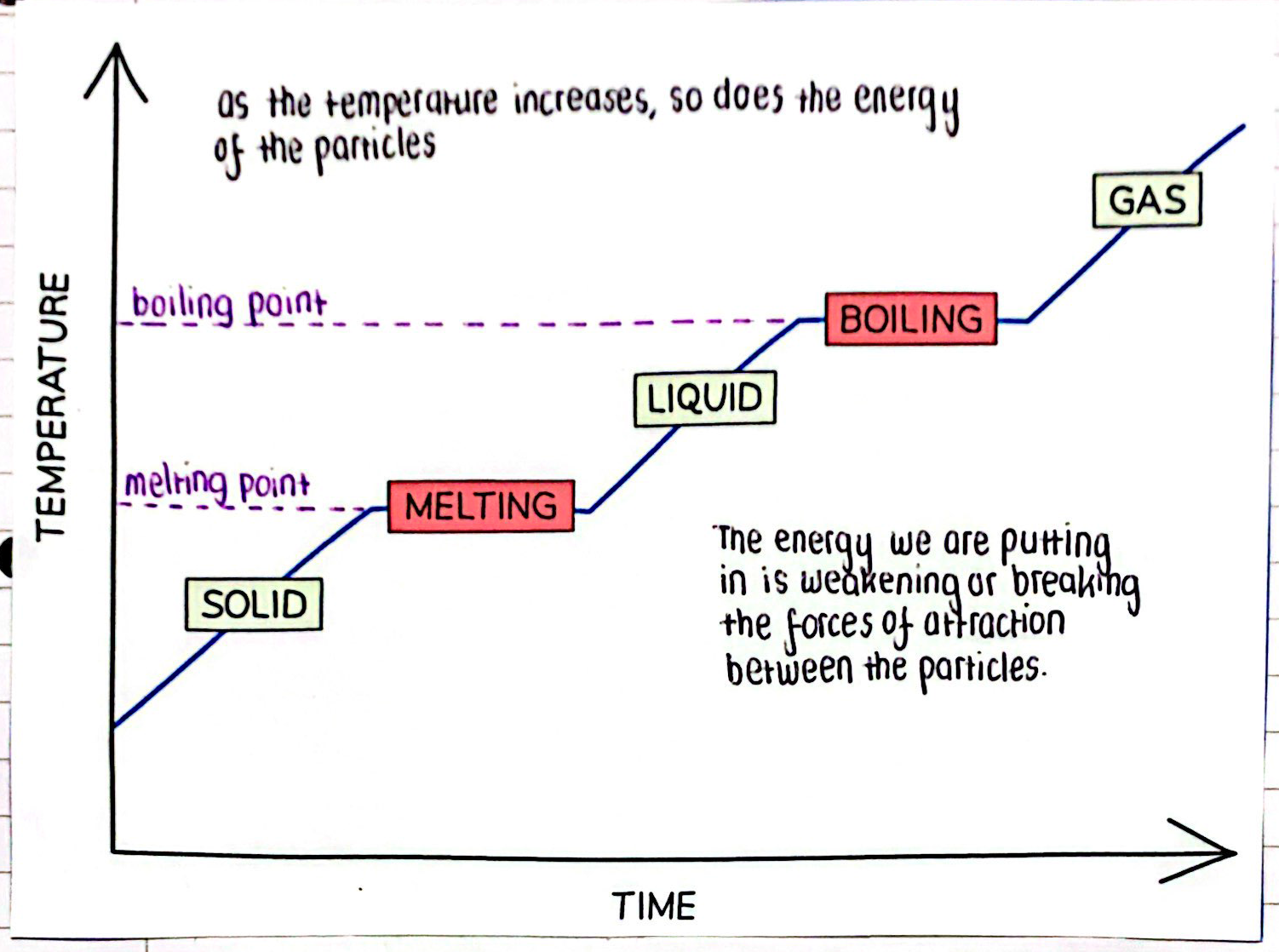
Heating Graph We are going to discuss the heating graph step by step:
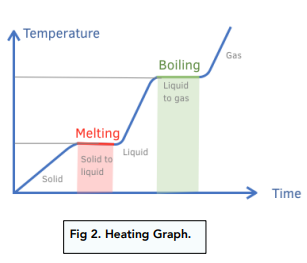
- Solid Heating – as temperature and time increases, the solid is starting to heat up.
- Melting – once the solid reaches its melting point (in this case it is 0 degrees), it starts to melt and turn into a liquid.
- Liquid Heating – as temperature and time increases, the liquid is starting to heat up.
- Boiling – once the liquid reaches its boiling point (in this case, it is 100 degrees), it starts to evaporate and turn into a gas.
The straight lines on the graph are very important. These are points where the substance is being heated, but instead of increasing in temperature, the substance is changing state.
:::
Note
Cooling Graph Now, we are going to discuss the cooling graph step by step:
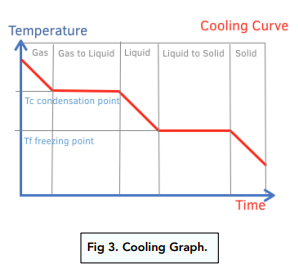
- Gas cooling – the gas is being cooled down as time goes on.
- Gas to liquid – once the gas reaches its condensation point, the gas condenses into a liquid.
- Liquid cooling – the liquid is being cooled down as time goes on.
- Liquid to solid – once the liquid reaches its freezing point, the liquid freezes into a solid.
The straight lines on the graph are very important. These are points where the substance is being cooled, but instead of decreasing in temperature, the substance is changing state.
:::
Note
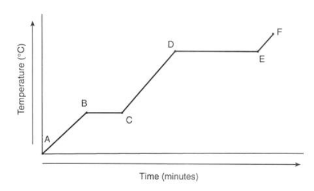
The graph shows the temperature of ice:
- At A it is Solid.
- At B, it reaches 0°C.
- From B to C there is no temperature change because the energy is used through melting.
- From C to D it is in liquid state.
- From D to E the water is boiling. This takes longer, because evaporation takes more energy
- From E to F the gas is heating.
Important
Important info:
- Energy is absorbed when melting and evaporating and energy is released when freezing and condensing.
- Sublimation is when a solid goes straight to gas – "dry ice" (solid CO2 does this)