Design Journey (Junior Cert Applied Technology): Revision Notes
📚Revision Notes
The Design Journey
The "Design Journey" is a guided path in Applied Technology. It helps students move from ideas to completed projects. This journey develops creative and technical skills. Students grow through each project stage, resulting in a complete folio and a finished artefact.
Definitions
- Design Process: A step-by-step method for creating solutions. Steps include exploring, idea creation, choosing the best solution, planning for making, producing, and reviewing the result.
- Coursework Folio: A collection of documents and insights about the project. Shows the design process with research and drawings to support the artefact.
- Artefact: The physical product made after the design process. Shows practical skills and craftsmanship.
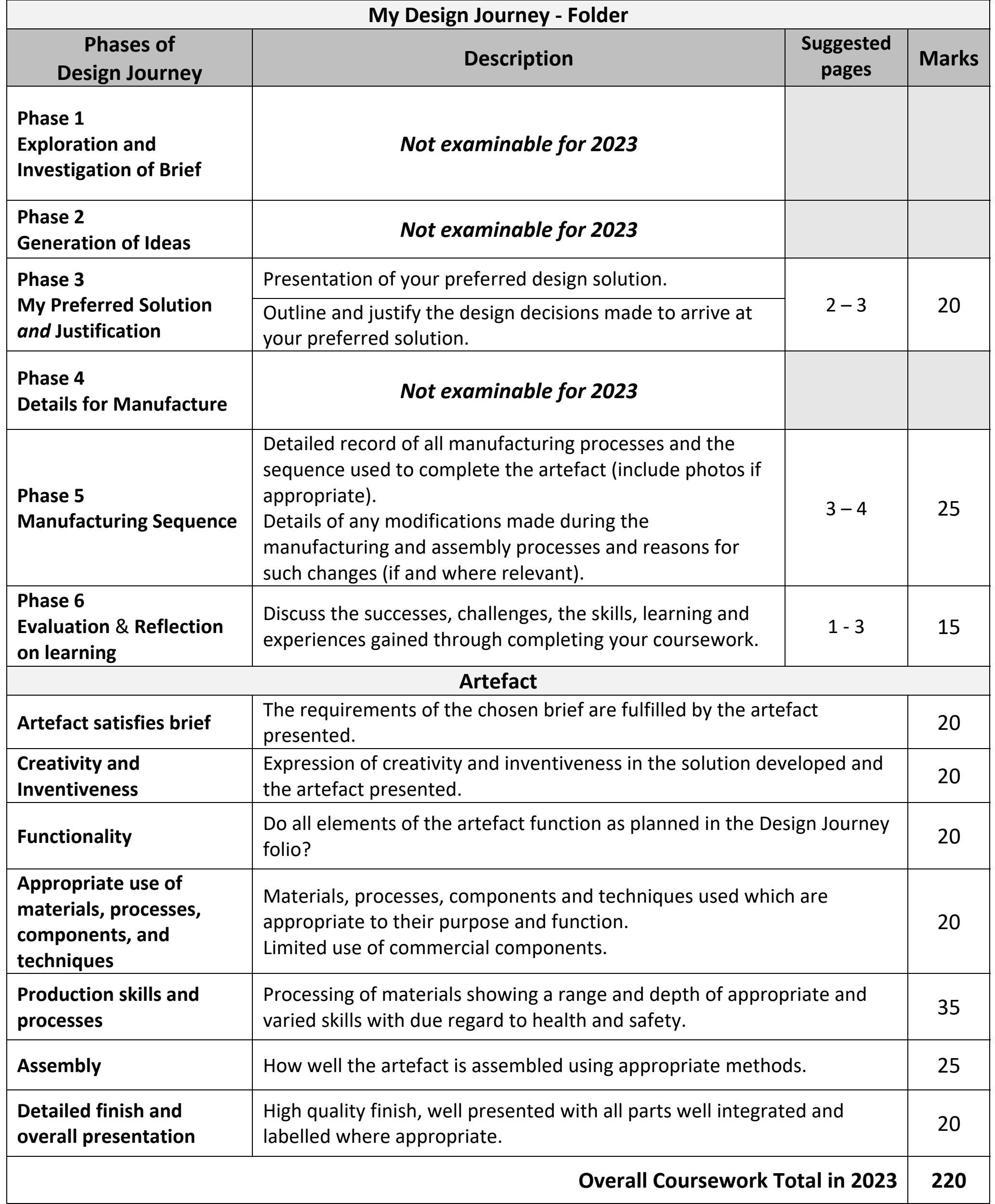
- Mark Allocation: How marks are distributed in coursework. In 2023, the folio gets 60 marks, and the artefact gets 160 marks.
- Storage Procedures: Rules to keep completed coursework safe until exams and assessments.
Sequence of Engagements
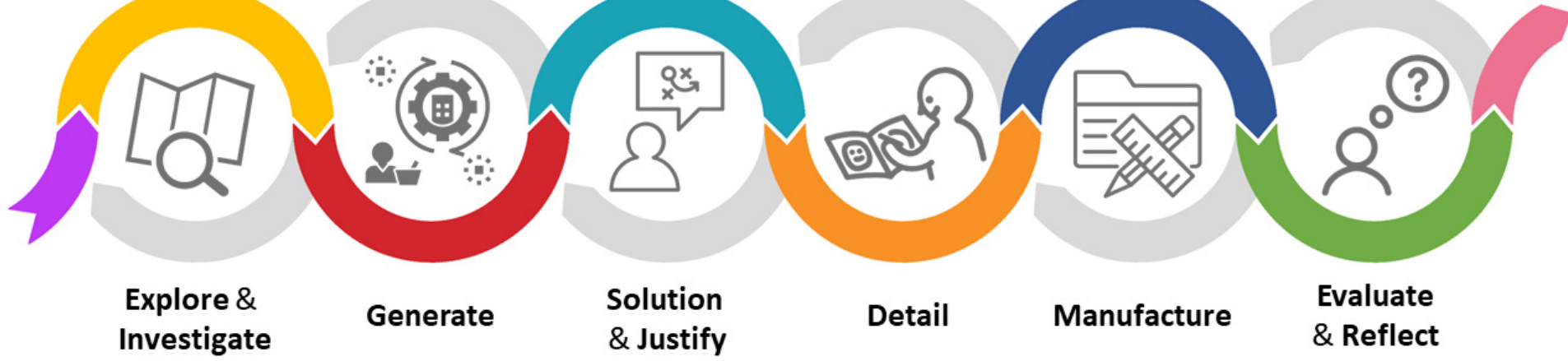
The coursework follows these key stages, displayed in the design process flowchart:
- Research & Exploration: Initial investigation into the project and potential solutions. Shown by a book with a magnifying glass.
- Ideation & Generation of Ideas: Development of new ideas, illustrated with a gear and collaborative figures.
- Solution & Justification: Choosing and explaining the final design, shown with a person speaking.
- Detailing for Manufacture: Planning steps for making, illustrated by sketching on paper.
- Prototyping & Manufacture: Making models and creating the artefact, shown with tools and a folder.
- Evaluation & Reflection: Assessing what worked, what didn't, and what was learned.
Note
The sequence of engagements is crucial for effective learning and project completion. Ensure each stage is thoroughly documented and analysed.
Examinable Headings
Three main areas for examination in 2023:
- My Preferred Design & Justification: Description and explanation of the chosen design.
- Covers reasons for selection and whether the solution is effective.
- Manufacturing Sequence: Documentation of all steps in artefact creation.
- Includes any changes and photographic evidence.
- Evaluation & Reflexion on Learning: Analysis of the experience, challenges, and skills developed.
- Encourages reflexion and critical evaluation.
Marks Allocation
Marks focus on both documentation and production:
- Design Journey Folio: 60 marks
- Artefact: 160 marks
- High marks for creativity, functionality, and innovative use of materials.
Important
Ensure all aspects of the artefact and folio are well-prepared to maximise marks. Overlooking details can lead to significant mark deductions.
Storage Procedures
Ensure secure storage of artefacts and portfolios:
- Physical Storage: Use locked cabinets and storage rooms to protect work.
- Security Maintenance: Keep coursework safe and accessible until exams conclude.
Summary
Note
- Understanding each stage of the design process is essential.
- The engagement stages directly impact the quality of the artefact and folio.
- Examinable headings guide the evaluation process.
- Mark allocation helps focus efforts for maximum results.
- Secure storage ensures coursework integrity.