Health & Safety Overview (Junior Cert Engineering): Revision Notes
📚Revision Notes
Health & Safety Overview
Working in an engineering workshop involves using various tools, machines and materials that can present hazards. Understanding how to work safely protects you and others from serious injury. This overview covers the essential safety knowledge every Junior Cycle Engineering student needs to master.

Understanding safety terminology
Before exploring specific safety practices, you need to understand three fundamental terms that form the foundation of workshop safety.
A hazard is anything that has the potential to cause injury to a person. In engineering workshops, hazards can include sharp tools, moving machinery parts, hot surfaces, electrical equipment, and hazardous chemicals. Recognising hazards is the first step in staying safe.
Risk refers to the likelihood that a hazard will actually cause an injury. Risk depends on two key factors: how severe the potential injury could be and how many people might be exposed to the hazard. For example, a sharp chisel is always a hazard, but the risk increases significantly when it's used improperly or left lying on a workbench where someone might accidentally touch it.
Risk control involves any action you take to reduce the chances of a hazard causing injury. This might include wearing protective equipment, following proper procedures, or modifying the work environment. Effective risk control is about being proactive rather than reactive.
Important
Understanding these three terms is essential for workshop safety. Every safety decision you make should consider: What hazards are present? What's the risk level? What risk control measures should I use?
Safety signs and symbols
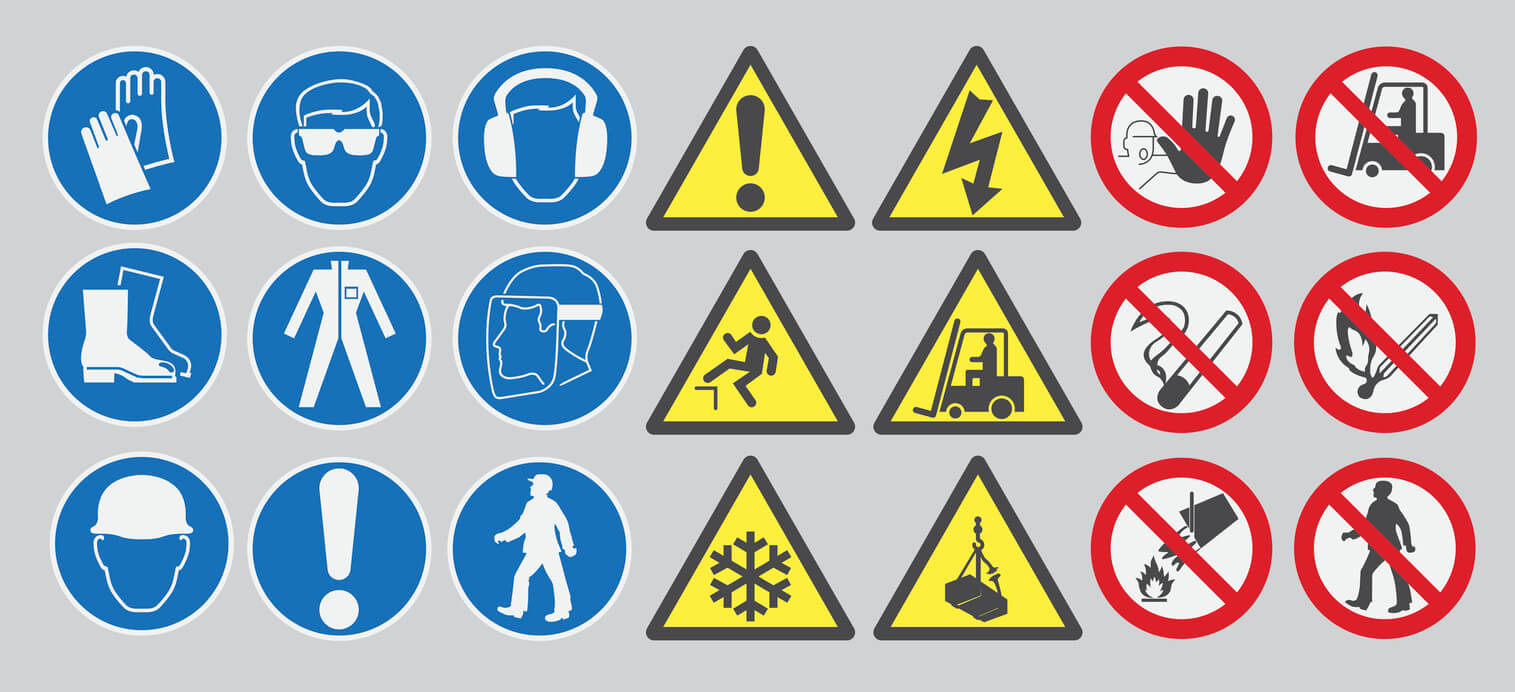
Engineering workshops use a standardised system of safety signs to communicate important information quickly and clearly. These signs follow international colour codes that you should memorise.
Red signs indicate fire-fighting equipment or prohibitions. You'll see red signs marking the location of fire extinguishers, fire hoses, and emergency equipment. Red circular signs with diagonal lines show what's forbidden, such as "no running" in workshop areas.
Yellow triangular signs warn of hazards. The most common include electrical hazard warnings (showing a lightning bolt) and fire hazard symbols (showing flames). When you see yellow warning signs, take extra precautions in that area.
Green signs show safety information and emergency routes. These mark fire exits, emergency stops, and the location of first aid equipment. In an emergency, follow the green signs to safety.
Blue circular signs indicate mandatory requirements. These tell you what personal protective equipment you must wear, such as safety glasses or protective gloves. Blue signs are not suggestions - they show legal requirements you must follow.
Note
Memory Aid for Safety Sign Colours:
- Red = Stop/Danger/Fire equipment
- Yellow = Warning/Caution
- Green = Go/Safe/Emergency exit
- Blue = Must do/Mandatory action
Personal safety requirements
Your appearance and behaviour significantly impact workshop safety. Following personal safety requirements protects you from accidents and shows respect for others working around you.
Clothing and appearance
Loose clothing poses serious risks around moving machinery. Never wear garments with loose sleeves, dangling ties, or flowing fabric that could catch in machine parts. If your clothing gets caught in machinery, it can pull you into dangerous moving parts, causing severe injury.
Long hair presents similar risks, especially near drilling machines and other rotating equipment. Always tie back long hair securely or tuck it under a cap. Never operate drilling machines without proper hair restraint - the rotating drill bit can catch loose hair and cause serious scalp injuries.
Important
Critical Safety Rule: Loose clothing and unsecured long hair are among the most dangerous hazards around machinery. Many serious accidents occur because students ignore these basic requirements. Always secure loose clothing and tie back long hair before entering workshop areas.
Footwear
Proper footwear protects your feet from falling objects, sharp materials, and hot surfaces. Wear shoes with strong toe caps and non-slip soles. Sandals, trainers, and open-toed shoes offer no protection against workshop hazards and should never be worn in engineering workshops.
Choose footwear that covers your entire foot and provides good ancle support. The soles should have sufficient grip to prevent slipping on smooth or wet surfaces, which are common in workshops where oils and coolants are used.
Workshop safety practices
Safe workshop practices create an environment where everyone can work effectively without unnecessary risks. These practices cover everything from tool usage to workspace organisation.
Hand tool safety
Hand tools are involved in many workshop accidents, often because they're used incorrectly or maintained poorly. Never use tools with loose handles or damaged working surfaces - a hammer with a loose head can fly off during use, potentially causing serious head injuries.
When using spanners and wrenches, ensure they fit properly on nuts and bolts. Poorly fitting tools can slip, causing you to lose balance or injure your knuckles against nearby objects. Always pull rather than push on spanners when possible, as this gives you better control if the tool slips.
Store sharp tools like chisels and punches carefully. Never leave them with cutting edges exposed where they might cause cuts to people passing by. Tools with "mushroomed" heads (where repeated hammering has caused the metal to spread) should be reported to your teacher for reconditioning, as pieces of metal can break off during use.

Note
Tool Safety Checklist:
- Check handles are secure before use
- Ensure cutting edges are sharp and undamaged
- Use the right size tool for the job
- Store tools safely with cutting edges protected
- Report damaged tools immediately
Workbench organisation
A well-organised workbench prevents accidents and makes your work more efficient. Keep tools arranged in an orderly fashion, with frequently used items within easy reach. This reduces the need to stretch across the bench or search through cluttered tool drawers.
Clear your work area of unnecessary items before starting each task. Remove metal shavings, off-cuts, and debris that might cause cuts or make the surface slippery. A clean workspace helps you concentrate on your work without distractions.
Walkway safety
Workshop walkways must remain clear to prevent trips and falls. Never leave tools, materials, or personal belongings where people walk. If you spill oil, water, or any liquid on the floor, clean it immediately - even small spills can cause serious falls.
Report any damaged flooring, loose mats, or other trip hazards to your teacher straight away. Good housekeeping in walkways is everyone's responsibility and prevents many common workshop accidents.
Important
Immediate Action Required: Any spill on workshop floors creates a serious slip hazard. Don't walk past spills thinking someone else will clean them - take immediate action to clean up or report the hazard.
Behaviour standards
Inappropriate behaviour in workshops can lead to serious accidents. Never engage in horseplay, shouting, or any activity that might distract others from their work. When someone is operating machinery, they need full concentration - any distraction could result in severe injury.
Stay calm and focused on your work. If you feel frustrated or angry, step away from tools and machinery until you regain composure. Many accidents occur when people are emotionally upset and not thinking clearly about safety.
Machine safety
Machine operation requires careful attention to procedures and safety systems. Machines have significant power and can cause severe injuries when used incorrectly.

Operating procedures
Never use any machine until you've received proper instruction and permission from your teacher. Your first lesson with any machine should include learning the emergency stop procedure - know how to shut down the machine quickly in case of problems.
Ensure only one person operates each machine to avoid confusion about controls. Never switch machines on or off when teachers aren't present, and always leave machines in a safe condition when you finish using them.
Before starting any machine, check that the workpiece is securely held. Loose work can be thrown from the machine with tremendous force, causing serious injuries to you and others nearby.
Example
Machine Safety Procedure:
Step 1: Get teacher permission and instruction
Step 2: Learn emergency stop location and procedure
Step 3: Check workpiece is securely held
Step 4: Ensure safety guards are in place
Step 5: Start machine and maintain full attention
Step 6: Stop machine and clean area when finished
Guards and cleaning
Machine guards protect you from moving parts and flying debris. Never remove or bypass safety guards - they're designed to prevent serious injuries while allowing normal operation.
Keep machines and their surrounding areas clean, but never attempt cleaning while machines are running. Moving parts can catch cleaning cloths and pull you into dangerous areas. Always switch off and isolate machines before any cleaning or maintenance work.
Swarf (metal shavings) from machines can be extremely sharp and sometimes very hot. Never handle it with bare hands - use appropriate tools and brushes for removal.
Important
Critical Safety Rule: Safety guards are never optional. They're designed to protect you from serious injury or death. Any machine with missing or bypassed guards must not be used - report it immediately to your teacher.
Material handling
When working with metals, take special care with freshly cut or machined surfaces. These often have razor-sharp edges that can cause deep cuts. Wear protective gloves when handling sheet metal and metal bars.
Store materials safely to prevent them falling and causing injuries. Place heavier items on lower shelves and ensure nothing projects into walkways where people might walk into it. When moving heavy materials, get help rather than risking back injury by lifting alone.
Personal protective equipment
Personal Protective Equipment (PPE) provides your last line of defence against workshop hazards. Different activities require different types of protection.

Eye protection
Your eyes are extremely vulnerable to workshop hazards including flying particles, chemical splashes, and bright light from welding operations. Safety glasses or face shields must be worn during activities like grinding, machining, drilling, and any work involving chemicals.
Choose eye protection appropriate to the hazard. Basic safety glasses protect against small particles, while face shields provide protection against larger flying objects and chemical splashes. If you get anything in your eyes, flush them immediately with clean water and seek medical attention.
Note
PPE Selection Guide:
- Safety glasses: For general workshop work and small particles
- Face shields: For grinding, chemical work, and larger flying objects
- Welding masks: For welding and cutting operations
- Chemical goggles: For work with hazardous chemicals
Skin protection
Protect your skin when working with chemicals, oils, and abrasive materials. Wear appropriate gloves for the task - chemical-resistant gloves for solvents and acids, heat-resistant gloves for hot materials, and cut-resistant gloves when handling sharp objects.
If hazardous substances contact your skin, wash the affected area immediately with plenty of clean water. Don't wait to see if irritation develops - immediate action prevents most skin problems from becoming serious.
Environmental hazards
Workshop environments contain various hazards that affect air quality, electrical safety, and temperature. Understanding these helps you work safely and comfortably.
Dust and fumes
Many workshop processes generate dust and fumes that can harm your respiratory system. Sanding, grinding, and machining create dust particles, while heating plastics and using solvents produces potentially harmful fumes.
Always work in well-ventilated areas when possible, and ensure extraction fans are operating effectively. Open windows and doors to improve air circulation, and wear appropriate respiratory protection when recommended by your teacher.
Note
Air Quality Management: Good ventilation is essential for workshop safety. If you notice strong chemical odours, excessive dust, or feel dizzy or nauseous, stop work and inform your teacher immediately. These can be signs of dangerous air contamination.
Electrical safety
Electrical equipment poses risks of shock, burns, and fires. Never attempt to repair electrical equipment yourself - report any problems to your teacher immediately. Look out for damaged cables, loose connections, and equipment that sparks or makes unusual noises.
Keep electrical equipment away from water and damp conditions. If you discover wet electrical equipment, don't touch it - inform your teacher so they can isolate the power supply safely before investigating.
Heating materials
Many engineering processes require heating materials for welding, brazing, heat treatment, and forming operations. Hot materials and equipment present risks of severe burns and fires.
Never attempt to operate heating equipment without proper instruction and supervision. When using gas appliances, ensure adequate ventilation and never leave them unattended. If you smell gas, don't use any flames or electrical switches - ventilate the area and inform your teacher.
Always assume that heated materials remain hot for longer than you expect. Use appropriate tools to handle hot objects and allow adequate cooling time before putting materials away.
Important
Gas Safety Protocol: If you smell gas in the workshop:
- Do not use any flames or electrical switches
- Do not attempt to find the leak yourself
- Ventilate the area immediately
- Inform your teacher straight away
- Evacuate if instructed to do so
Fire safety and prevention
Fire prevention is essential in workshops where flammable materials, heat sources, and electrical equipment are common. Understanding fire risks helps you prevent fires and respond appropriately if they occur.
Heating operations must be carried out in designated areas with proper ventilation and fire-fighting equipment readily available. Keep flammable materials away from heat sources and ensure good housekeeping to prevent accumulation of combustible waste.
When working with catalysts and accelerators, never mix them directly as they can react violently and cause explosions. Store these materials separately in metal cupboards, away from heat sources and direct sunlight.
If resin spillages occur, cover them with sand and remove the mixture to a safe outdoor location. Don't use cloths to clean up different types of chemicals, as mixing catalysts and accelerators on cleaning materials can start fires.
Know the location of fire exits and emergency equipment. In case of fire, follow evacuation procedures calmly - panic causes more problems than the fire itself. Building evacuation must be quick but orderly to ensure everyone gets out safely.
Example
Fire Emergency Procedure:
Step 1: Raise the alarm immediately Step 2: If safe to do so, attempt to fight small fires with appropriate extinguisher Step 3: If fire is large or spreading, evacuate immediately Step 4: Close doors behind you to contain fire and smoke Step 5: Go to designated assembly point Step 6: Report to teacher for headcount
Hygiene practices
Good personal hygiene prevents contamination and health problems. Always wash your hands thoroughly after workshop work and before handling food. This removes oils, chemicals, and metal particles that could cause skin problems or make you ill.
Keep cuts and abrasions covered with appropriate dressings to prevent infection and avoid contaminating your work. Report any injuries to your teacher, even minor ones, so they can be properly treated and recorded.
Note
Workshop Hygiene Essentials:
- Wash hands thoroughly with soap after workshop work
- Cover all cuts and wounds with clean dressings
- Report injuries immediately, no matter how minor
- Don't eat or drink in workshop areas
- Keep personal belongings away from work surfaces
Summary
Key Points to Remember:
- Safety terminology: Hazard (potential for injury), Risk (likelihood of injury), Risk Control (actions to reduce risk)
- Safety signs: Red (danger/prohibition), Yellow (warning), Green (safety/emergency), Blue (mandatory)
- Personal protection: Secure loose clothing and long hair - these cause many serious machinery accidents
- Machine safety: Never use equipment without instruction and always know emergency stop procedures
- PPE requirements: Wear appropriate eye protection, gloves, and respiratory protection for each task
- Fire prevention: Keep work areas clean, store materials safely, know evacuation procedures
- Emergency response: Stay calm, follow procedures, and prioritise getting everyone to safety