Overview (Junior Cert English): Revision Notes
📚Revision Notes
Overview
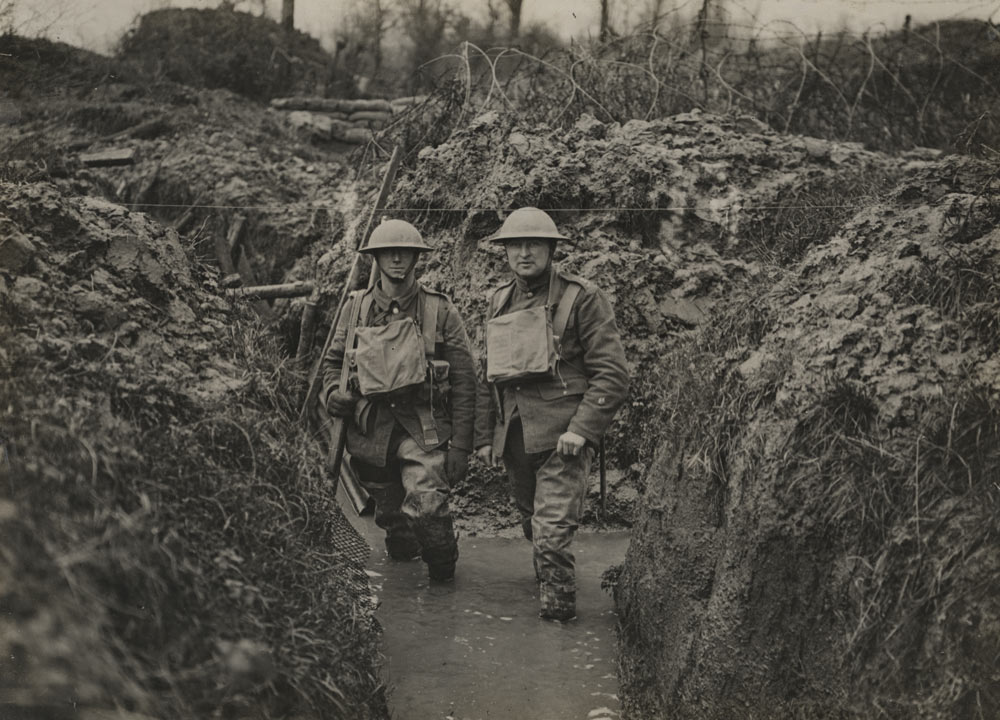
"Dulce et Decorum Est" by Wilfred Owen is a poem that shows the terrible reality of war. The poet describes how soldiers suffer and die in the trenches during World War I. The poem has four stanzas, each showing different aspects of the soldiers' experiences. Owen uses strong and vivid images to make the reader feel the pain and horror of the battlefield.
The title, which means "It is sweet and proper to die for one's country," is used ironically to show that this idea is a lie. The main themes are the horror of war, the suffering of soldiers, and the false idea that dying for your country is glorious.
About the Poet
Wilfred Owen (1893-1918) was a British poet and soldier. He is famous for his poems about World War I, which show soldiers' true and brutal experiences in the war. Owen fought in the war himself, and his poems reflect the horrors he saw. He died in combat just a week before the war ended. His poetry remains some of the most powerful writing about the impact of war.
Setting of the Poem
- The poem is set in the trenches and battlefields of World War I.
- It describes a scene where soldiers are marching through mud, exhausted and injured.
- The setting then shifts to a gas attack, where one soldier is unable to get his mask on in time.
- This setting highlights the pain and chaos of war.
Summary
Stanza 1
-
The poem describes soldiers exhausted, injured, and struggling to walk through the mud.
-
They are compared to "old beggars" and "hags," showing how the war has aged them. Stanza 2
-
Suddenly, a gas attack happens, and the soldiers scramble to put on their gas masks.
-
One soldier is too slow, and the poet describes, in graphic detail, how the man suffers from the gas. Stanza 3
-
The poet shares the haunting image of seeing this soldier die, which he can never forget.
-
This memory stays with him, even in his dreams. Stanza 4
-
Owen ends the poem by addressing the reader directly, saying that if they could see the horrors of war as he has, they would never tell the "old lie" that it is sweet and proper to die for one's country.