Overview (Junior Cert English): Revision Notes
📚Revision Notes
Overview
"The Lake Isle of Innisfree" by W.B. Yeats is a poem that reflects the poet's deep longing for peace and a simple life in nature. Yeats imagines escaping the busy city to the tranquil island of Innisfree, where he dreams of building a small cabin and living in harmony with nature.
The poem has three stanzas, each describing the peaceful beauty of Innisfree and contrasting it with the grey, noisy city life. Yeats uses vivid imagery and a soothing tone to express his yearning for a life filled with peace and natural beauty.
The main themes are the desire for peace, the connection to nature, and the contrast between the natural world and urban life.
About the Poet
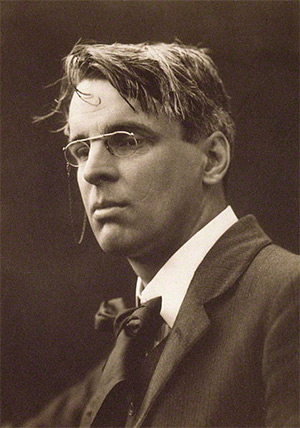
W.B. Yeats (1865-1939) was an Irish poet and one of the most significant figures in 20th-century literature. He was deeply influenced by Irish mythology and the landscape of his homeland. Yeats's poetry often explores themes of nature, mysticism, and a longing for spiritual and emotional renewal. He won the Nobel Prize in Literature in 1923. "The Lake Isle of Innisfree" is one of his most famous poems, capturing his desire to escape from the pressures of modern life into the serene beauty of nature.
Setting of the Poem
- The poem is set on the idyllic island of Innisfree, a remote and peaceful place in Ireland.
- Yeats describes the natural beauty of Innisfree, with its small cabin, bean rows, and buzzing bees.
- This setting contrasts with the grey, noisy city life the poet wishes to escape.
- The setting highlights the poet's longing for peace and simplicity in nature.
Summary
Stanza 1
-
The poem begins with the poet declaring his intention to "arise and go" to Innisfree, where he will build a small cabin and live in peace. He envisions planting bean rows, keeping a beehive, and living alone in a "bee-loud glade." Stanza 2
-
In this stanza, Yeats describes the tranquil beauty of Innisfree, where peace "comes dropping slow."
-
He imagines the misty mornings, the purple glow of noon, and the soft sounds of the evening filled with the wings of linnets. Stanza 3
-
The final stanza returns to the poet's longing as he hears the sound of the lake water in his "deep heart's core," even while standing on the grey city pavements.
-
This reflects his strong connection to Innisfree despite being physically distant.