Overview (Junior Cert English): Revision Notes
📚Revision Notes
Overview
Overview
"The Road Not Taken" by Robert Frost is a poem about the choices we make in life and their lasting impact. The speaker stands at a fork in the road, faced with two possible paths. After much contemplation, he chooses one, knowing he may never return to the other.
The poem consists of four stanzas, each exploring the speaker's decision-making process and reflecting on the consequences of choice. Frost uses vivid imagery and a reflective tone to express the uncertainty and inevitability of life's decisions.
The main themes include choice and consequence, the passage of time, and the nature of regret and reflection.
About the Poet
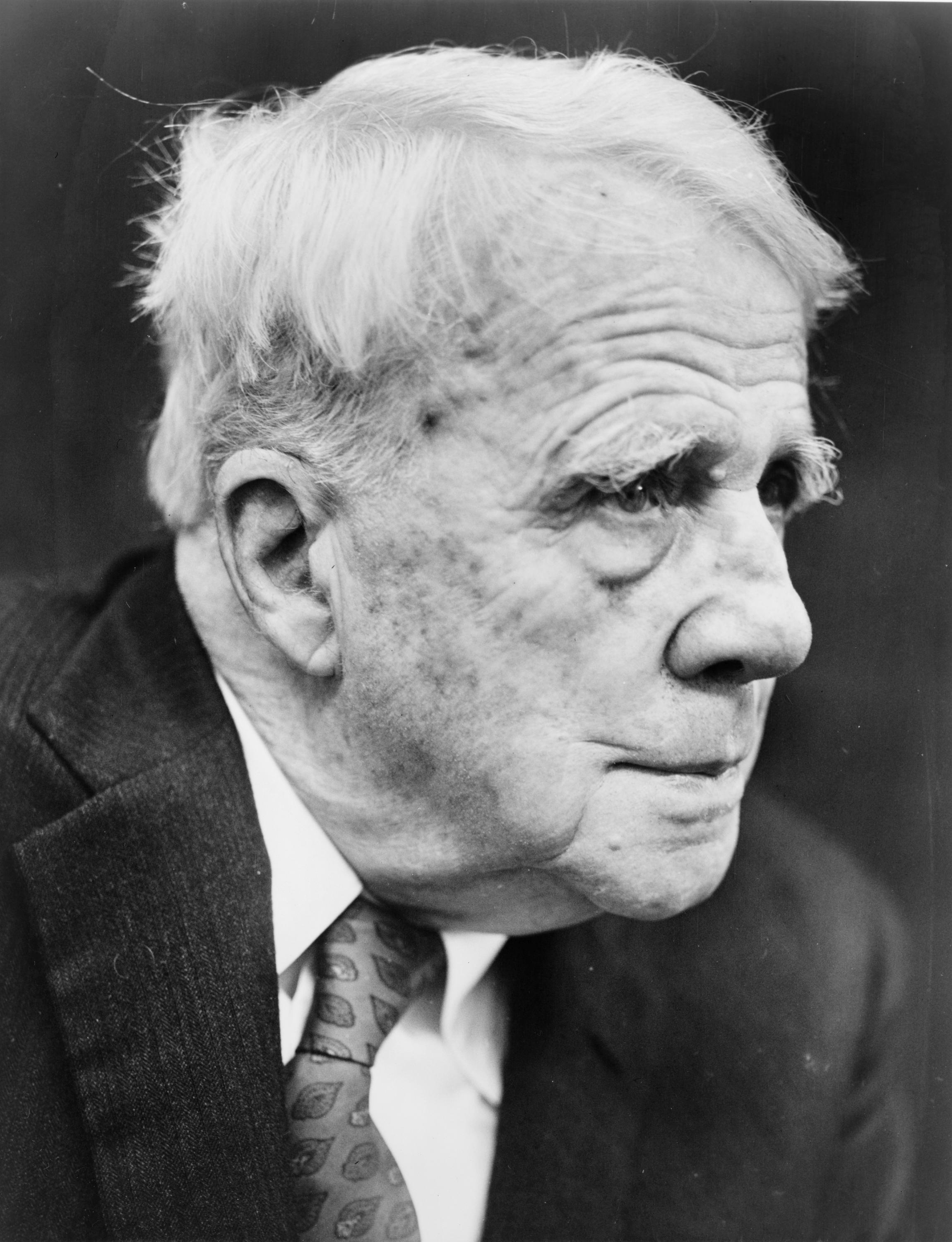
Robert Frost (1874–1963) was an American poet known for his depictions of rural life and his deep exploration of human experiences. His poetry often features simple, natural imagery that conveys complex ideas about life, choices, and nature.
Frost was awarded the Pulitzer Prize for Poetry four times and is regarded as one of America's greatest poets. His works frequently explore themes of individualism, decision-making, and the passage of time. "The Road Not Taken" is one of his most famous poems, often interpreted as a meditation on choice and its consequences.
Setting of the Poem
-
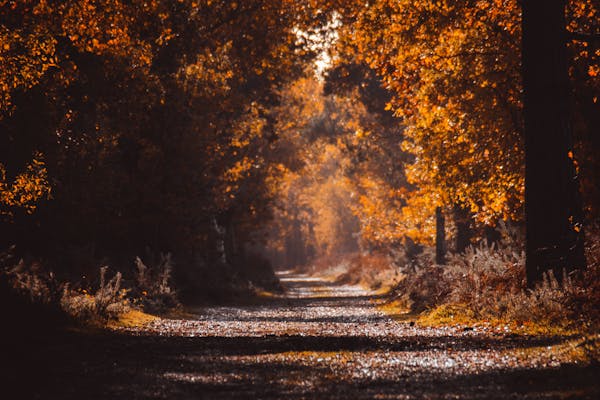
The poem is set in a woodland during autumn, indicated by the phrase "a yellow wood."
-
The speaker comes to a fork in the road, symbolising a choice in life.
-
The two paths appear similar, but one seems less travelled at first.
-
The woodland setting is both literal and metaphorical, representing the unpredictable nature of life's paths.
-
The setting reflects the uncertainty of decision-making and the idea that choices shape our journey.
Summary
Stanza 1
- The speaker arrives at a fork in the road and must choose between two paths.
- He wishes he could take both but knows it is impossible ("And sorry I could not travel both / And be one traveller").
- He looks down one path as far as he can but cannot see where it leads ("To where it bent in the undergrowth"), symbolising the uncertainty of the future.
Stanza 2
- He chooses the other path, describing it as "just as fair" but possibly "having perhaps the better claim" because it appeared less worn.
- However, he soon realises that both paths were actually quite similar ("Though as for that the passing there / Had worn them really about the same").
Stanza 3
- Both paths are untrodden that morning ("In leaves no step had trodden black"), meaning no one had yet walked on them that day.
- The speaker promises himself he will return to take the other path someday ("Oh, I kept the first for another day!").
- However, he doubts he will ever get the chance, as one choice often leads to another ("Yet knowing how way leads on to way, / I doubted if I should ever come back").
Stanza 4
- The poem shifts to a future perspective, with the speaker reflecting on his choice "somewhere ages and ages hence."
- He states that he took the "one less travelled by" and that "that has made all the difference."
- This final line is ambiguous—it could mean the choice led to success or regret, leaving the interpretation open-ended.