Earthquakes I (Junior Cert Geography): Revision Notes
📚Revision Notes
Earthquakes I
Earthquakes
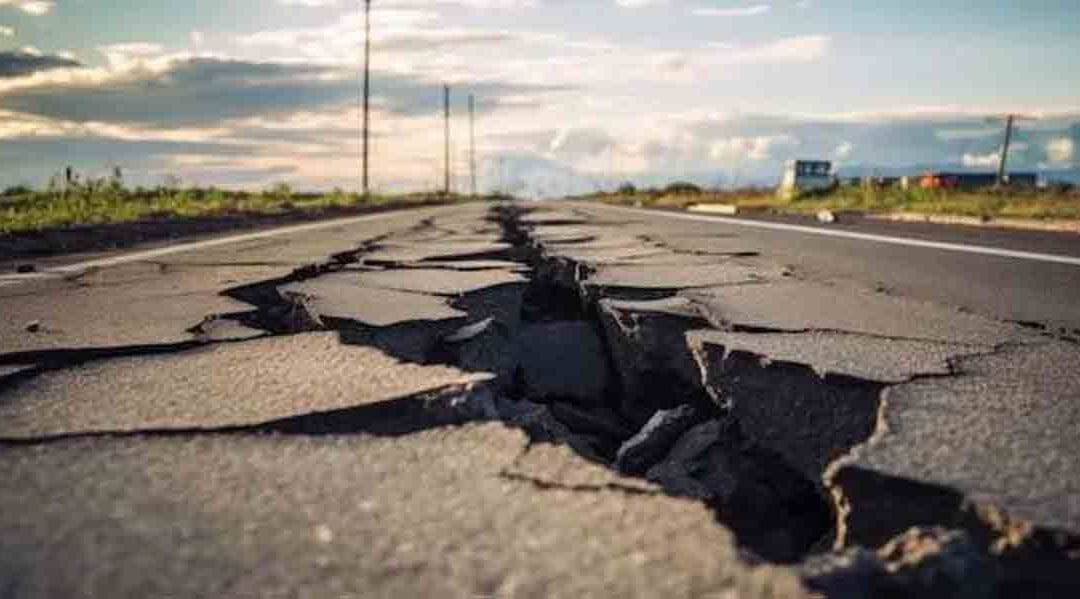
An earthquake is the sudden shaking of the Earth's crust caused by the movement of tectonic plates. This movement happens when plates slip past each other.
- Earthquakes can cause severe damage to buildings and infrastructure.
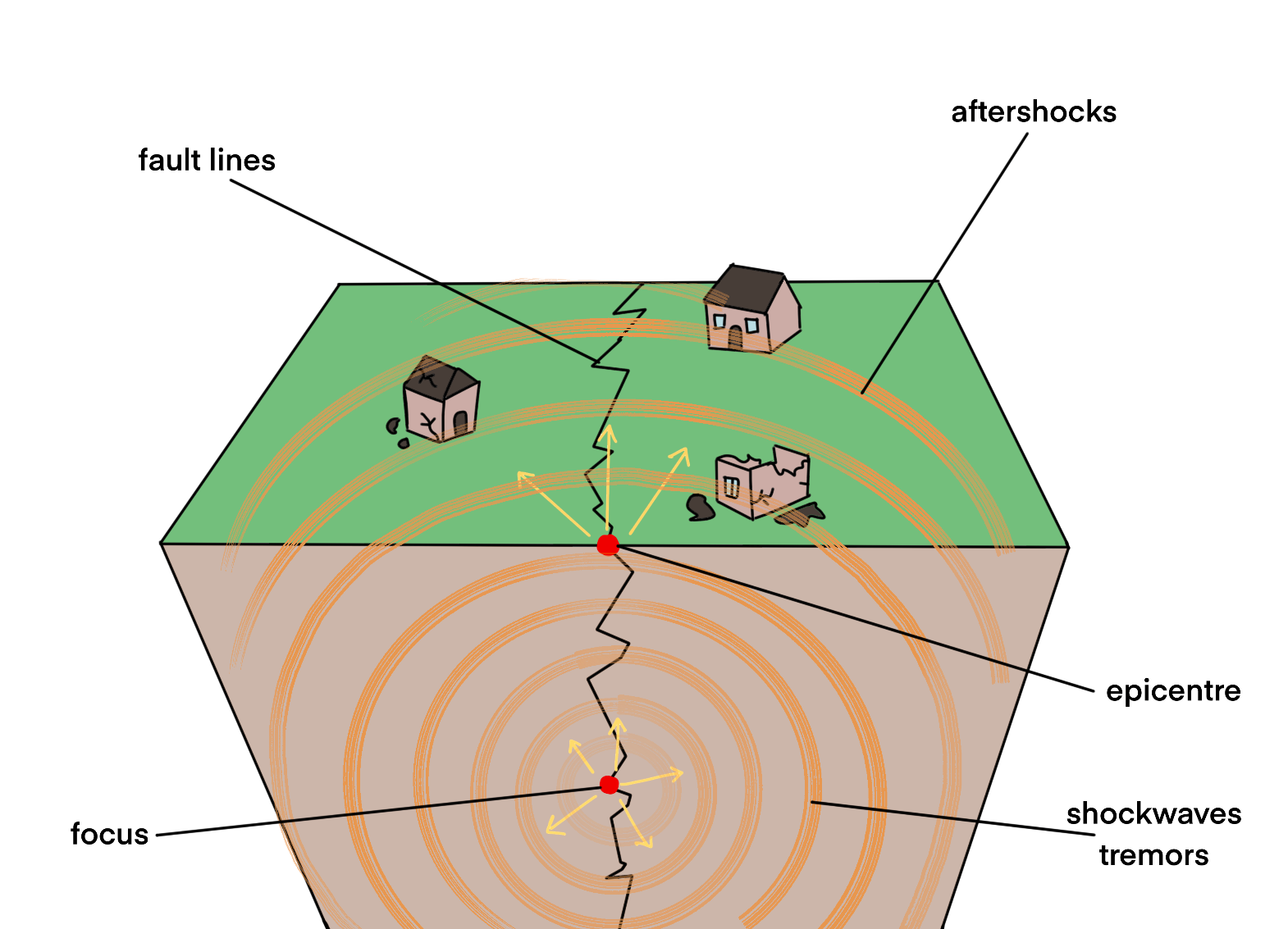
- They occur along fault lines, which are deep cracks in the Earth's crust where movement occurs.
- As plates move along these fault lines, stress builds up until it is released as energy. This causes the plates to slip suddenly, resulting in an earthquake.
- The focus is the point beneath the Earth's surface where the earthquake starts.
- The epicentre is the point on the Earth's surface directly above the focus. This is where the shaking is usually strongest.
- Earthquake tremors spread outwards from the focus. Sometimes, aftershocks occur, which are smaller tremors following the main earthquake.
- Aftershocks can cause additional damage, particularly in areas where the initial earthquake has weakened structures.
- The strength of an earthquake and the damage it causes depend on factors like how close the area is to the epicentre and the depth at which the earthquake occurs. Earthquakes are common at plate boundaries. An example of a fault line is the San Andreas Fault. This is a conservative (transform) plate boundary in the US which has frequent earthquakes.
Measuring Earthquakes
To measure and record earthquakes, scientists use specific tools and scales.
- A seismograph is an instrument used to detect and record the vibrations of earthquakes.
- The Richter scale measures the strength or magnitude of an earthquake.
- This scale is open-ended, with each increase of one unit meaning the earthquake has ten times the amplitude and releases about 32 times more energy.
- A higher number on the Richter scale indicates a stronger earthquake that can cause more damage.
- The Moment Magnitude Scale (Mw) is now more commonly used by scientists to measure large earthquakes accurately.
- The Mercalli scale is another way to measure earthquakes.
- It is based on eyewitness observations and assesses the damage caused by the earthquake.
- The Mercalli scale ranges from 1 (no damage) to 12 (total destruction).
Tsunami
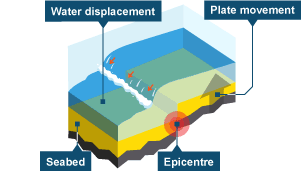
A tsunami is a large, powerful wave that forms after an underwater earthquake. It moves rapidly towards the shore and can cause severe damage and loss of life.
- Tsunamis are usually triggered by large, shallow underwater earthquakes that involve vertical movement of the sea floor.
- When the tectonic plates suddenly shift, they displace a massive amount of water, which leads to the formation of a tsunami.
- As these tsunami waves reach shallower water, they grow in height, sometimes reaching up to 30 metres.
- For example, the 2011 tsunami in Japan caused the ocean floor to move several metres vertically, leading to devastating waves.
- When the wave finally reaches the shore, it floods the area, causing destruction to buildings, infrastructure, and loss of life, depending on the strength and size of the tsunami.