Sign and Symbol (Junior Cert Religious Education): Revision Notes
📚Revision Notes
Sign and Symbol
Understanding signs and symbols
Signs and symbols are both forms of communication, but they work in very different ways.
Important
Key Distinction: A sign is a direct form of communication that conveys one clear meaning to everyone who sees it. A symbol, on the other hand, carries much deeper significance and can represent multiple layers of meaning.
A sign is designed to be easily understood universally - they must communicate the same message to all people. For example, a stop sign tells everyone to halt their vehicle, regardless of their background or culture. Signs are primarily informational and straightforward.
A symbol carries much deeper significance and can represent multiple layers of meaning. Unlike signs, symbols are used to communicate complex ideas that may be interpreted differently by different people. They have the unique ability to connect with both our minds and emotions, creating powerful responses. The colour red, for instance, might symbolise danger in one context, but represent love or passion in another.
Religious symbols in Christianity
The cross
The cross stands as Christianity's most recognisable symbol, carrying profound meaning for believers. When Christians make the sign of the cross, this simple gesture serves as a reminder of God's love and sacrifice.
Note
The cross represents the crucifixion of Christ, who died to offer salvation to humanity. This symbol encompasses the complete Christian narrative - Christ's death, burial, and resurrection.
The incredible depth of meaning contained within this one symbol demonstrates its central importance to Christian faith and worship.
Water
Water serves as a vital symbol across all major world religions, representing life and spiritual cleansing. In Christianity, water holds particular significance in the sacrament of baptism.
During baptism ceremonies, water poured over an infant's head symbolises the beginning of new spiritual life. This connects to Jesus's own baptism in the River Jordan. Water also appears at the end of life, when holy water is sprinkled on coffins as a reminder of the deceased's membership in the Christian community.
The Paschal candle
The Paschal candle represents the risen Jesus and serves as a symbol of Christ as the light of the world. This special candle embodies the concept of resurrection and hope.
Example
Symbolic Elements of the Paschal Candle
Beyond being a symbol itself, the Paschal candle contains additional symbolic decorations:
- Cross - representing the crucifixion
- Brass markers - symbolising the wounds from nails and crown of thorns
- Alpha and Omega - representing God as the beginning and end of all things
- Present year - signifying God's presence in our current time
Icons
Understanding icons in everyday life
An icon can refer to someone we look up to and admire. Icons serve as sources of inspiration - people who motivate others through their achievements or character. They can also represent aspiration, embodying qualities we hope to develop in ourselves. These might be family members, celebrities, sports figures, or historical personalities who inspire us to be better.
Religious icons
In religious contexts, particularly within Eastern Orthodox Christianity, an icon represents a very special type of sacred artwork. These are typically painted on wood and feature rich, vibrant colours.
Note
Religious icons serve a purpose far beyond mere decoration - they are believed to help bring worshippers closer to God through focused meditation and prayer.
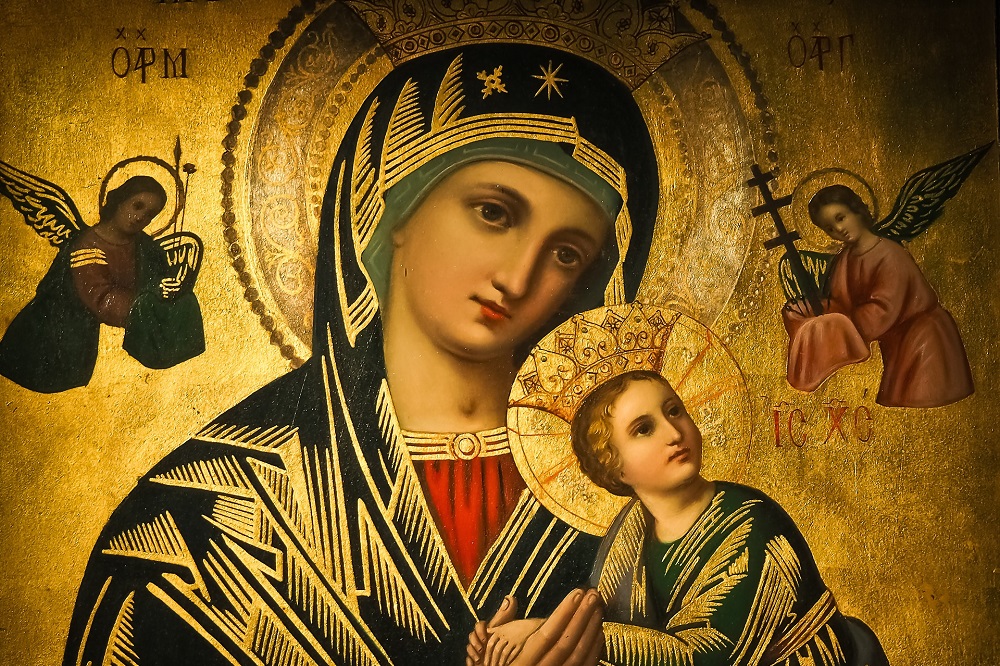
Creating religious icons
Iconographers are the skilled artists who create these sacred images. The process of creating an icon involves intense spiritual preparation, including prayer and fasting while working. This spiritual discipline ensures that God sanctifies their creative work.
Example
Symbolic Materials and Colours in Icons
The materials and colours used in icons carry deep symbolic meaning:
- Colours represent different spiritual concepts (gold symbolises heaven, blue represents humanity)
- Natural materials hold spiritual significance (linen on wood represents the burial cloths of Christ, paint mixed with egg yolk symbolises resurrection)
Icons in worship
Icons serve as aids to prayer, helping worshippers focus their attention on God. Rather than simply looking at the image, believers are encouraged to see through the icon to the divine reality it represents. This practice aims to make the invisible spiritual world visible and tangible.
Candles are often lit in front of icons during prayer, representing the light of Christ. The saints or holy figures depicted in icons are understood to exist within Christ's light, creating a connection between the earthly and divine realms.
Iconostasis
Important
Don't Confuse Icons with Iconostasis: It's important not to confuse icons with the iconostasis - a decorative screen found in Orthodox churches that separates the congregation from the altar area where priests perform sacred ceremonies. Only clergy members are permitted behind this screen during religious services.
Summary
Key Points to Remember:
- Signs deliver single, universal messages whilst symbols carry deeper, multilayered meanings
- Religious symbols like the cross, water, and Paschal candle hold profound significance in Christian worship
- Icons are sacred artworks used in Orthodox Christianity to aid prayer and connect with the divine
- Iconographers create icons through a spiritually disciplined process involving prayer and fasting
- Colours and materials in religious art carry symbolic meanings that enhance spiritual understanding