Energy and Energy Conversions (Junior Cert Science): Revision Notes
📚Revision Notes
Energy and Energy Conversions
What is energy?
Energy is the ability to do work. When you feel tired, you might say you have no energy. This means you feel unable to work or move around. Energy is what allows us to get things done.
The unit of energy is the joule (), named in honour of the English scientist James Joule.
Note
About James Joule
James Joule was particularly interested in energy conversions and constructed very accurate thermometers to study how energy changes from one form to another. His pioneering work in understanding energy transformations led to the unit of energy being named in his honour.
Forms of energy
Energy exists in many different forms. Understanding these different forms helps us recognize how energy moves and transforms in the world around us. Let's examine the main types:
Potential energy
Potential energy is the energy that an object has due to its position or shape. There are two main types:
Gravitational potential energy occurs when an object is held at a height. Water held behind a dam stores energy due to its position. A car at the top of a hill has more energy than it does at the bottom. The higher an object is positioned, the more potential energy it possesses.
Elastic potential energy is stored when an object is stretched or compressed. A stretched bow stores energy that can be released. When you pull back the string of a bow and arrow, energy is stored in the bow. This energy is released when the arrow is fired.
Kinetic energy
Kinetic energy is the energy of an object that is in motion. A moving lorry, the wind, and falling water all have kinetic energy. Sometimes kinetic energy is called mechanical energy. The faster an object moves, the more kinetic energy it has.
Chemical energy
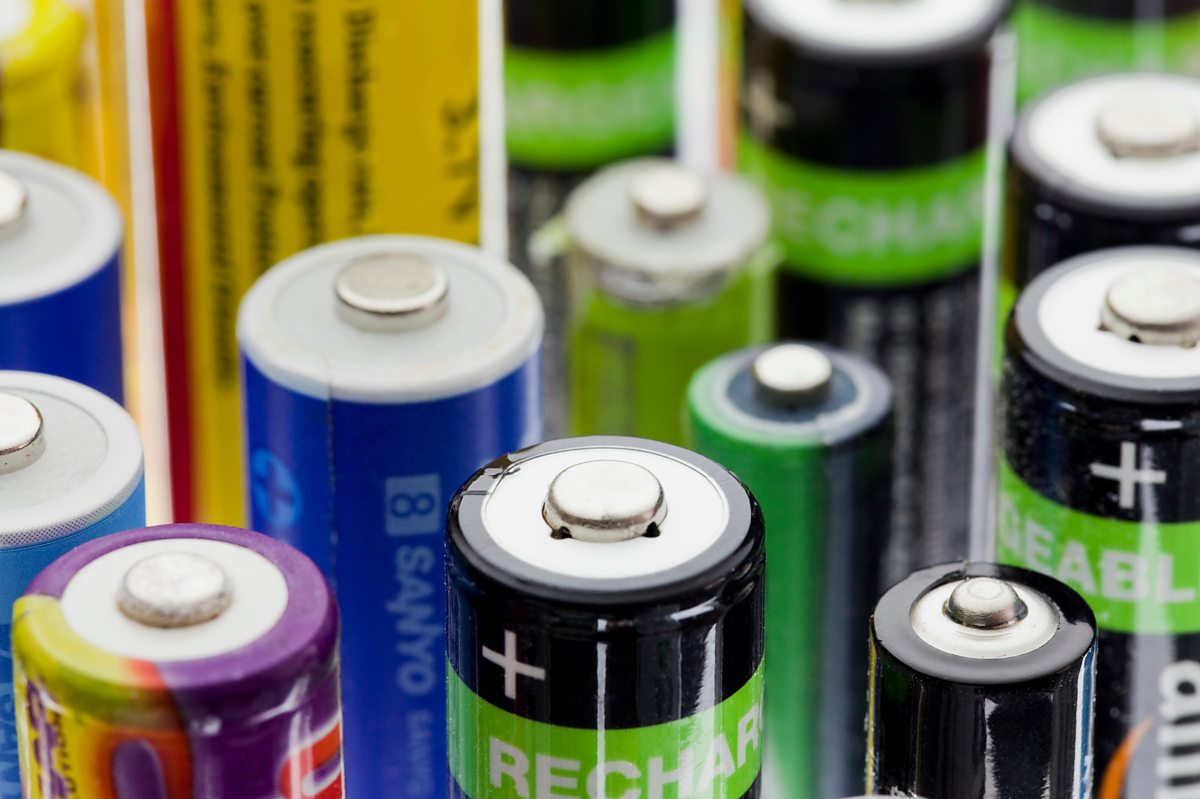
Energy is stored in chemicals. Explosives release this energy very quickly when they react. Food is an example of a substance containing chemical energy - our bodies release this energy slowly over a period of time. Oil and other fuels, such as gas and coal, also have chemical energy that is released when they are burned. Batteries contain chemicals that react with each other to release electricity.
Light energy
Light from the sun provides the energy for plants to grow and make food and oxygen for us (a process called photosynthesis). We can use solar panels to get energy to heat water in our homes and generate electricity to run traffic safety signs. Most of the energy present on Earth originated from the sun.
Note
If light shines on a Crookes radiometer, the vanes of the instrument start to turn. This demonstrates light energy being converted into kinetic energy - a practical example of energy conversion in action.
Heat energy
When energy is given to an object, the temperature of the object may increase. The particles that make up the object move around more and move faster. The energy that is needed to heat our homes is usually supplied from gas, oil, coal, turf, or electricity. In many electrical devices, chemical energy is changed into heat energy, and this is then changed into electrical energy.
A burning fuel changes chemical energy in the fuel into heat energy connected to a generator. The generator then converts kinetic energy to electrical energy.
Electrical energy
A wire carrying electricity can be used to supply energy to machines and heaters. This is a convenient type of energy as it can be easily converted into many other forms. Electrical energy can be transformed into:
-
Kinetic energy (in a washing machine)
-
Heat energy (in a kettle)
-
Light energy (in a light bulb)
-
Sound energy (in a speaker or radio)

Sound energy
Sound is a form of kinetic energy created when objects vibrate. This makes the air around the object vibrate and causes our eardrums to vibrate, allowing us to hear. Sound can also travel through other substances, such as water and metal.
Nuclear energy
The nucleus of an atom has an enormous amount of stored energy. When the nucleus is smashed or changed, the atom can release this energy. This is used in nuclear-powered electricity power stations and nuclear weapons. Nuclear energy is converted into heat energy and then into electrical energy.

Energy conversions
Energy can be changed from one form to another. Think of all the ways you use electricity in your home. It can be converted to kinetic energy in the washing machine, heat in a heater, sound and light in a television, and chemical energy when batteries are recharged. We have many appliances that convert electrical energy from one form to another. Energy conversions happen all around us.
The principle of conservation of energy
When energy is converted from one form to another, the total amount of energy in one form (for example, electricity) will be equal to the total amount of energy converted in its new forms (for example, heat and sound). We say that energy is conserved. This is a fundamental principle in physics.
Important
The Principle of Conservation of Energy
Energy cannot be created or destroyed, but can only be changed from one form to another.
The word 'conserved' means 'keep the same' or 'keep constant'. Energy is not simply used up – it is converted to other forms. This is one of the most important principles in all of physics.
Understanding Sankey diagrams
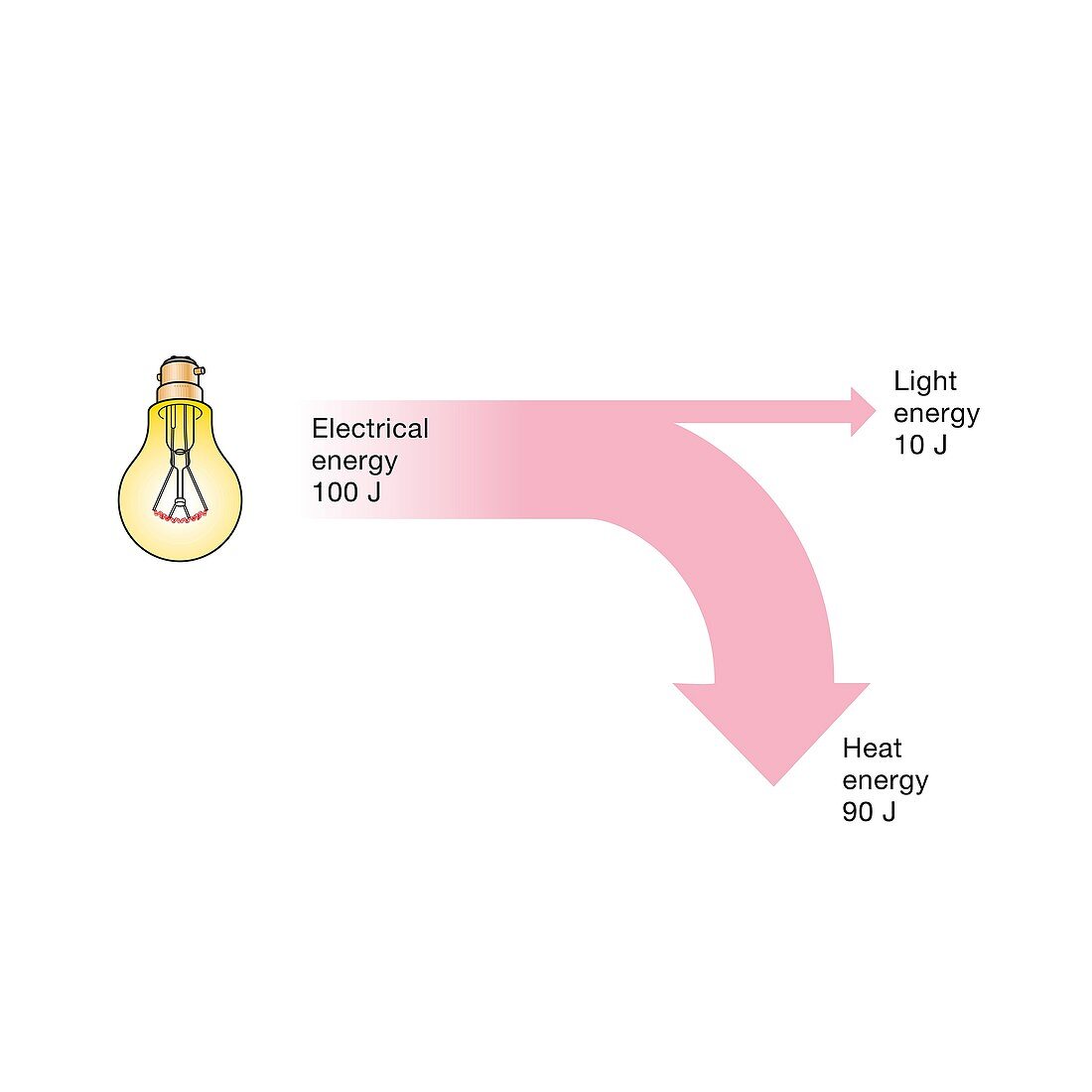
The energy flow in appliances can be shown more clearly using a Sankey diagram. A Tipperary-born scientist, H. Riall Sankey, came up with the graphic diagram shown below.
Note
How to Read a Sankey Diagram
In a Sankey diagram:
- The straight-through arrow represents the useful energy output
- The downward-facing arrow shows the wasted energy (usually as heat)
- The thickness of each arrow is proportional to the amount of energy it represents
For example, when looking at an incandescent light bulb, we can see that for every joules of electrical energy that enters the bulb, only joules are used to make light. The rest of the energy ( joules) is converted to heat and is dissipated (wasted).
Energy efficiency
Earlier we looked at the law of conservation of energy. We learned that energy cannot be created or destroyed, but can only change from one form to another. However, when converting energy from one form to another, some energy is wasted or dissipated.
Energy dissipated means that energy is lost in a form that is less useful.
Calculating energy efficiency
The energy efficiency of an appliance is often expressed as a percentage. It tells us what proportion of the input energy is converted into useful output energy.
Important
Energy Efficiency Formula
This formula helps us determine how efficiently a device converts input energy into useful work. The higher the percentage, the more efficient the device.
Example
Worked Example: Calculating Efficiency of an Incandescent Bulb
An incandescent filament bulb uses joules of electrical energy. It produces joules of light energy and joules of heat energy. Calculate its efficiency.
Step 1: Write the formula
Step 2: Fill in the formula
Step 3: Write the answer with the correct unit
Comparing different devices
A compact fluorescent lamp (CFL) is much more efficient than a filament lamp. If a CFL uses joules of electrical energy and produces joules of light energy, its efficiency would be:
The CFL is much more efficient, as 75% of the incoming energy is converted into light, compared to only 10% of the filament lamp. Much less energy is dissipated as heat in the CFL.
Important
Exam Tip: Reading Sankey Diagrams
In a Sankey diagram, the width of each arrow is proportional to the quantity of energy flowing. Therefore, the thicker the arrow, the greater the amount of energy is dissipated.
EU energy labels
To make it easier for the public to understand the energy efficiency of an appliance, the European Union has made it law that products must display an energy rating from A to G when being offered for sale. The higher the classification on the scale, the more efficient the appliance is. Certain other information can also be indicated depending on the appliance, such as annual expected electricity consumption, loudness, water consumption, etc.

Sources of energy
The sun is our most important source of energy. All green plants trap energy from sunlight. Plants use this energy during photosynthesis to make food and oxygen. Without photosynthesis, we would run out of food and oxygen.
Our sources of energy can be classified into two categories: renewable and non-renewable.
Renewable Energy Sources
Note
Renewable Energy Sources
A renewable energy source will never be used up.
Renewable energy sources will not run out when they are used. Examples are wind, solar, hydroelectric, biomass, wave, tidal, and geothermal energy. Renewable energy sources produce no harmful waste products, but they are also often expensive to set up. Renewable sources will meet most of the Earth's energy needs in the future.
:quality(90)/p7i.vogel.de/wcms/ed/d8/edd83d7b6f7038c7c15a46fdf2bc6fb7/96879394.jpeg)
Wind energy
| Explanation | The kinetic energy of the wind is converted to kinetic energy of a wind turbine and then into electricity in a generator. |
|---|---|
| Advantages | - Free source of energy - No emissions, which cause global warming |
| Disadvantages | - Some people think that turbines are unsightly - Cannot rely on wind blowing all the time |
Solar energy
| Explanation | - Photovoltaic solar cells convert light energy into electricity - Solar thermal collectors are used to heat water and convert light energy into heat |
|---|---|
| Advantages | - Can be useful in areas where mains electricity is not easily available, e.g. in outer space and weather buoys at sea |
| Disadvantages | - Energy is only available by day, so it needs to be stored if needed after darkness |
Hydroelectricity
| Explanation | Rivers are dammed. The potential energy of the water is converted to kinetic energy in a turbine and then into electrical energy in a generator. |
|---|---|
| Advantages | - Free source of energy - Can be switched on and off in minutes - The dam can control flooding and store water for public supply and recreation - No emissions |
| Disadvantages | - Land may need to be flooded when the dam is built, damaging natural habitat for plants and animals and perhaps people's homes |
Biomass
| Explanation | - Fast-growing plants, manure, and waste plant material, e.g. brown bin waste, are known as biomass - Rotting biomass can be converted to natural gas (methane). Alternatively, fast-growing plants are burned to make heat - Chemical energy in the plants is converted to heat energy in natural gas, alcohol or heat energy by burning |
|---|---|
| Advantages | - An alternative fuel to fossil fuel for cars and jet engines - No net release of |
| Disadvantages | - Land that may have been used to grow food will now be used to grow fuel. This will make food more expensive - Some biofuels produce large amounts of smoke when burned |
Wave energy
| Explanation | The kinetic energy of the waves of the sea is used to generate electricity. As a wave approaches, it causes joined tubes to move up and down. This motion pushes on a hydraulic ram, which turns a turbine. The turbine is connected to a generator, which makes electricity. |
|---|---|
| Advantages | - No emissions - Enormous amounts of energy are available |
| Disadvantages | - During storms, the equipment could be destroyed - The amount of energy produced depends on the weather |
Tidal energy
| Explanation | The tide is blocked from coming in and out of a bay by a dam. Just like hydroelectricity, the potential energy of the water is converted into electrical energy. |
|---|---|
| Advantages | - Tides are reliable and the energy supply will never run out - No emissions |
| Disadvantages | - Prevents ships and fish moving into certain areas - Only available during certain times |
Geothermal energy
| Explanation | - Cold water is pumped deep into the Earth and returns as steam - The hot water or steam is used to heat our homes - The steam can be used to turn a turbine. The kinetic energy in a turbine and then into electrical energy in a generator |
|---|---|
| Advantages | - No emissions - Hot water could also be used to heat homes and glasshouses |
| Disadvantages | - Only possible in certain volcanic parts of the world - May be expensive to build - Can release toxic gases |
Non-renewable sources of energy
When non-renewable energy sources are used up, they will not be regenerated (made) again in our lifetime. These sources were formed over millions of years – for example, the coal and oil that we burn.
Fossil fuels
| Explanation | Fossil fuels are made from the remains of plants and animals. They can form natural gas, oil, peat, and coal. When burned, their chemical energy is converted into heat energy. |
|---|---|
| Advantages | - Easy to transport and store - Relatively cheap |
| Disadvantages | - They produce , which causes global warming - When burned, they may cause acid rain |
Important
Why Fossil Fuels Are Unsustainable
At present, the majority of our energy needs are met using unsustainable fossil fuel sources. These are unsustainable because:
- When burned, they produce carbon dioxide, which causes global warming
- We are using fossil fuels at a much greater rate than they are being generated by nature. Eventually they will run out.
Nuclear fission
| Explanation | Nuclear fission occurs when the nucleus of a large atom is split into two smaller nuclei with the release of large amounts of energy. Nuclear energy is converted into heat energy and then into electrical energy. |
|---|---|
| Advantages | - Vast amounts of energy can be produced from a small amount of fuel - No or acid rain is produced, unlike fossil fuels |
| Disadvantages | - Reactors are expensive to build - Accidents at nuclear power stations, e.g. Chernobyl, have released radioactivity that has caused birth defects, cancer, and death |
Sustainable energy usage
Important
Definition of Sustainability
Sustainability is the use of a resource so that it does not run out.
When using energy sustainably, it should also satisfy the following criteria:
- Using this form of energy will not damage the environment
- The energy source will be available for many future generations
- The energy available is at a reasonable cost
We need to replace burning fossil fuels with renewable energy sources. However, we cannot yet rely on renewable energy sources to supply the electricity needs of the country. There are times when we will not have enough wind energy, hydroelectricity, and sunlight to meet the energy needs of the country.
We need to use technology that is as energy efficient as possible. Over 50% of the population in the world has seen an increase in their standard of living with the building of many coal-fired power stations, which give out vast amounts of carbon dioxide into the atmosphere. This is not sustainable.
Things we can do to make our energy use more sustainable
Note
Practical Actions for Sustainable Energy Use
- Insulate buildings as much as possible
- Choose energy-efficient appliances
- Reduce, reuse, and recycle where possible
- Switch off lights and other appliances when not in use
- Walk, cycle, or use public transport instead of a car
Every small action contributes to more sustainable energy usage and helps protect our environment for future generations.
Calculating energy use
The energy used to do a task is often referred to as work. The amount of work needed to push a box from place to place depends on the force needed to push the box and the distance the box is moved. Energy is measured in units called joules.
Important
Work Formula
This formula helps calculate the total amount of work done to move an object. Remember that force must be in newtons (N) and distance must be in metres (m) to get the answer in joules (J).
Example
Worked Example: Calculating Work Done
How much energy is used to push: (a) a box with a force of N a distance of m? (b) a lawnmower with a force of N a distance of cm?
Answer:
(a)
Step 1: Write the formula
work = force × distance
Step 2: Fill in the formula (force in N and distance in m)
work =
Step 3: Write the answer with the correct unit
work = joules
(b)
Step 1: Write the formula
work = force × distance
Step 2: Fill in the formula (force in N and distance in m)
Note: Convert cm to m first
work =
Step 3: Write the answer with the correct unit
work = joules
Summary
Key Points to Remember:
- Energy is the ability to do work and is measured in joules ()
- There are eight main forms of energy: potential, kinetic, chemical, light, heat, electrical, sound, and nuclear energy
- Energy cannot be created or destroyed, only converted from one form to another (conservation of energy)
- Sankey diagrams show energy flow, with arrow thickness representing the amount of energy
- Energy efficiency = (useful energy output ÷ energy input) × 100. Most devices waste energy as heat
- Renewable energy sources (wind, solar, hydro, biomass, wave, tidal, geothermal) will never run out and produce no harmful emissions
- Non-renewable sources (fossil fuels and nuclear) will eventually be depleted and can harm the environment
- Sustainability means using resources responsibly without damaging the environment or depleting them for future generations
- Work = force × distance. This formula helps calculate the energy needed to move objects