Metals and Non-Metals (Junior Cert Science): Revision Notes
📚Revision Notes
Metals and Non-Metals
Introduction to metals and non-metals
Elements can be classified into two main groups: metals and non-metals. This classification is based on their physical and chemical properties. Understanding the differences between these two groups helps us predict how different elements will behave and explains why they are used for different purposes in everyday life.
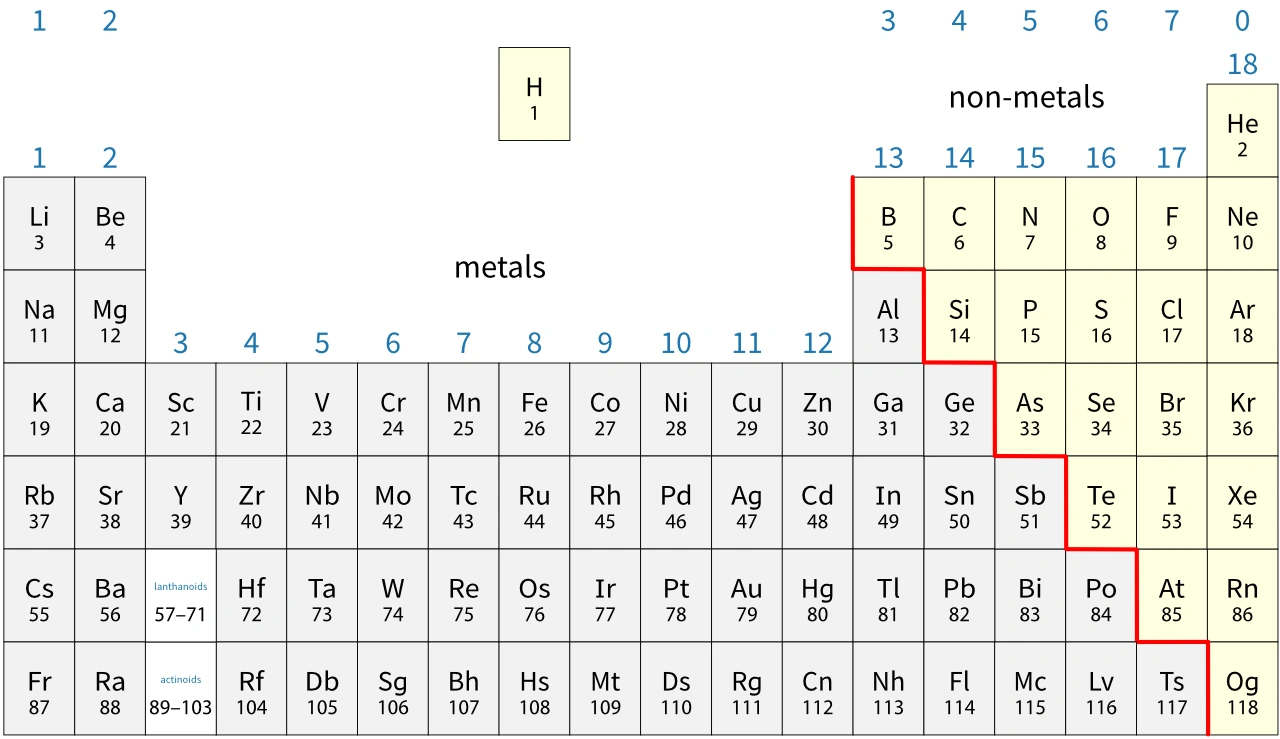
In the periodic table, metals and non-metals occupy distinct regions. Most elements are metals, and they are found on the left-hand side and in the centre of the periodic table. Non-metals are located on the right-hand side. This organization reflects fundamental differences in their atomic structure and behavior.
Note
The periodic table's organization is not random—it reflects the fundamental properties of elements. The clear division between metals and non-metals helps chemists predict how elements will interact and what properties they will have.
Metals and non-metals play important roles in our daily lives. Metals are used extensively in construction, electrical wiring, cooking equipment, and transport. Non-metals are equally important and include elements essential for life, such as oxygen for breathing and carbon in organic compounds.
Properties of metals
Metals share several characteristic properties that distinguish them from non-metals. Understanding these properties helps explain why metals are so widely used in construction, manufacturing, and technology.
Physical state and appearance
Almost all metals are solid at room temperature. The only exception is mercury, which is a liquid at . Metals typically have a shiny appearance when freshly cut or polished. This property is called lustre. The lustrous quality of metals makes them attractive for decorative purposes and jewelry.
Important
Exception to the Rule: Mercury is the only metal that is liquid at room temperature. This unique property made it historically useful in thermometers, though concerns about its toxicity have led to its replacement in most modern applications.
Melting and boiling points
Most metals have high melting and boiling points compared to non-metals. This means they remain solid at normal temperatures and can withstand high temperatures before melting. For example, tungsten has an extremely high melting point of , which makes it ideal for light bulb filaments.
| Metal | Melting point (°C) | Boiling point (°C) |
|---|---|---|
| Aluminium | 660 | 2,470 |
| Copper | 1,083 | 2,595 |
| Iron | 1,535 | 3,000 |
| Mercury | -39 | 357 |
| Nickel | 1,453 | 2,730 |
| Silver | 961 | 2,210 |
| Sodium | 98 | 890 |
| Tungsten | 3,410 | 5,930 |
The wide range of melting points allows different metals to be used for specific purposes. Mercury's low melting point makes it liquid at room temperature, which is why it was historically used in thermometers (though this use is now discouraged due to toxicity concerns).
Conductivity of heat and electricity
Metals are excellent conductors of both heat and electricity. This means they allow thermal energy and electrical current to pass through them easily. This property makes metals essential for electrical wiring and cooking equipment.
Copper is one of the best conductors of electricity, which is why it is used extensively in electrical cables and wiring throughout homes and buildings. The ability to conduct heat efficiently makes metals like aluminium and steel ideal for cookware, as they distribute heat evenly across the surface.
Malleability and ductility
Two important properties of metals are malleability and ductility. Malleable means that metals can be hammered or pressed into different shapes without breaking or cracking. For example, gold can be beaten into extremely thin sheets called gold leaf, which is used for decoration.
Ductile means that metals can be stretched and drawn out into thin wires. Copper is highly ductile, which is why it can be made into the fine wires used in electrical circuits. These properties occur because the atoms in metals can slide past each other while maintaining their metallic bonds.
Note
Understanding Metal Properties:
The ability of metals to be shaped without breaking (malleability) and stretched into wires (ductility) comes from their unique atomic structure. Metal atoms are arranged in layers that can slide over each other while maintaining strong bonds, allowing the metal to change shape without shattering.
Strength and density
Many metals are strong, meaning they can support heavy loads without breaking or bending. Steel, an alloy of iron, is particularly strong and is used in construction for building bridges, skyscrapers, and vehicles.
Metals are generally dense materials. This means they have a high mass for their volume, making them feel heavy. However, there are some exceptions. Sodium, for example, has a low density and can actually float on water.
Properties of non-metals
Non-metals have very different properties from metals. These differences make non-metals suitable for completely different applications.
Physical state and appearance
Unlike metals, non-metals exist in all three states of matter at room temperature. Oxygen and nitrogen are gases, bromine is a liquid, and elements like sulfur and carbon are solids. Non-metals that are solid tend to have a dull appearance rather than the shiny lustre of metals.
Melting and boiling points
Most non-metals have lower melting and boiling points compared to metals. This means many of them are gases or liquids at room temperature, or they melt easily when heated.
| Non-metal | Melting point (°C) | Boiling point (°C) |
|---|---|---|
| Bromine | -7.2 | 58.8 |
| Chlorine | -101 | -35 |
| Helium | -270 | -269 |
| Iodine | 114 | 184 |
| Oxygen | -218 | -183 |
| Sulfur | 113 | 445 |
The low melting and boiling points explain why elements like oxygen, nitrogen, and chlorine are gases at normal temperatures. This property is very different from most metals, which remain solid except at very high temperatures.
Poor conductivity
Non-metals are generally poor conductors of both heat and electricity. This means they do not allow thermal energy or electrical current to pass through them easily. In fact, non-metals are often used as insulators to prevent the flow of heat or electricity.
Note
Insulators vs Conductors:
The poor conductivity of non-metals makes them extremely valuable as insulators. The plastic coating on electrical wires is made from non-metallic materials that prevent electricity from escaping and protect people from electric shocks. This shows how the "weakness" of non-metals becomes a strength in certain applications!
For example, the plastic coating on electrical wires is made from non-metallic materials that prevent electricity from escaping and protect people from electric shocks. Sulfur does not conduct electricity, which can be demonstrated using a simple circuit test.
Brittleness
Solid non-metals tend to be brittle, meaning they break or shatter easily when struck or bent. Unlike metals, which can be hammered into shapes, non-metals cannot be reshaped without breaking. For example, crystals of sulfur or iodine will crack and crumble if you try to hammer them.
Uses of non-metals
Despite having very different properties from metals, non-metals are essential in everyday life. Some examples include:
- Carbon is used in pencils for writing
- Chlorine is added to swimming pools to kill bacteria
- Helium is used to fill balloons because it is lighter than air
- Oxygen is essential for breathing and supports combustion
- Nitrogen is used to preserve packaged foods
- Iodine is used as an antiseptic to treat cuts and prevent infection
Distinguishing metals from non-metals
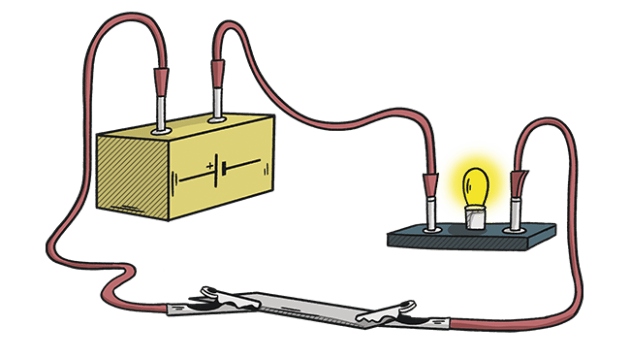
One of the most reliable ways to determine whether an element is a metal or non-metal is to test its electrical conductivity.
Electrical conductivity test
This simple experiment can help identify unknown elements. You need a battery, a light bulb, connecting wires, and a sample of the material to test.
Example
Worked Example: Testing Electrical Conductivity
Testing copper (a metal): When copper is placed in the circuit, the circuit is completed and the bulb lights up. This happens because copper conducts electricity, allowing the electrical current to flow from the battery, through the copper, and to the bulb.
Result: Bulb lights up - copper is a metal
Testing sulfur (a non-metal): When sulfur is placed in the circuit, the bulb does not light. This is because sulfur does not conduct electricity, so the circuit is not completed and current cannot flow to the bulb.
Result: Bulb does not light - sulfur is a non-metal
Important
Exam Tip - Determining Physical State:
When explaining whether a substance is a solid, liquid, or gas at room temperature, you must mention both the melting point and the boiling point.
Room temperature is usually about .
- If the melting point is below and the boiling point is above , the substance will be a liquid at room temperature.
- If the boiling point is below , the substance will be a gas.
- If the melting point is above , the substance will be a solid.
Alloys
An alloy is a mixture of two or more metals, or a metal combined with another element. Alloys are not pure substances; they are mixtures that combine the desirable properties of different metals.
Why make alloys?
Chemists and metallurgists have discovered that mixing metals together often produces materials with improved properties compared to pure metals. Alloys can be stronger, more resistant to corrosion, or have other enhanced characteristics that make them more useful.
Common alloys and their uses
Several important alloys are used in everyday objects and industry:
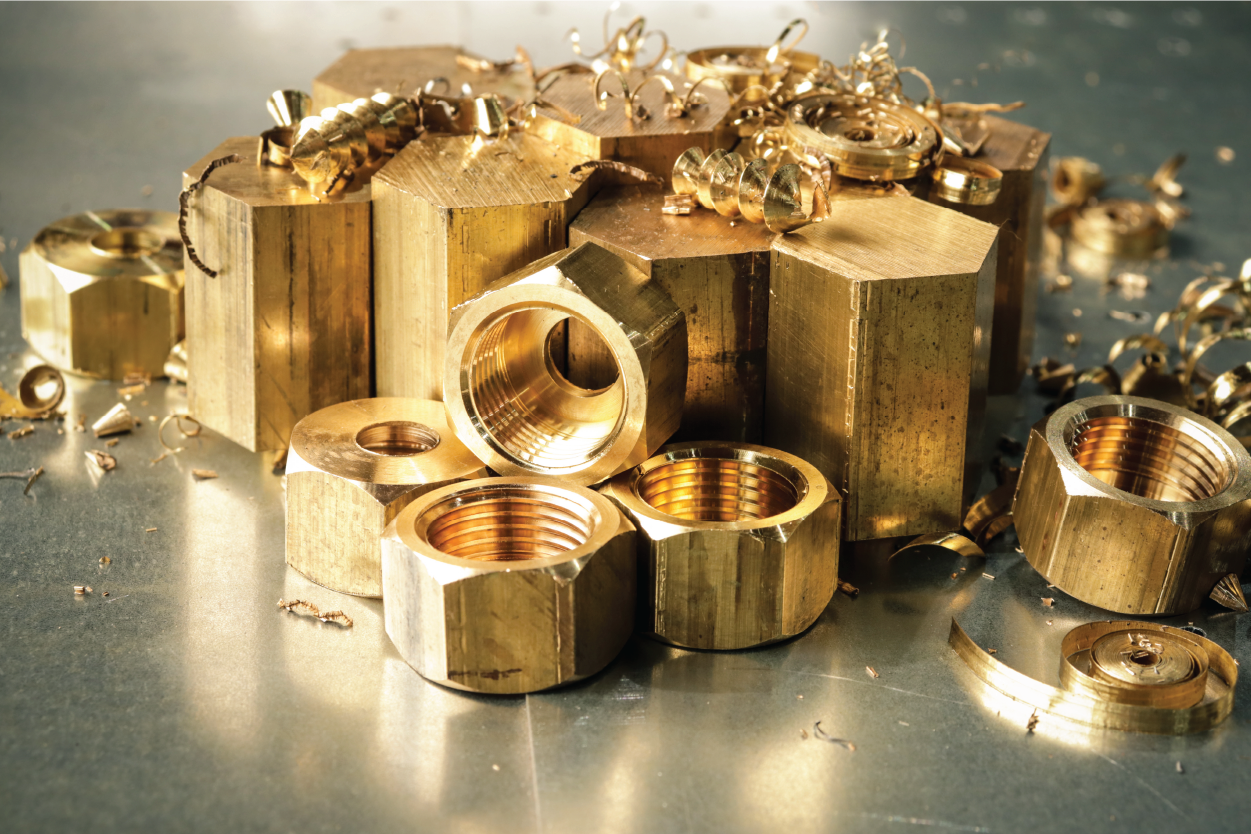
Brass is a mixture of copper and zinc. It has a golden appearance and is used to make musical instruments, decorative items, and door handles. Brass is harder than pure copper but still easy to shape.
Bronze is a mixture of copper and tin. This was one of the first alloys discovered by humans (the Bronze Age is named after it). Bronze is used for making statues and sculptures because it is durable and resistant to weathering. Historically, bronze was used for making tools and weapons.
Steel is a mixture of iron and carbon. It is much stronger than pure iron, making it essential for construction. Steel is used to make buildings, bridges, vehicles, tools, and countless other products. Different types of steel can be made by varying the proportions of iron and carbon or adding other metals.
Solder is a mixture of lead and tin (though modern solders often use other metals to avoid lead). Solder has a low melting point, which makes it ideal for joining metal components together in electrical circuits and plumbing.
Alnico is a mixture of aluminium, nickel, cobalt, and other metals. It is used to make strong permanent magnets for motors, speakers, and scientific instruments.
Advantages of alloys
At one time, coins were made from pure silver and gold. However, these pure metals were too soft and wore away quickly with use. Modern coins are made from alloys because alloys are harder and more durable. This illustrates an important principle: alloys often have superior properties compared to the pure metals they contain.
Note
Why Alloys Are Stronger:
When different metals are mixed to form an alloy, the atoms of different sizes disrupt the regular arrangement of the metal structure. This makes it harder for the layers of atoms to slide over each other, resulting in a stronger, harder material that resists deformation better than pure metals.
Corrosion of metals
One significant problem with metals is that they can corrode, or break down chemically, when exposed to air and moisture. The corrosion of iron and steel is called rusting.
What is rusting?
Rusting is a chemical reaction in which iron reacts with oxygen and water to form a new substance called rust (iron oxide). Rust is the reddish-brown flaky coating that appears on iron and steel objects left outdoors or in damp conditions.
The chemical process can be written as:
Conditions necessary for rusting
For iron to rust, both oxygen and water must be present. If either one is missing, rusting cannot occur. This can be demonstrated through a simple experiment.
Example
Worked Example: Investigating Rusting Conditions
Three steel nails are placed in different conditions to test what causes rusting:
Test tube 1 - Water and air present: A nail is placed in water that is exposed to air. This nail has contact with both oxygen (from the air) and water.
Result: The nail rusts ✓
Test tube 2 - Air only (no water): A nail is placed in a tube containing calcium chloride (a drying agent) with a stopper preventing moisture from entering. This nail is exposed to oxygen but not to water.
Result: The nail does not rust ✗
Test tube 3 - Water only (no oxygen): A nail is placed in boiled water (which has had oxygen removed) with a layer of oil on top to prevent oxygen from the air dissolving in the water. This nail is exposed to water but not to oxygen.
Result: The nail does not rust ✗
Conclusion: Rust forms only when both oxygen and water are present together.
Important
Remember the Rusting Rule:
Rusting requires BOTH oxygen AND water. If you remove either one, rusting cannot occur. This principle is the basis of all rust prevention methods.
Preventing rust
Since rust damages iron and steel objects, making them weak and eventually causing them to crumble away, it is important to protect these metals from corrosion. There are three main methods of rust prevention, all based on the principle of keeping oxygen and water away from the metal surface.
1. Painting
Applying paint creates a protective barrier layer on the metal surface that prevents both oxygen and water from coming into contact with the iron underneath. Cars are painted not just for appearance but also to protect the steel body from rusting. The paint must remain intact; if it chips or scratches, rust can form at the exposed areas.
2. Oiling or greasing
Coating metal with oil or grease provides a protective layer that repels water and blocks oxygen. This method is commonly used for bicycle chains, tools, and machine parts. The oil or grease must be reapplied periodically as it wears away with use.
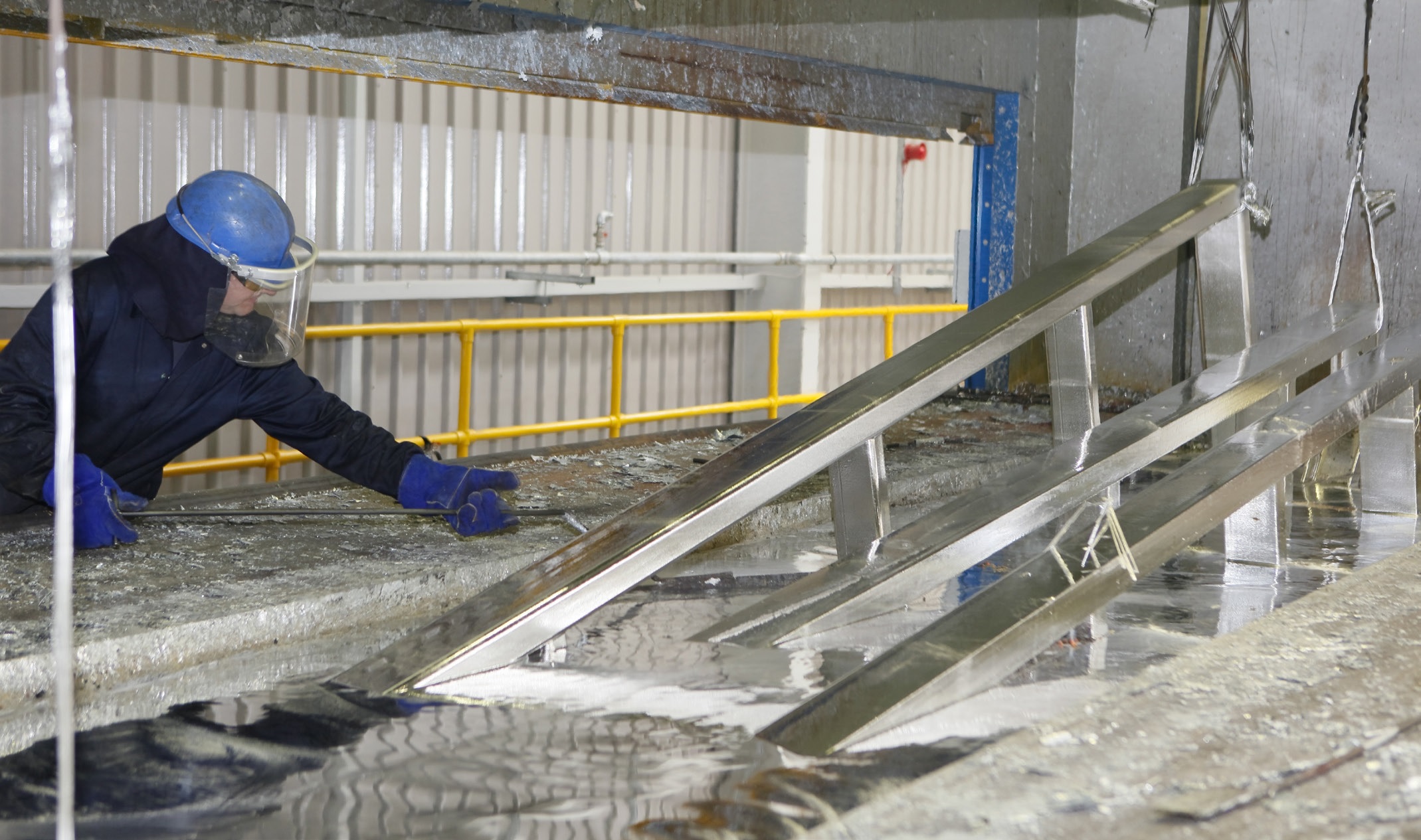
3. Galvanising
Galvanising involves coating iron or steel with a layer of zinc metal. The zinc acts as a sacrificial layer, meaning it corrodes instead of the iron underneath. Galvanised steel is used for outdoor structures like sheds, fencing, water tanks, and roofing because it provides long-lasting protection against rust.
Note
How Galvanising Works:
Galvanising provides a double layer of protection. First, the zinc coating acts as a physical barrier. Second, even if the coating is scratched, the zinc corrodes preferentially (sacrificially) instead of the iron, continuing to protect the underlying metal.
All three methods work by creating a barrier between the metal and the environment, preventing the oxygen and water needed for rusting from reaching the iron surface.
Exam practice
Elements can be classified based on their properties. Consider this data for three unknown elements:
| Element | Melting point (°C) | Boiling point (°C) | Conductor of electricity |
|---|---|---|---|
| Element 1 | 1,538 | 2,682 | Yes |
| Element 2 | 7 | 59 | No |
| Element 3 | -101 | -34 | No |
Example
Worked Example: Classifying Elements
Element 1 is most likely a metal because it conducts electricity. Metals are good conductors of electrical current.
Element 2 is a liquid at room temperature (about ) because its melting point () is below room temperature and its boiling point () is above room temperature. This means at , the substance has melted but not yet boiled, so it exists as a liquid.
Key Point: When answering questions about the state of a substance at a particular temperature, always explain your reasoning using both the melting point and the boiling point.
Remember!
Summary
Key Points to Remember:
- Metals are found on the left and in the centre of the periodic table; non-metals are on the right side.
- Metals are typically solid, shiny, have high melting and boiling points, conduct heat and electricity well, and can be shaped (malleable and ductile).
- Non-metals generally have lower melting and boiling points, do not conduct electricity, are brittle when solid, and have a dull appearance.
- Electrical conductivity is the most reliable test to distinguish metals from non-metals: metals conduct electricity while non-metals do not.
- Alloys are mixtures of metals that often have superior properties to pure metals, such as increased strength and durability.
- Rusting requires both oxygen and water to occur, and can be prevented by creating a barrier through painting, oiling/greasing, or galvanising.