Colours (Junior Cert Spanish): Revision Notes
📚Revision Notes
Colours
Learning colours in Spanish opens up a whole new world of description and self-expression. Colours are essential vocabulary for describing objects, people, preferences, and the world around you. In Spanish, colours follow specific grammar rules that differ from English, so understanding these patterns will help you use them correctly in conversation.
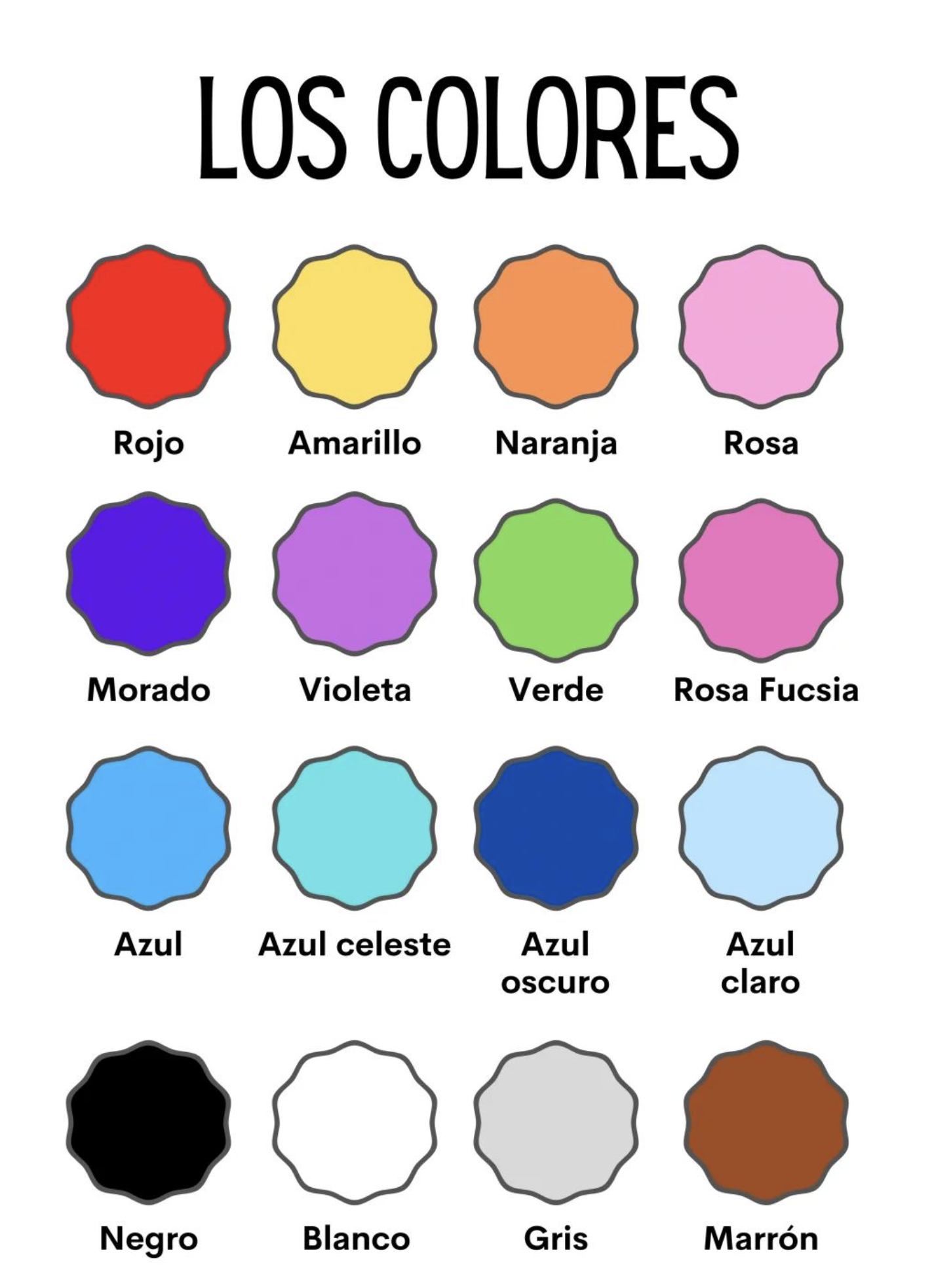
Basic colours vocabulary
| Spanish | English |
|---|---|
| azul | blue |
| café | brown |
| gris | grey |
| negro | black |
| naranja | orange |
| rojo | red |
| blanco | white |
| verde | green |
| amarillo | yellow |
| rosa | pink |
| morado | purple |
Example
Practical Examples: Using Basic Colours
- Mi colour favorito es el azul. (My favourite colour is blue.)
- La casa es blanca y verde. (The house is white and green.)
- ¿Te gusta el rojo? (Do you like red?)
- El coche negro es muy bonito. (The black car is very nice.)
Important
Grammar note: All colour names are masculine nouns when used with articles (el azul, el rosa), even colours that might seem feminine like "rosa" (pink).
Hair and eye colours for describing people
When describing people's physical appearance, you'll need specific colour vocabulary for hair and eyes:
Hair colours
| Spanish | English |
|---|---|
| canoso | grey-haired |
| castaño | chestnut/brown/brunette |
| rubio | blond |
| güero | blond (Mexican slang) |
| negro | black |
| pelirrojo | red-headed |
| rojo | red |
Eye colours
| Spanish | English |
|---|---|
| azules | blue |
| cafés/castaños | brown |
| grices | grey |
| miel/avellana | hazel |
| negros | black |
| verdes | green |
Example
Describing Physical Appearance
- Mi hermana tiene el pelo castaño. (My sister has brown hair.)
- Él tiene los ojos verdes. (He has green eyes.)
- ¿Tienes el pelo rubio? (Do you have blond hair?)
- Sus ojos son azules como el cielo. (Her eyes are blue like the sky.)
Important
Grammar note: When describing hair colour, use "el pelo" (the hair) and match the adjective in singular form. For eyes, use "los ojos" (the eyes) and remember that eye colours must be plural to match.
Grammar rules for colours
Understanding how colours work grammatically in Spanish is crucial for accurate communication:
Placement
Colours typically come after the noun they describe, unlike in English. However, when expressing surprise or emphasis, they can come before the noun.
- El coche rojo (The red car) - normal placement
- ¡Qué rojo coche! (What a red car!) - expressing surprise
Gender agreement
When colours function as adjectives (describing nouns), they must match the gender of the noun they describe. However, when used as nouns themselves, colours are always masculine.
- La camisa roja (The red shirt - feminine)
- El zapato rojo (The red shoe - masculine)
- El rojo es bonito (Red is beautiful - rojo as a noun)
Plural forms
Colours must agree in number with the nouns they describe:
- Las flores rojas (The red flowers)
- Los coches azules (The blue cars)
Important
Important exception: Colours ending in 'e', consonants, or 'a' typically don't change for gender: la camisa verde, el coche verde.
Describing colour intensity and shades
To make your descriptions more precise, you can use descriptive words with colours:
| Spanish | English |
|---|---|
| bajito | soft |
| brillante | shining |
| cielo | sky/baby (only used with azul) |
| claro | light/pale |
| fuerte | intense/dark |
| oscuro | dark |
| pálido | pale/light |
| pastel | pastel |
Example
Adding Intensity and Shade Descriptions
- Tu bolsa es café oscuro. (Your bag is dark brown.)
- El cuarto de mi hermano es azul cielo. (My brother's room is sky blue.)
- Me gusta el verde claro. (I like light green.)
- Lleva una camisa rosa pálido. (She's wearing a pale pink shirt.)
Note
Grammar note: When using descriptive words with colours, the colour name stays singular even when describing plural objects.
Expressing preferences with colours
Learning to express what colours you like or dislike is important for personal communication:
Phrase bank:
- Me gusta el... (I like...)
- No me gusta el... (I don't like...)
- Mi colour favorito es... (My favourite colour is...)
- Mis colores favoritos son... (My favourite colours are...)
- Prefiero el... al... (I prefer... to...)
Example
Expressing Colour Preferences
- A mí no me gusta el amarillo. (I don't like yellow.)
- El rosa y el azul son mis colores favoritos. (Pink and blue are my favourite colours.)
- Prefiero el verde al rojo. (I prefer green to red.)
Translation practice
Spanish to English:
- Mi camisa es blanca y mis zapatos son negros.
- El rosa no es mi colour favorito.
English to Spanish: 3. That notebook is blue. 4. His shirt is blue with pink stripes.
Common errors and fixes
Important
Common Mistakes to Avoid:
- ❌ La casa roja → ✅ La casa roja (colour after noun)
- ❌ Los ojos azul → ✅ Los ojos azules (plural agreement)
- ❌ Una rosa camisa → ✅ Una camisa rosa (adjective placement)
- ❌ El verde oscuros → ✅ El verde oscuro (colour stays singular with descriptive words)
Cultural spotlight
Note
In Spanish-speaking countries, certain colours carry cultural significance. For example, bright colours are often celebrated in festivals and traditional clothing. The colour combinations you'll see in Mexican, Colombian, or Spanish art reflect cultural preferences that differ from other countries.
Summary
Key Points to Remember:
- Colours usually come after the noun they describe
- When describing objects, colours must match the gender and number of the noun
- Use specific vocabulary for hair colours (castaño, rubio) and eye colours (verdes, azules)
- Add descriptive words like claro, oscuro, brillante to be more precise
- Practice expressing your colour preferences using "me gusta" and "no me gusta"
Translation answers:
- My shirt is white and my shoes are black.
- Pink is not my favourite colour.
- Ese cuaderno es azul.
- Su camisa es azul con rayas rosas.