Circuits (Junior Cert Wood Technology): Revision Notes
📚Revision Notes
Electric Circuits in Wood Technology
Electric circuits are crucial for adding electronic features to wooden products in wood technology. They allow for creative uses such as incorporating lights and basic electronics into wooden items.
Definitions
- Circuit: A pathway for electric current to flow, essential for powering electronic parts and creating a closed loop.
- Loop: In a circuit, a loop is necessary as it enables the current to return to the power source.
- Voltage: The electric force that drives current flow; it's what makes electrons move in circuits.
- Current: The flow of electrons in a circuit, enabling its parts to work.
- Power Source: Usually a battery that provides energy to push electrons through the circuit.
- Switch: A device that controls the flow of current by opening or closing the circuit loop.
Basic Concepts of Electric Circuits
Electric circuits are formed by closed loops made with conductive wires and powered by sources like batteries. Complete loops allow electrons to flow, activating circuit components.
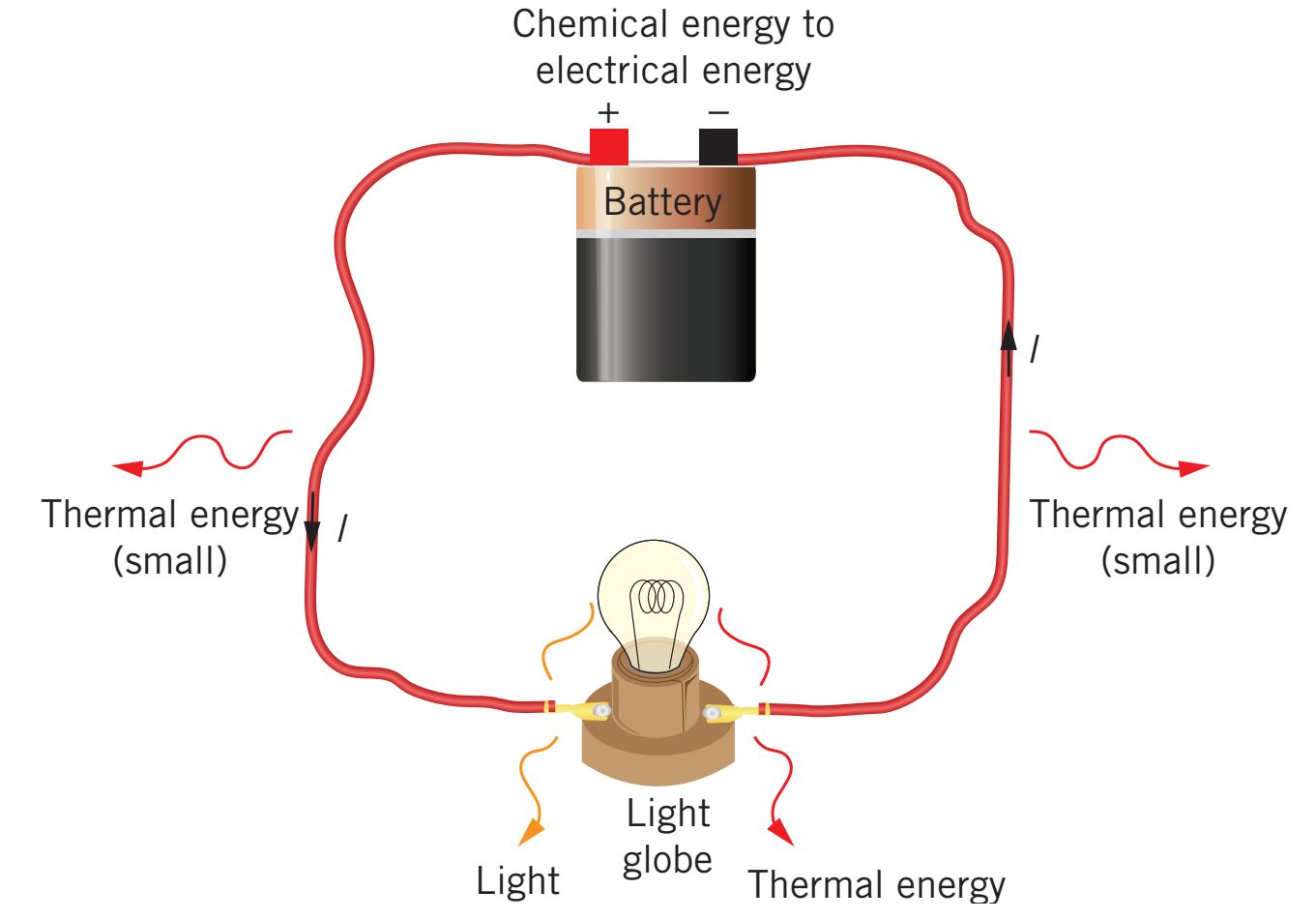
Look at the Simple Circuit Diagram of a battery and a light bulb. Electrons flow from the battery's negative end to the bulb and back to the positive end, lighting up the bulb when the circuit is closed.
Note
In woodworking, basic setups might include embedding lights into wooden objects using simple circuits to add function.
Components Involved
Simple circuits in wood technology involve these key parts:
- Wires: Paths that allow electrons to flow, keeping the loop intact.
- Switches: Control points that open or close the circuit, often used to control lights.
- Power Sources: Generally batteries that provide energy to keep the circuit working.
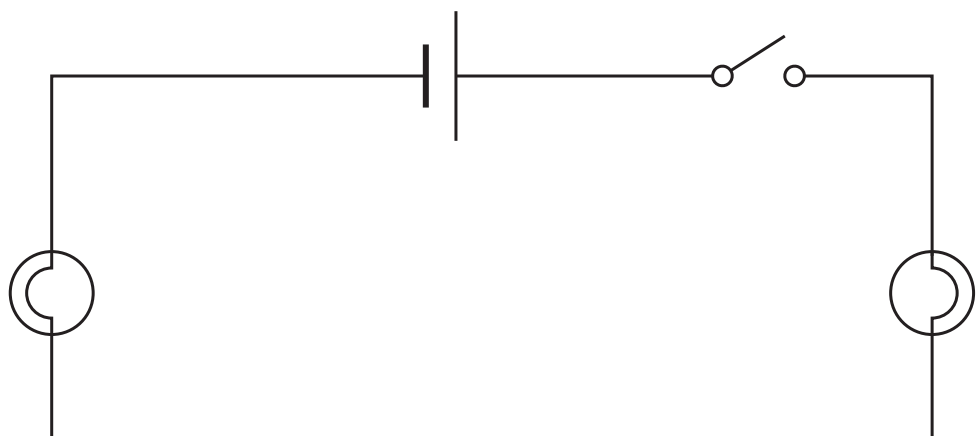
The diagram below shows how these parts work together: a battery, a switch, and light bulbs.
Summary
Note
Electric circuits are key to adding electronic features in wood technology. A closed loop is vital for circuits to function, with important components like wires, switches, and power sources enabling their operation. Understanding these basics is crucial for applying simple circuits in these products.