Hinges (Junior Cert Wood Technology): Revision Notes
📚Revision Notes
Hinges
Note
Hinges are essential in woodworking and furniture-making, allowing doors and lids to rotate securely while maintaining the structure's strength.
Definitions
- Hinges: Mechanical devices in woodworking and furniture that enable doors and lids to rotate without compromising structural integrity.
Types of Hinges
Hinges serve various functions based on their designs:
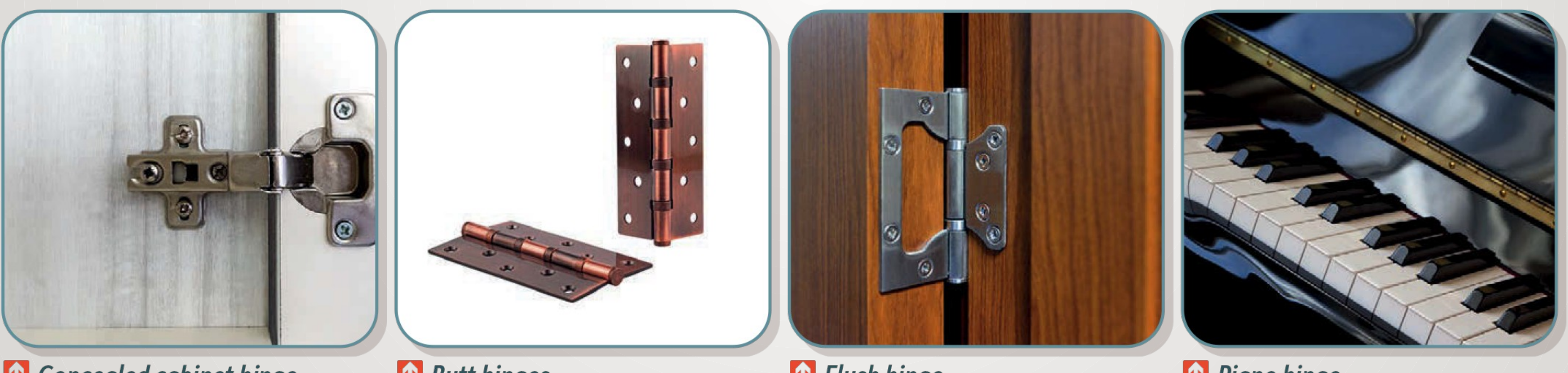
- Butt Hinges:
- Primarily used in doors.
- Made of steel or brass, ranging from 13mm to 150mm.
- Two-leaf design, recessed for a flush finish.
- Piano Hinges:
- Also known as continuous hinges.
- Used for long panels like piano lids.
- Lengths available at 1830mm and 2440mm.
- Distribute weight evenly.
- Concealed Hinges:
- Common in cabinets for a clean look.
- Hidden when doors are closed.
- Precision required for hinge cup placement.
Diagram:
Factors Affecting Hinge Selection
Consider these factors when selecting a hinge:
- Weight Capacity: Must support the load of the door or lid.
- Alignment: Essential for smooth operation.
- Movement Type: Hinge choice varies with door movement direction.
- Environmental Factors: Consider moisture and durability.
Installing a Basic Hinge
Step-by-step process to install a butt hinge:
- Tools Required: Screws, screwdriver, tape measure, drill.
- Marking Positions:Diagram:
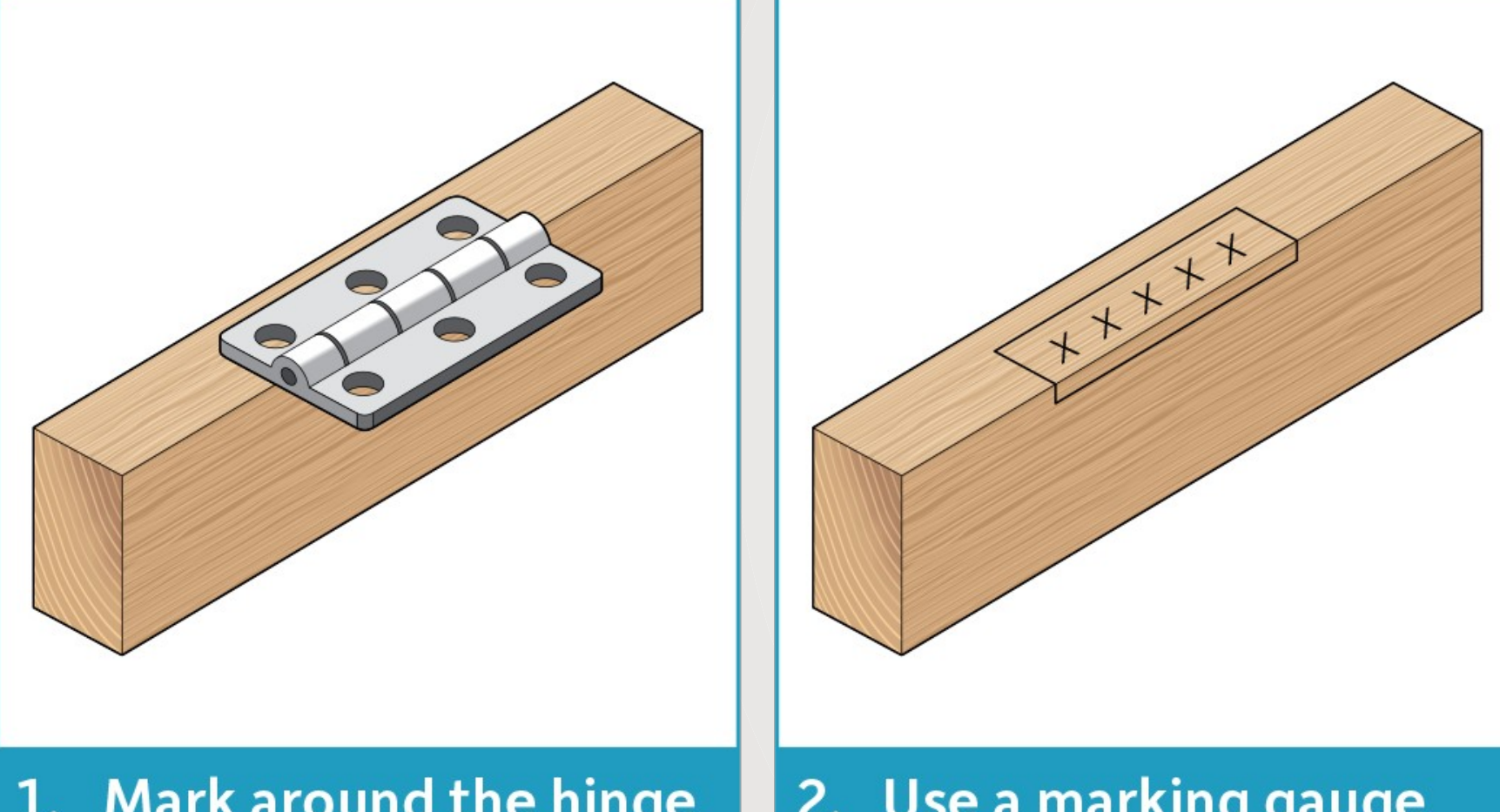
- Use a tool to mark hinge outlines.
- Precision in marking is crucial.
- Pre-drill Holes: Avoids wood splitting.
- Secure the Hinge: Attach firmly with screws.
- Final Alignment Check: Confirm smooth operation.
Maintaining Hinges
Ensure optimal function by:
- Regular Inspection: Every 3-6 months.
- Lubrication: Use appropriate metal oils.
- Adjust Misalignment: Correct during inspections.
Summary
Note
- Hinges enable movement, ensuring structural stability.
- Types include butt, piano, and concealed hinges.
- Important factors include weight, alignment, and motion type.
- Correct installation and maintenance ensure durability.