Hammers and Mallets (Junior Cert Wood Technology): Revision Notes
📚Revision Notes
Hammers and Mallets
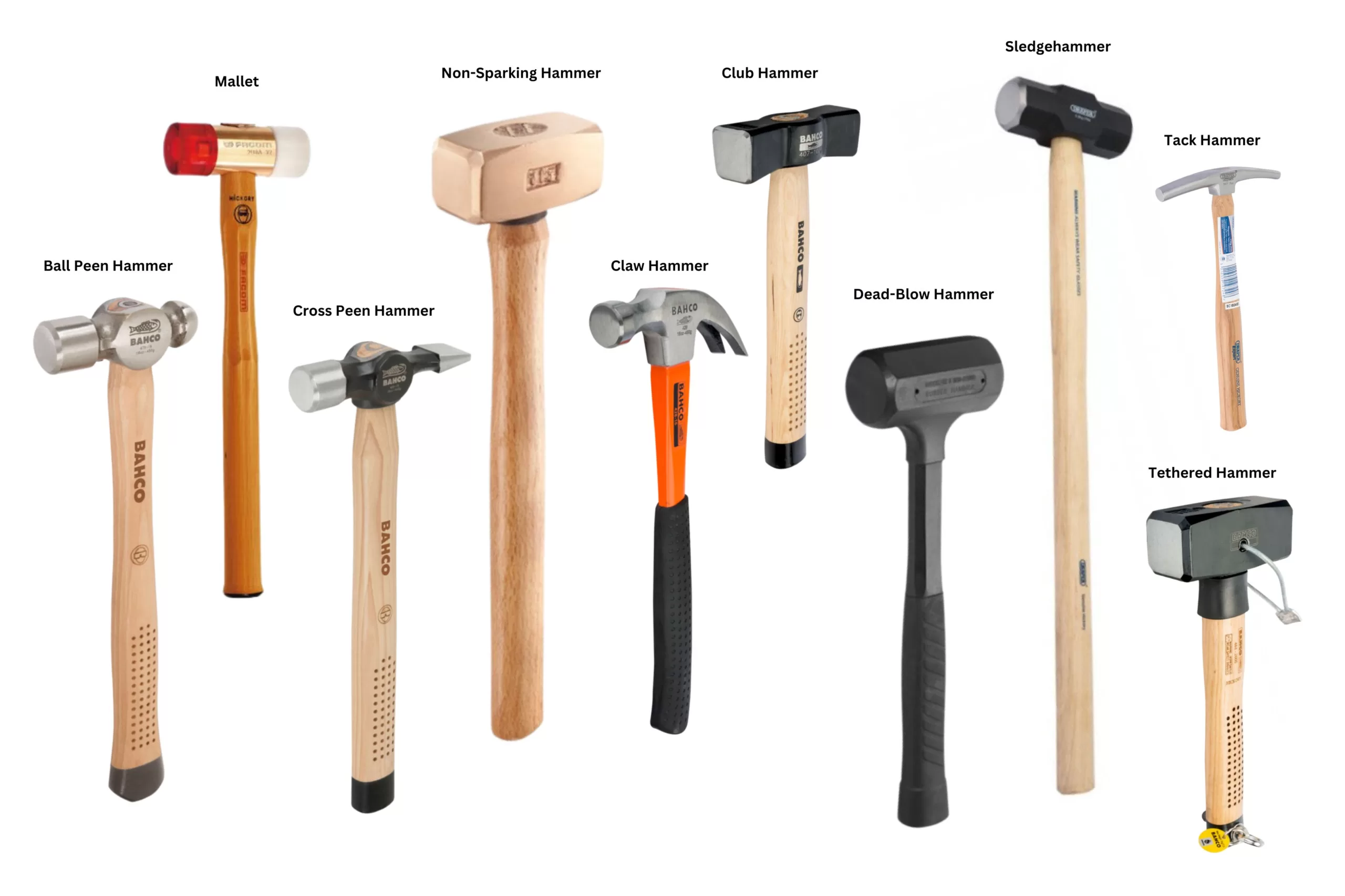
Overview
- Hammers and mallets are essential tools in woodworking.
- They are used for building, taking apart, and shaping workpieces.
Definitions
- Hammer: A tool with a heavy metal head on a handle, mainly for hitting nails or breaking objects.
- Mallet: A type of hammer with a large, softer head made from materials like wood, rubber, or rawhide. It is usually used to hit chisel handles and put joints together without damage.
- Wooden Mallet: Made from hardwood like beech, with a tapered handle for a secure hold, it is used in woodworking for tasks like mortising and chiselling.
Differences Between Hammers and Mallets
- Structural Differences:
- Hammers have metal heads designed for impact.
- Mallets have softer heads to prevent marking surfaces.
- Materials:
- Hammers are made from hard metals.
- Mallets have heads made from wood, rubber, or plastic.
- Weight:
- Hammers: Heavier, meant for tasks needing more force.
- Mallets: Lighter, for controlled, gentle force.
- Applications:
- Hammers: For driving nails and breaking objects.
- Mallets: For precise work like chiselling and fitting wood joints.
- Example Scenarios:
- Hammer: Used to drive nails into a frame.
- Wooden Mallet: Used for tapping joints and chiselling.
Note
Key Insight: Understanding the differences can help in selecting the right tool for essential tasks like woodworking or metalworking.
Functions and Types of Hammers and Mallets
- Hammers
- Claw Hammer: Used for driving and removing nails in carpentry.
- Ball-peen Hammer: Mainly for metalworking tasks.
- Mallets
- Wooden Mallet: Best for precision in woodworking; avoids surface damage.
- Rubber Mallet: Suitable for lighter tasks; delivers non-marring impacts.
- Specialised Use of Wooden Mallets:
- Perfect for mortising, chiselling, and ensuring accurate woodworking joints.
Mallet Construction
- Materials: Typically made of kiln-dried solid beech.
- Manufacturing Techniques:
- Kiln-drying greatly boosts durability by reducing moisture, stopping cracks.
- The handle is tapered for a snug fit, preventing it from coming off.
Safety and Best Practices
- Safety Gear: Always wear gloves and goggles.
- Inspection: Regularly check for cracks and splinters.
- Handling: Use a proper grip and stance.
- Tool Selection: Choose the appropriate tool—hammers for metalwork and mallets for woodworking—to avoid misuse or damage.
Important
Critical Reminder: Choosing the wrong tool can result in damage or injury. Always ensure the tool matches the task.
Summary
Note
- Differences: Hammers are for hard hits; mallets for softer, controlled hits.
- Functions and Types: Different forms fit various woodworking tasks.
- Construction: Wooden mallets are built for durability.
- Safety Practices: Proper use and regular inspection ensure effective and safe woodworking.