Frida Kahlo (Leaving Cert Art): Revision Notes
📚Revision Notes
Frida Kahlo
Introduction
Frida Kahlo stands as one of the most recognisable and influential artists of the 20th century. This Mexican painter created deeply personal works that explored themes of pain, identity, and cultural heritage through powerful symbolic imagery. Her art provides a window into her tumultuous life experiences and has left a lasting impact on the art world.
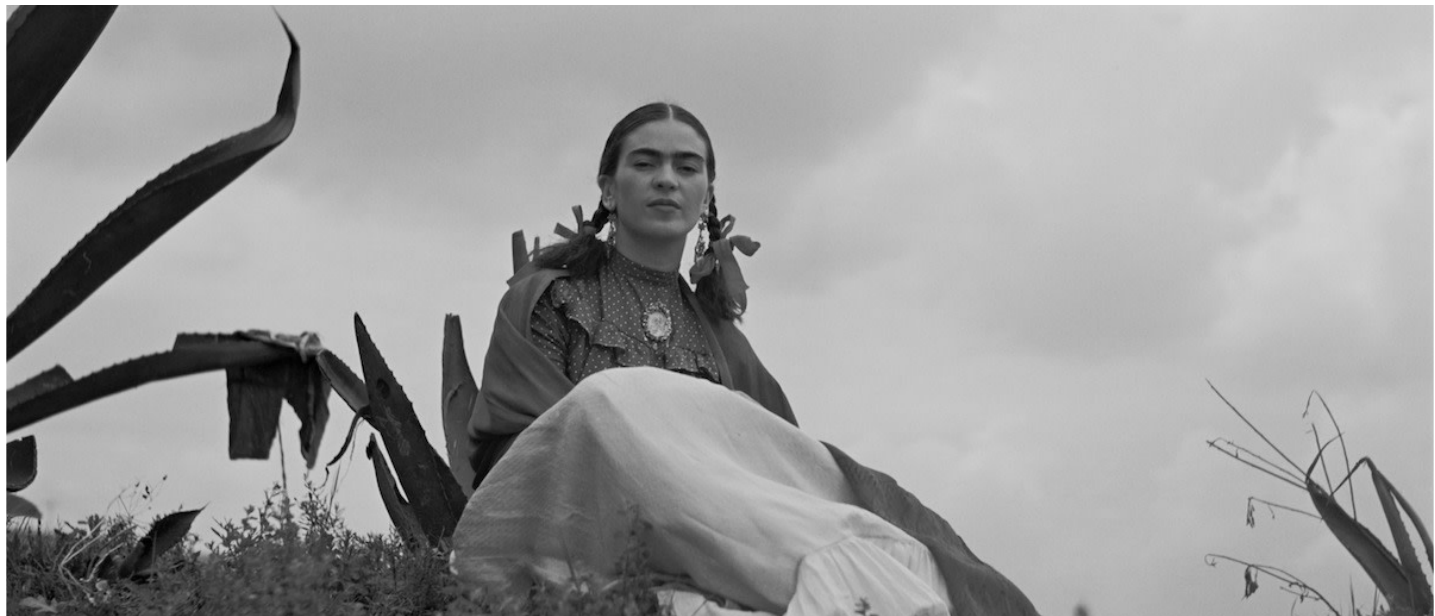
Note
Kahlo's unique artistic style emerged from her personal experiences of physical and emotional pain, making her work both deeply personal and universally relatable. Her paintings serve as visual autobiographies that continue to resonate with audiences today.
Who was Frida Kahlo?
Frida Kahlo (born Magdalena Carmen Frida Kahlo y Calderón) was a Mexican artist who drew heavily from her cultural background to create introspective self-portraits and surrealist works. Her life was marked by physical suffering and emotional turmoil, which became central themes in her artistic expression.
Kahlo lived a challenging life, enduring chronic pain from childhood polio and a severe bus accident in her youth. Her personal relationships were equally complex, particularly her marriage to famous muralist Diego Rivera, which was characterised by mutual infidelity and passionate reconciliations. Despite these struggles, Kahlo achieved artistic success and created a lasting legacy that continues to influence artists today.
Her family home in Coyoacán, known as La Casa Azul (the Blue House), later became the Frida Kahlo Museum, preserving her memory and artistic contributions for future generations.
The life of Frida Kahlo
Early life and formative experiences
Born in July 1907 outside Mexico City, Kahlo grew up in a multicultural household. Her father, Guillermo Kahlo, was a German immigrant and photographer, while her mother, Matilde Calderón y González, had mixed Mexican and Spanish heritage. This diverse background would later influence her artistic identity.
As a child, Kahlo contracted polio, which left her with lasting physical effects. During her youth, she received art instruction from her father's friend, providing her first exposure to artistic techniques and creative expression.
The life-changing accident
Important
At age 18 in 1925, Kahlo suffered a devastating bus accident that fundamentally altered her life's trajectory. The crash left her with an impaled pelvis, damaged spine, and multiple broken bones. This traumatic event resulted in chronic pain and infertility that would affect her for the remainder of her life.
During her lengthy recovery, Kahlo began painting seriously, often while bedridden and wearing supportive corsets. She decorated these medical devices by hand, transforming symbols of her suffering into artistic expressions. Her isolation during recovery led her to develop painting as both a coping mechanism and artistic pursuit.
Marriage, politics, and artistic development
In 1927, Kahlo joined the Mexican Communist Party, having been politically active since her teens. Two years later, she married Diego Rivera, a celebrated Mexican muralist who was 20 years her senior. Their relationship was complex and stormy, marked by Rivera's numerous affairs and Kahlo's own extramarital relationships.
The marriage influenced Kahlo's artistic development as she became more connected to Mexican cultural nationalism. She began incorporating indigenous Mexican elements into her work, often wearing traditional clothing to emphasise her anti-colonialist political views.
Professional recognition and health struggles
Although often overshadowed by her husband's fame, Kahlo gradually gained recognition as an artist in her own right. In 1938, art dealer Julien Levy organised her first solo exhibition in Manhattan, attended by notable figures including Georgia O'Keeffe and Clare Boothe Luce.
Despite achieving some success, Kahlo's health continued to deteriorate. She underwent numerous surgeries, including an unsuccessful bone graft, and suffered from various infections. Eventually, gangrene led to the amputation of her right leg, further limiting her mobility and independence.
Final years and death
Important
Kahlo's final years were marked by continued political activism alongside Rivera. In 1954, she participated in a demonstration against CIA involvement in Guatemala, despite her deteriorating health. She died shortly afterwards at age 47, with the official cause listed as pulmonary embolism.
Four characteristics of Frida Kahlo's paintings
1. Surrealism
Although surrealist leader André Breton described Kahlo's work as surrealist, comparing it to "a ribbon around a bomb," Kahlo herself rejected this classification. She insisted that she painted her own reality rather than dreams or subconscious imagery. Her works often contained dreamlike or fantastical elements, but these emerged from her personal experiences rather than surrealist ideology.
2. Symbolism
Kahlo frequently employed symbolic imagery, particularly animals such as monkeys and parrots, which appeared throughout her work. These creatures often represented various aspects of her emotional state, relationships, or Mexican cultural identity. Her symbolic vocabulary was deeply personal yet accessible to viewers.
3. Political expression
Kahlo's political beliefs strongly influenced her artistic choices. She incorporated Mexican cultural artefacts, indigenous imagery, and nationalist symbols into her paintings as statements of independence and anti-colonial sentiment. Her work celebrated Mexican identity and challenged European artistic dominance.
4. Personal narrative
Most notably, Kahlo used her art to process and express her personal experiences of pain, relationships, and identity. Her paintings served as visual diaries, documenting her physical and emotional struggles while asserting her strength and resilience in the face of adversity.
Frida Kahlo's most famous paintings
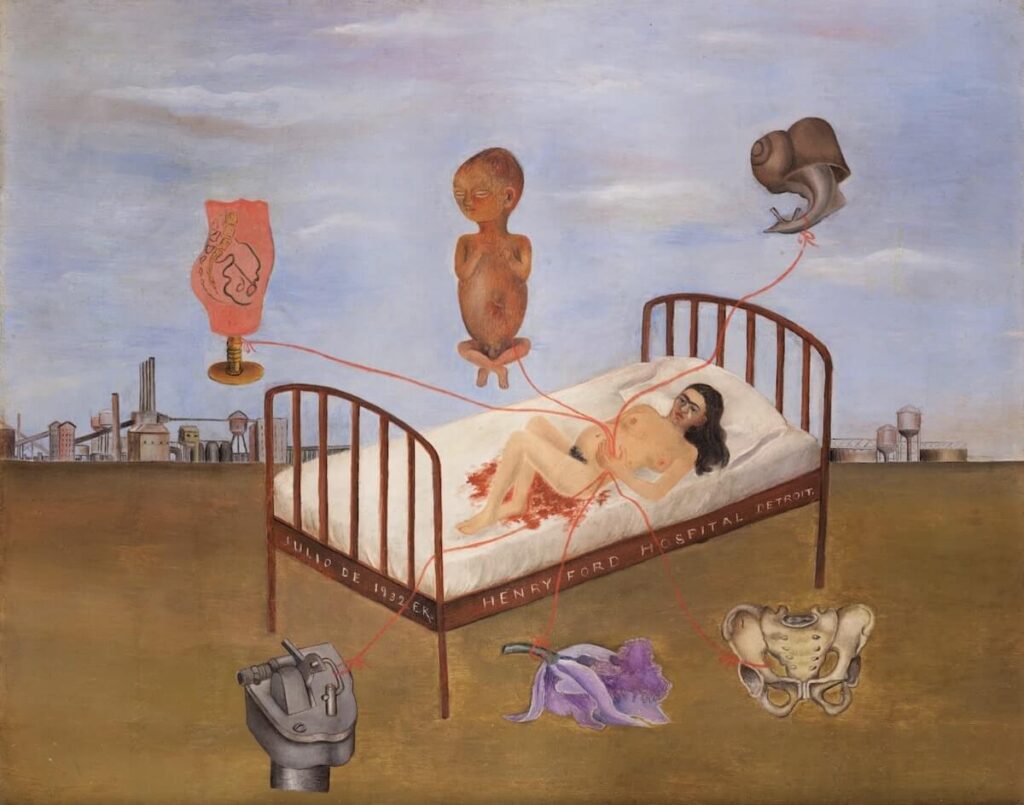
1. Henry Ford Hospital (1932)
Example
Detailed Analysis: Henry Ford Hospital
This powerful work depicts Kahlo lying in a hospital bed with her heart exposed, connected by red ribbons to six symbolic objects including a foetus and a snail.
Symbolic Elements:
- Red ribbons: Represent blood and life connections
- Foetus: Symbolises her lost pregnancy and fertility struggles
- Snail: Represents the slowness of her recovery
- Hospital bed: Shows her vulnerability and isolation
Art historians interpret this painting as Kahlo's response to experiencing miscarriage and infertility, transforming personal trauma into artistic expression.
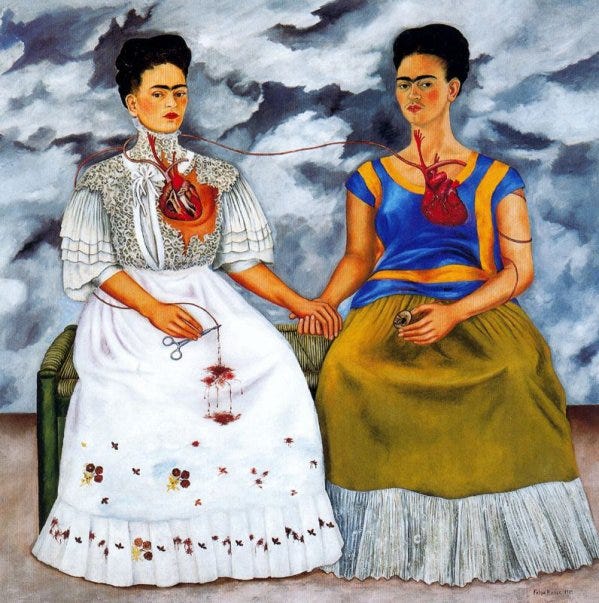
2. The Two Fridas (1939)
Example
Detailed Analysis: The Two Fridas
This double self-portrait shows two versions of the artist: one wearing European-style dress with an exposed heart, and another in traditional Mexican clothing with an intact heart positioned over her chest.
Symbolic Interpretation:
- European Frida: Represents the rejected self after separation from Diego
- Mexican Frida: Symbolises her cultural identity and strength
- Exposed vs. intact hearts: Show emotional vulnerability versus resilience
Scholars view this work as reflecting Kahlo's emotional state following her separation from Diego Rivera, representing her divided identity and feelings of loss.
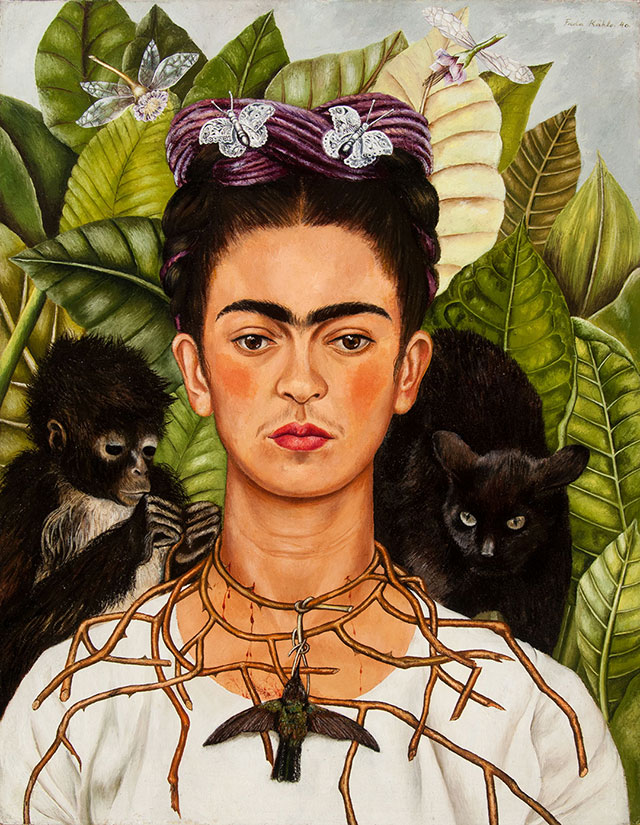
3. Self-Portrait with Thorn Necklace and Hummingbird (1940)
Example
Detailed Analysis: Self-Portrait with Thorn Necklace and Hummingbird
One of Kahlo's most recognised works, this painting features the artist wearing a necklace of thorns with a dead hummingbird pendant, accompanied by a monkey and black cat.
Key Elements:
- Thorn necklace: Pierces her neck, symbolising emotional pain
- Dead hummingbird: Represents lost love and hope
- Stoic expression: Demonstrates her ability to endure suffering
- Animal companions: Provide symbolic support and companionship
This piece reflects her emotional state after divorcing Rivera, with the thorns symbolising pain while her composed demeanour demonstrates her resilience.
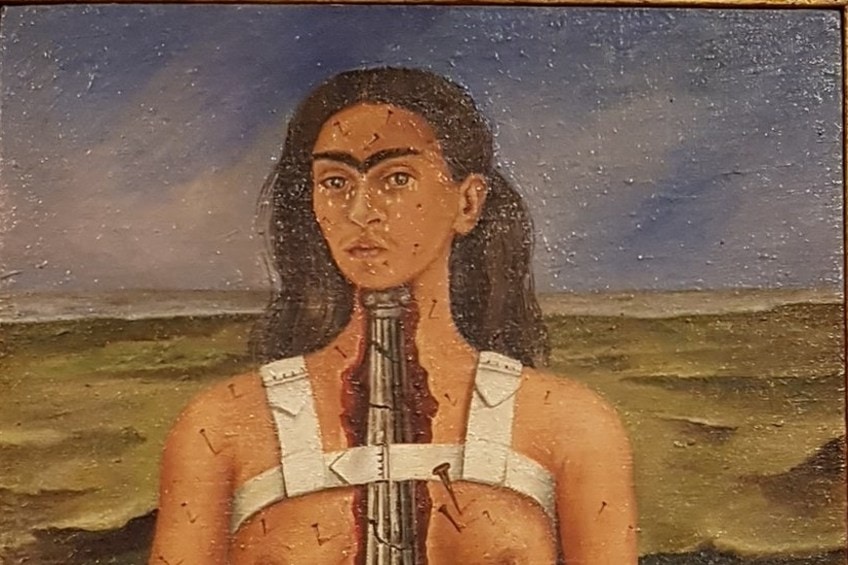
4. The Broken Column (1944)
Example
Detailed Analysis: The Broken Column
Created after spinal surgery, this oil painting shows Kahlo standing in a barren landscape with her body split open to reveal a cracked Ionic column replacing her spine.
Symbolic Components:
- Broken column: Represents her damaged spine and physical foundation
- Metal corset: Shows the medical supports holding her together
- Nails throughout her body: Symbolise points of pain and suffering
- Barren landscape: Reflects her emotional desolation
- Tears: Express her grief while her face remains dignified
This work powerfully represents her feelings about her damaged body after years of pain stemming from childhood polio and the bus accident.
Influence on contemporary art
Frida Kahlo significantly impacted art and culture by bringing Latin-American perspectives into international art discourse and presenting unflinching depictions of female experience. Her influence extends to contemporary artists worldwide, including Julio Salgado, a Mexican-born gay rights activist, and Brazilian photographer Camile Fontenele de Miranda, who drew particular inspiration from "The Broken Column."
Note
Kahlo's work paved the way for future artists to explore personal trauma, cultural identity, and political activism through their art. Her honest approach to depicting pain and resilience continues to inspire artists across different mediums and cultures.
Kahlo's legacy demonstrates how personal struggle can be transformed into universal artistic expression, inspiring artists to explore themes of identity, pain, and resilience in their own work.
Remember!
Summary
Key Points to Remember:
-
Personal as political: Kahlo transformed her individual experiences of pain, identity, and relationships into powerful artistic statements that resonated universally
-
Cultural identity: Her work celebrated Mexican indigenous culture and challenged European artistic dominance through symbolic imagery and nationalist themes
-
Artistic innovation: Despite rejecting the surrealist label, Kahlo created a unique visual language that combined realistic techniques with symbolic and fantastical elements
-
Resilience through art: Her painting practice served as both coping mechanism and creative expression, demonstrating art's therapeutic and communicative power
-
Lasting influence: Kahlo's honest exploration of female experience and cultural identity continues to inspire contemporary artists and activists worldwide