Gustav Klimt (Leaving Cert Art): Revision Notes
📚Revision Notes
Gustav Klimt
Gustav Klimt (1862-1918) was an Austrian symbolist painter and one of the most important figures in the Art Nouveau movement. He co-founded the Vienna Secession and became famous worldwide for his decorative portraits and landscapes that combined realistic figures with elaborate golden patterns.
Early life and education
Gustav Klimt was born on 14 July 1862 in Baumgarten, near Vienna, into a poor family. His father was a gold engraver, which may have influenced Klimt's later fascination with gold in his paintings. The family struggled financially and moved house frequently during Klimt's childhood.
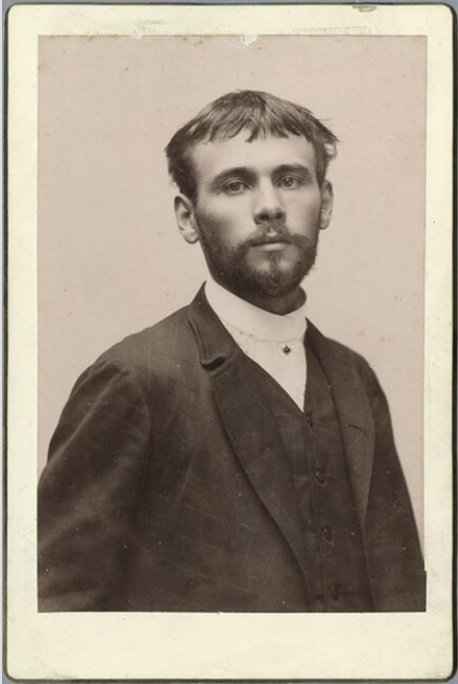
At age fourteen, Klimt showed remarkable artistic talent and was accepted into the prestigious Vienna School of Applied Arts. He studied there from 1876 to 1883, learning architectural painting and decoration. During this period, he developed strong technical skills in traditional academic art methods.
Note
Klimt's training in architectural decoration was considered highly respectable work for artists during this era, as it provided steady income and social status. This practical foundation would later prove invaluable when he developed his signature decorative style.
Klimt's education focused on creating decorative artwork for buildings, which was considered respectable and commercially viable work for artists at the time. This training in architectural decoration would prove crucial to his later development as an artist.
The "company of artists" period
In 1877, while still a student, Klimt formed a business partnership with his brother Ernst and their friend Franz von Matsch. They called themselves the "Künstlercompagnie" (Company of Artists) and worked together on decorative projects for public buildings.
The group gained recognition for their traditional, academic style of painting. They received important commissions including work on the Burgtheater in Vienna and various municipal buildings. This period established Klimt's reputation as a skilled decorator and brought him financial success.
Important
The death of Klimt's brother Ernst in 1892 marked a crucial turning point in Gustav's artistic development. This personal tragedy led him to abandon conventional academic art and begin experimenting with the revolutionary style that would define his legacy.
However, the partnership dissolved after Ernst's death in 1892, which deeply affected Gustav. This personal loss marked the beginning of a significant change in his artistic direction, moving away from conventional academic art towards a more personal and experimental style.
The Vienna Secession movement
In 1897, Klimt became a founding member and first president of the Vienna Secession, a revolutionary art movement that rejected the conservative Vienna Academy of Fine Arts. The Secession's motto was "Der Zeit ihre Kunst, der Kunst ihre Freiheit" (To every age its art, to every art its freedom).
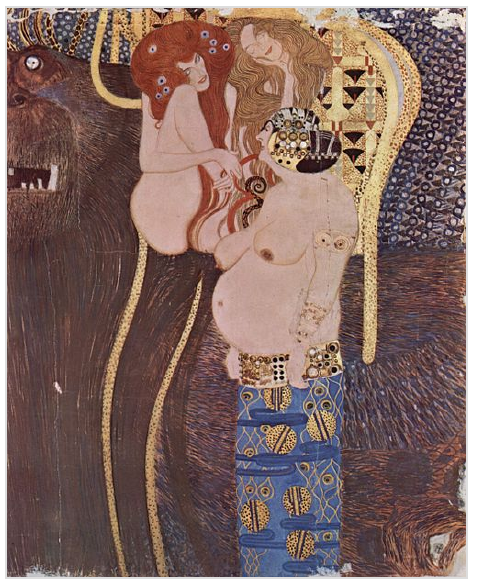
The movement aimed to bring modern international art to Vienna and provide exhibition opportunities for avant-garde artists. Klimt designed several posters for Secession exhibitions and created controversial works that challenged traditional artistic and social conventions.
Example
Analyzing "Nuda Veritas" (1899)
This provocative work demonstrates Klimt's revolutionary approach:
- Subject: Nude red-haired woman holding a mirror
- Symbolism: The mirror represents artistic truth confronting society
- Impact: Shocked conservative Viennese audiences
- Significance: Showed Klimt's willingness to challenge social taboos through art
One of his most provocative works from this period was "Nuda Veritas" (1899), featuring a nude red-haired woman holding a mirror - a symbol of artistic truth that shocked conservative Viennese society. This painting demonstrated Klimt's willingness to confront social taboos through his art.
Golden period and masterworks
From 1900 onwards, Klimt entered his most celebrated phase, known as the "Golden Period". During this time, he created his most famous paintings using extensive gold leaf, inspired by Byzantine mosaics he had seen during travels to Italy.
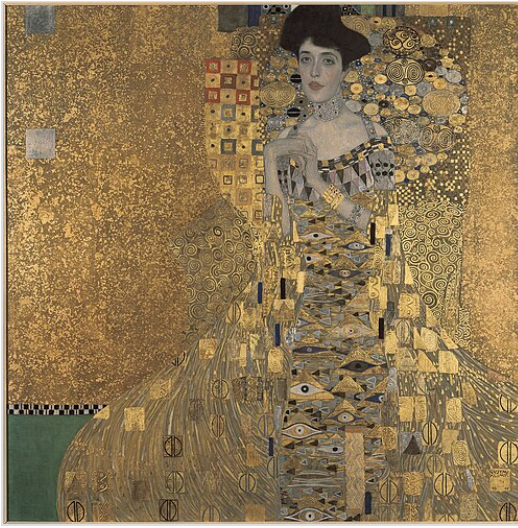
Portrait of Adele Bloch-Bauer I (1903-1907)
This portrait exemplifies Klimt's golden period style. The wealthy Viennese socialite is depicted wearing an elaborate golden dress that merges with the decorative background. The painting demonstrates Klimt's skill in combining realistic portraiture with abstract decorative patterns, creating a sumptuous, jewel-like effect.
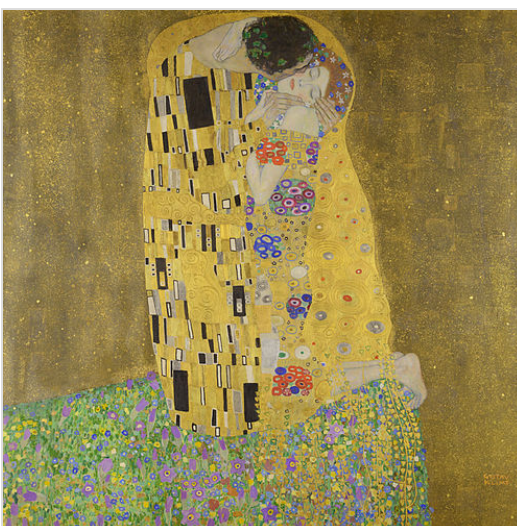
The Kiss (1907-1908)
Perhaps Klimt's most famous work, "The Kiss" shows two lovers embracing on a flowery meadow. The couple is clothed in richly patterned robes - the man's featuring rectangular motifs and the woman's circular patterns. The extensive use of gold leaf creates a luminous, dreamlike quality that has made this one of the most recognisable paintings in art history.
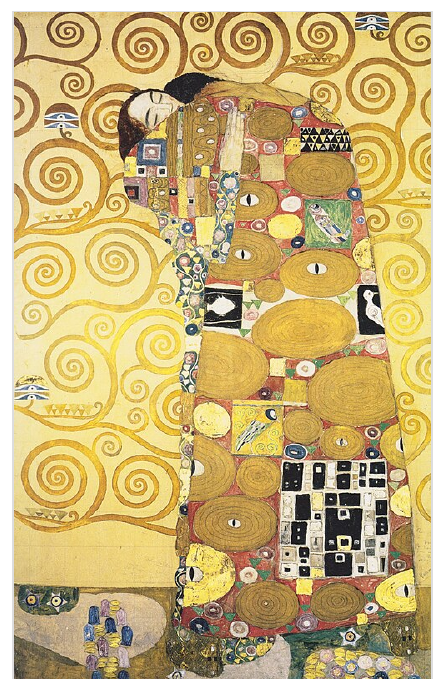
Danaë (1907-1908)
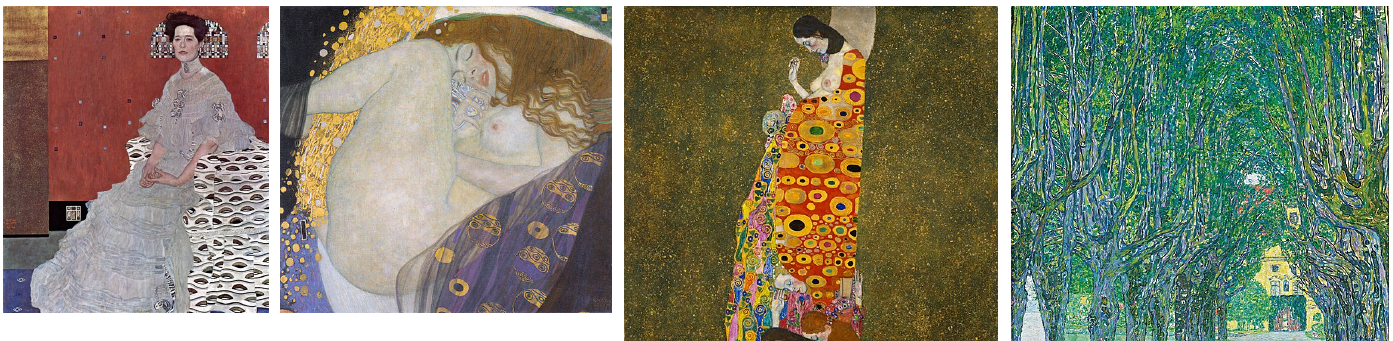
This painting depicts the mythological figure Danaë receiving Zeus in the form of golden rain. Klimt presents the subject in a sensual, intimate pose surrounded by his signature decorative patterns and gold ornamentation. The work demonstrates his ability to combine classical mythology with contemporary Art Nouveau aesthetics.
Artistic characteristics and techniques
Decorative style
Klimt's mature style is characterised by flat, decorative surfaces that reject traditional perspective and three-dimensional modelling. He often filled backgrounds with intricate patterns, spirals, and geometric motifs that create a tapestry-like effect.
Gold leaf application
His most distinctive technique involved applying real gold leaf to canvas, creating luminous surfaces that catch and reflect light. This technique was inspired by Byzantine religious art and Japanese decorative screens, giving his paintings an otherworldly, precious quality.
Note
The gold leaf technique required extraordinary skill and patience. Klimt would apply thin sheets of actual gold over painted surfaces, then burnish them to create different textures and effects. This expensive process contributed to the high value and distinctive appearance of his works.
Symbolism and subject matter
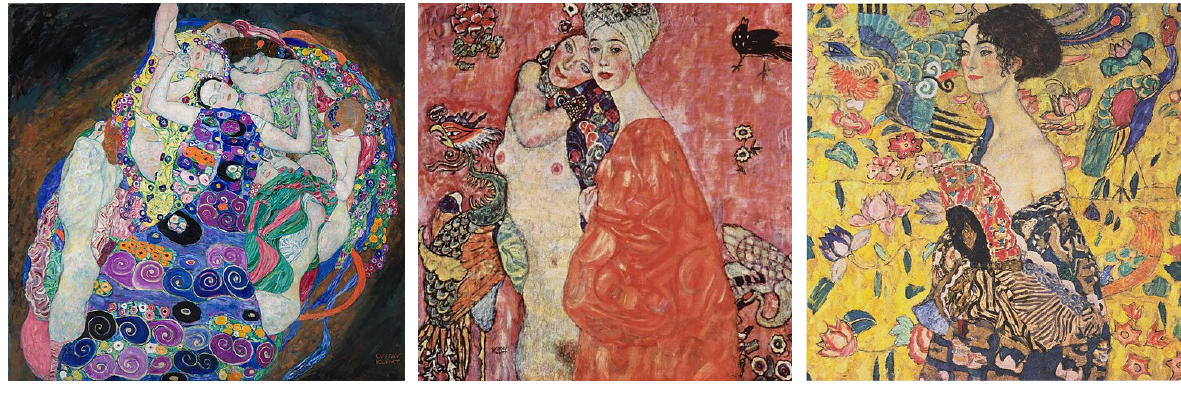
Klimt frequently painted portraits of wealthy Viennese women, often depicting them as powerful, mysterious figures. He also created allegorical works exploring themes of love, death, and sexuality. His paintings often contain symbolic elements that reward careful observation.
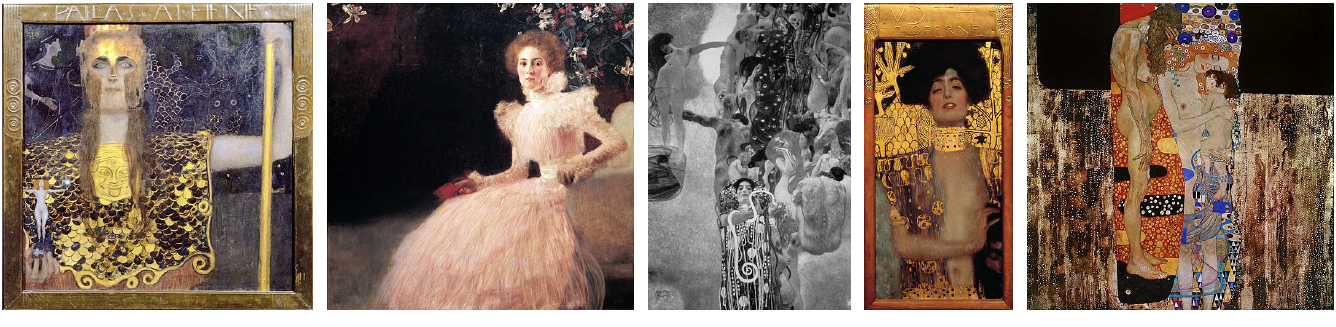
Pattern and ornamentation
Each painting features elaborate decorative elements - spirals, circles, rectangles, and organic forms that create visual richness. These patterns often have symbolic meaning and demonstrate Klimt's background in decorative arts.
Landscapes and later works
Besides portraits, Klimt created atmospheric landscape paintings of the Austrian countryside. These works show his pointillistic technique, building up surfaces with small dots and dabs of paint to create shimmering, decorative effects.
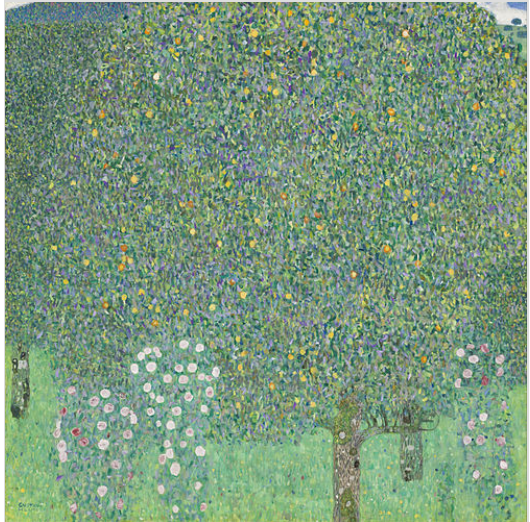
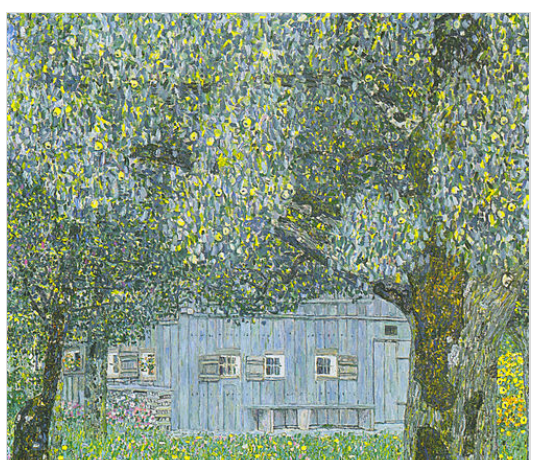
His landscapes often focus on single motifs like houses surrounded by dense foliage or tree-lined avenues. These paintings maintain his decorative approach while showing his appreciation for natural beauty.
Legacy and influence
Gustav Klimt died in Vienna on 6 February 1918 following a stroke, leaving many paintings unfinished. His work profoundly influenced the development of modern art, particularly the Art Nouveau movement and decorative painting.
Important
Klimt's revolutionary approach to portraiture - presenting subjects as powerful, decorative figures rather than simple likenesses - fundamentally changed how artists represent the human figure in decorative contexts. This influence extends far beyond painting into fashion, design, and popular culture.
His paintings regularly achieve record prices at auction, demonstrating their continued popularity and importance in art history. The distinctive combination of realism and decoration in his work has inspired countless artists and designers.
Klimt's approach to portraiture - presenting subjects as powerful, decorative figures rather than simple likenesses - revolutionised portrait painting and influenced how artists represent the human figure in decorative contexts.
Key works for study
Essential paintings to know:
- The Kiss (1907-1908) - Iconic golden period masterpiece
- Portrait of Adele Bloch-Bauer I (1903-1907) - Supreme example of decorative portraiture
- Danaë (1907-1908) - Mythological subject with golden ornamentation
- Judith I (1901) - Early golden period work showing biblical femme fatale
- The Three Ages of Woman (1905) - Allegorical painting exploring life cycle
Example
How to Identify Klimt's Style in Exam Questions
Look for these key visual elements:
- Gold leaf backgrounds - luminous, reflective surfaces
- Flat decorative patterns - spirals, geometric shapes, organic motifs
- Powerful female subjects - often portrayed as mysterious or symbolic figures
- Byzantine influences - mosaic-like quality and religious art inspiration
- Art Nouveau characteristics - flowing lines and decorative integration
These works demonstrate Klimt's mastery of gold leaf application, decorative patterning, and his unique ability to combine realistic figures with abstract ornamentation.
Summary
Key Points to Remember:
- Gustav Klimt (1862-1918) was an Austrian painter and co-founder of the Vienna Secession movement who revolutionised decorative art
- Golden Period (1900-1910) produced his most famous works using extensive gold leaf and Byzantine-inspired patterns - essential for understanding his artistic legacy
- The Kiss and Portrait of Adele Bloch-Bauer I are his most celebrated paintings, demonstrating perfect fusion of realism and decorative art
- Vienna Secession was the progressive art movement he helped establish in 1897 that rejected conservative academic traditions
- Art Nouveau characteristics include flat decorative surfaces, intricate patterns, gold leaf application, and symbolic subject matter focusing on powerful feminine figures