Modernism (c. 1900 – 1960s) (Leaving Cert Art): Revision Notes
📚Revision Notes
20th-Century Art
Introduction to modernist art
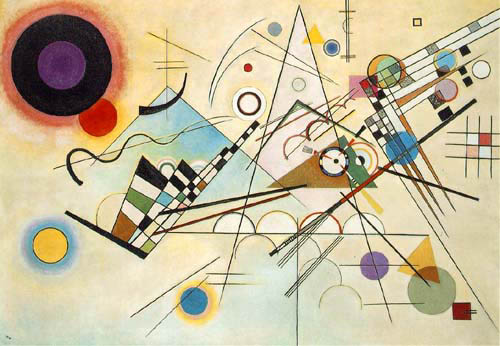
The 20th century marked a revolutionary period in Western art, characterised by a dramatic shift from traditional realism to bold new forms of artistic expression. This transformation was driven by massive social, technological, and cultural changes that fundamentally altered how artists viewed and depicted the world.
Note
The transition to modernist art wasn't sudden but evolved gradually through various movements, each responding to the changing world around them. Understanding this context is essential for appreciating why art changed so dramatically during this period.
Key characteristics of 20th-century art:
- Move away from realistic representation towards abstract expression
- Focus on personal, subjective feelings rather than objective reality
- Experimental use of new materials and techniques
- Reflexion of modern industrial society and its challenges
The period saw the emergence of various avant-garde movements that challenged traditional artistic conventions and sought to express the complexity of modern life in new visual languages.
Impact of industrialisation and technology
The rapid advancement of industrial technology profoundly influenced artistic development throughout the 20th century. Modern science and engineering opened up entirely new possibilities for creative expression.
New materials and techniques
Industrial progress provided artists with:
- Steel wire and glass - used by Russian Constructivists for sculptures
- Advanced optical developments and machinery
- New synthetic materials for creating collages and mixed media works
- Photography - which challenged traditional painting's role in documentation
Example
Example: Marcel Duchamp's Innovation
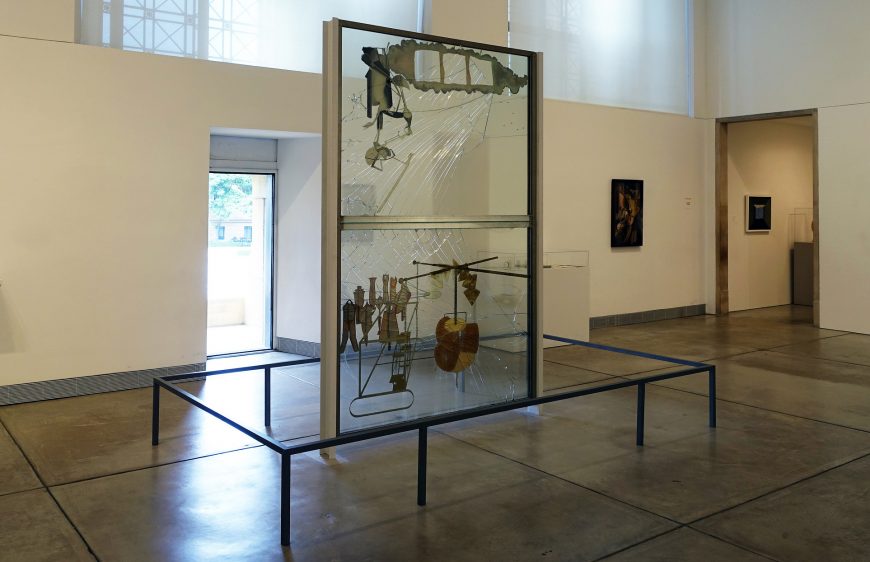
Marcel Duchamp created "The Bride Stripped Bare by Her Bachelors" (1915-1923), demonstrating how artists incorporated industrial materials and concepts. This work showed how artists moved away from traditional painting methods to explore new forms of artistic creation.
The piece used unconventional materials like glass, lead, and dust, reflecting the industrial age's influence on artistic practice.
Russian Constructivism exemplified this technological embrace, with artists acting as "artistic engineers" who used industrial materials like steel and glass to create abstract works that reflected modern industrial society.
Influence of war and trauma
The devastating impact of two world wars fundamentally changed artistic expression, introducing themes of trauma, suffering, and psychological exploration that became central to modern art.
World War I impact
- Created unprecedented war trauma that needed new forms of artistic expression
- Led to the breakdown of traditional artistic values and techniques
- Introduced psychological realism as artists explored inner mental states
- Resulted in art that was often abstract, deformed, and emotionally intense
Example
Example: Pablo Picasso's "Guernica"
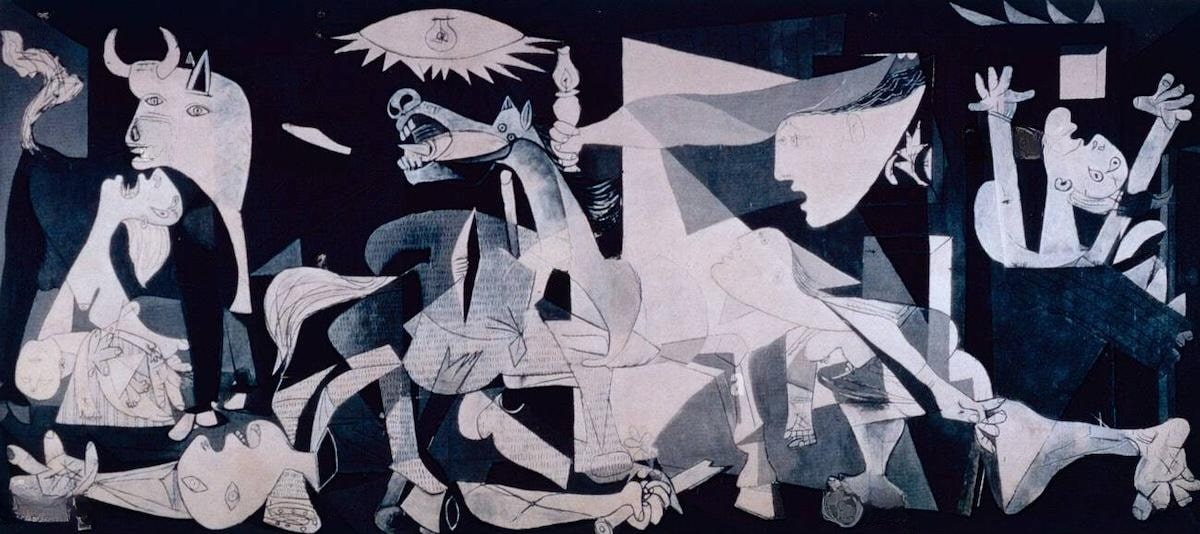
This masterpiece, created after the bombing of the Spanish town of Guernica, demonstrates how war trauma influenced artistic expression. The work uses:
- Black, white, and grey tones to convey the darkness of war
- Abstract and exaggerated forms to show suffering and destruction
- Fragmented composition reflecting the chaos and devastation of conflict
The painting became a powerful anti-war symbol, showing how art could respond to historical events.
Abstract Expressionism and WWII
Post-World War II saw the rise of Abstract Expressionism, particularly in America, as artists sought to:
- Express the spiritual and emotional aftermath of global conflict
- Create art that reflected the anxiety and uncertainty of the modern world
- Develop a uniquely American artistic identity separate from European traditions
Important
War didn't just influence the subject matter of art - it fundamentally changed how artists approached their craft. The trauma of conflict led to the development of entirely new artistic languages that could express psychological and emotional states that traditional realistic art couldn't capture.
Connection to previous art movements
20th-century modernist art didn't emerge in isolation but built upon the foundations of earlier artistic developments.
19th-century influences
Post-Impressionism provided crucial groundwork through artists like:
- Paul Cézanne - focused on geometric structure and form
- Vincent van Gogh - emphasised emotional expression through colour and brushwork
- Paul Gauguin - explored symbolic and primitive themes
Key transition features
The shift from 19th to 20th-century art involved:
- Movement from representational to abstract forms
- Increased focus on colour and form rather than realistic detail
- Subjective interpretation taking precedence over objective observation
- Emotional and psychological content becoming more important than visual accuracy
Note
Understanding these connections helps explain why modern art developed as it did. Artists weren't rejecting everything that came before - they were building on earlier innovations while responding to their contemporary world.
Major art movements and artists
Cubism
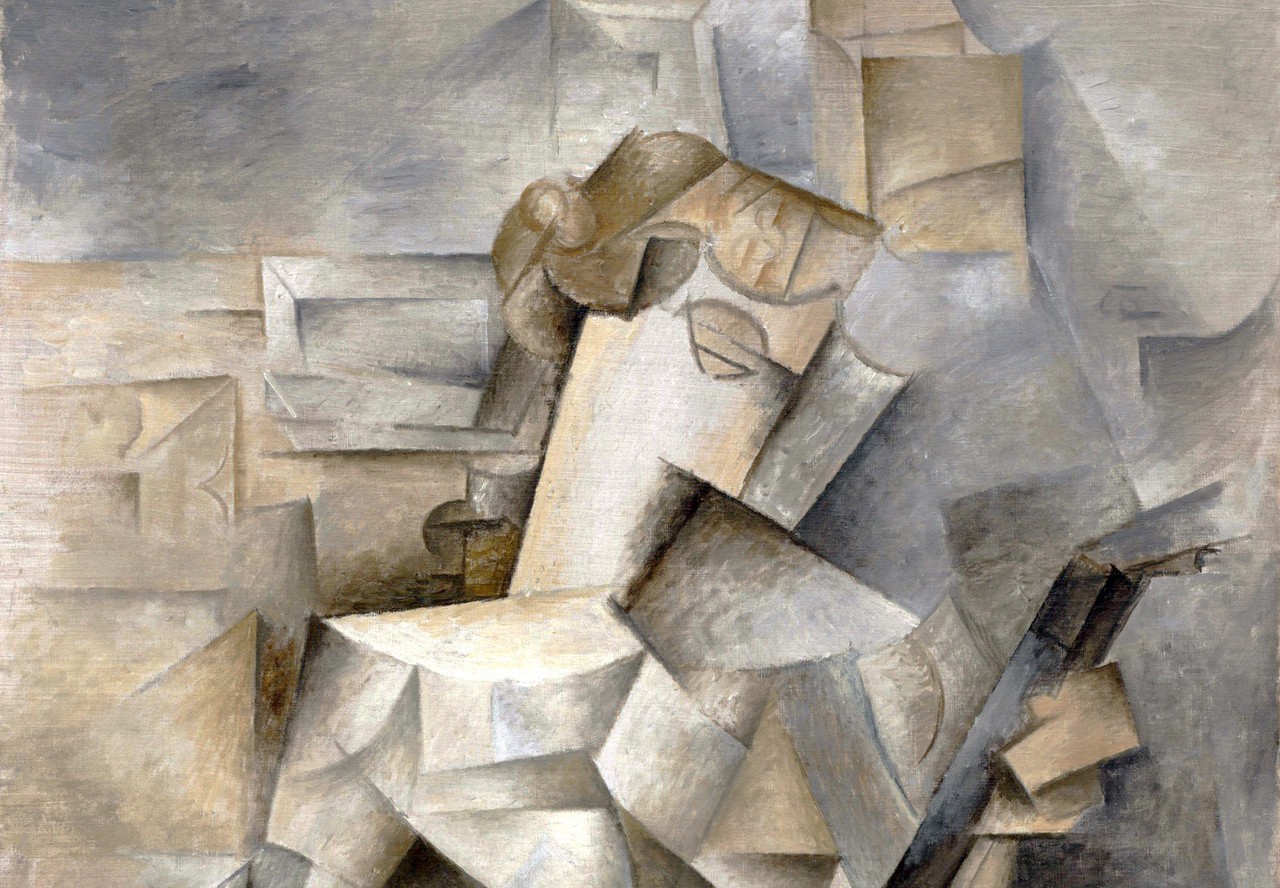
Developed by Pablo Picasso and others, Cubism revolutionised artistic representation by:
- Breaking objects into geometric fragments
- Showing multiple perspectives simultaneously
- Flattening three-dimensional space onto the canvas
- Moving completely away from realistic representation
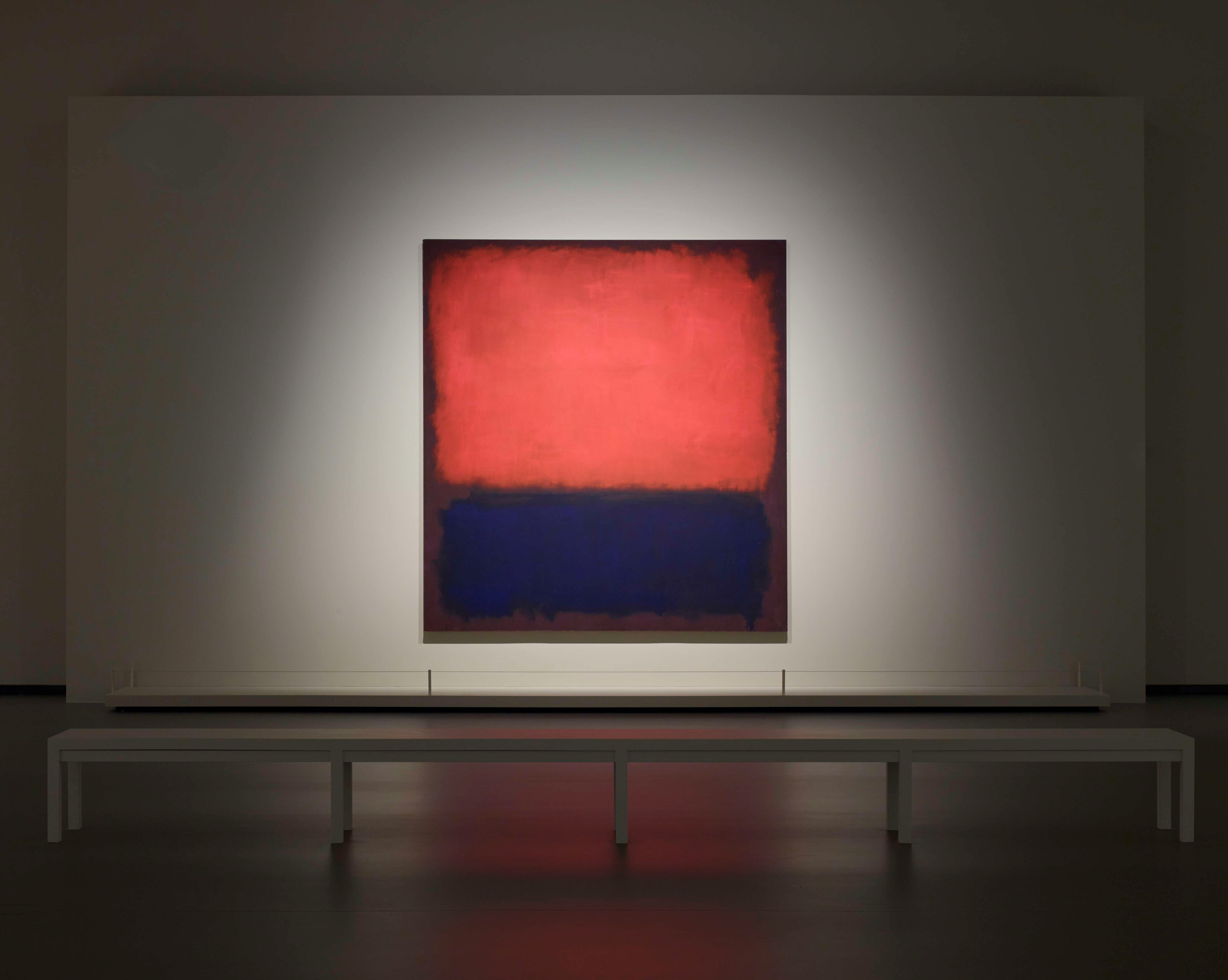
Abstract Expressionism
This movement, particularly strong in post-war America, featured:
- Large-scale works that emphasised emotional impact
- Non-representational forms that expressed inner spiritual states
- Artists like Mark Rothko who created works focusing on colour and emotion
- Spontaneous, gestural painting techniques
 Fauvism
Developed by Henri Matisse and others, Fauvism emphasised:
- The use of pure, vivid colours applied directly from the tube
- Simplified forms and shapeswithout detail
- Expressive, emotional impact over realism
- Breaking with Impressionism by focusing on colour as the main subject
 Futurism
Originating in Italy around 1909, Futurism celebrated:
- Speed, technology, and modern life (cars, planes, machines)
- Showing movement and dynamism through fractured forms
- Rejecting the past and tradition
- Works that glorified violence, industry, and energy like the below work, The City Rises by Umberto Boccioni
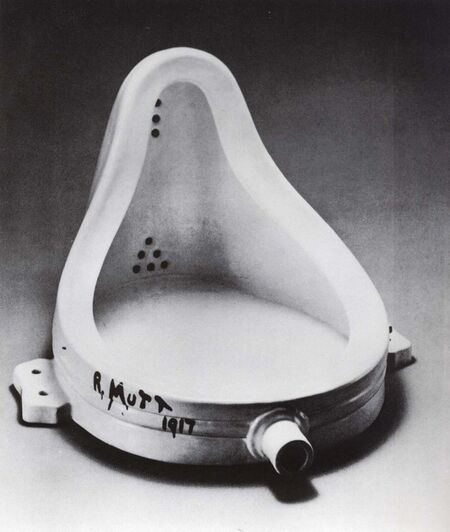
 Dada
Dada
Emerging during WWI in Zurich, Dada was defined by:
- A rejection of logic, reason, and traditional art values
- The embrace of chance, nonsense, and absurdity
- Use of collage, ready-mades, and performance
- Artists like Marcel Duchamp challenged the very definition of art
 Surrealism
Led by André Breton in the 1920s, Surrealism explored:
- The power of the unconscious mind and dreams
- Strange, illogical, or dream-like imagery
- Techniques such as automatism and unexpected juxtapositions
- Key artists: Salvador Dalí, René Magritte, Max Ernst
 Pop Art
Emerging in the 1950s–60s, Pop Art reacted against abstraction by:
- Using imagery from advertising, comics, and consumer culture
- Bright, bold colours and mechanical techniques (silkscreen)
- Blurring the line between high art and mass culture
- Artists such as Andy Warhol and Roy Lichtenstein

Key characteristics across movements
- Rejection of traditional representation
- Emphasis on personal artistic vision
- Experimentation with form, colour, and materials
- Expression of modern psychological and spiritual states
The spiritual dimension of modern art
Modern art increasingly became a vehicle for spiritual and emotional expression rather than mere visual documentation. Artists saw their work as:
- A means of exploring inner psychological states
- Metaphorical representations of modern human experience
- Ways to express the spiritual crisis of industrial society
- Alternative forms of religious or transcendent experience
This spiritual dimension was particularly evident in abstract works that moved completely away from recognisable subject matter to focus purely on colour, form, and emotional impact.
Note
This spiritual approach to art was revolutionary - it suggested that art could serve functions previously associated with religion or philosophy, helping people understand their place in the modern world.
Summary
Essential Remember Points:
-
20th-century art was revolutionary - it completely transformed how artists approached their work, moving from realistic representation to abstract expression
-
Historical events shaped artistic development - industrialisation provided new materials and techniques, while world wars created trauma that needed new forms of expression
-
Key movements included Cubism and Abstract Expressionism - these represented fundamental breaks with traditional artistic approaches
-
Technology and art became interconnected - industrial advances gave artists new materials and methods, while also changing the subject matter of their work
-
The period saw art become increasingly spiritual and psychological - artists focused on inner emotional states rather than external visual reality