Michelangelo (Leaving Cert Art): Revision Notes
📚Revision Notes
Michelangelo
Who was Michelangelo?
Michelangelo di Lodovico Buonarroti Simoni (1475-1564) was one of the most influential artists in history. This Italian Renaissance master worked as a sculptor, painter, architect, and poet, earning the nickname "Il Divino" (The Divine One) because his art seemed to embody godly perfection.
During his lifetime, Michelangelo was considered the greatest living artist. Today, he remains recognised as one of the most important figures in Western art history. His diverse talents and exceptional skill helped define the High Renaissance period.
Note
The nickname "Il Divino" (The Divine One) reflects the extraordinary reverence people had for Michelangelo's artistic abilities during his lifetime, suggesting his work transcended human capability and approached divine perfection.
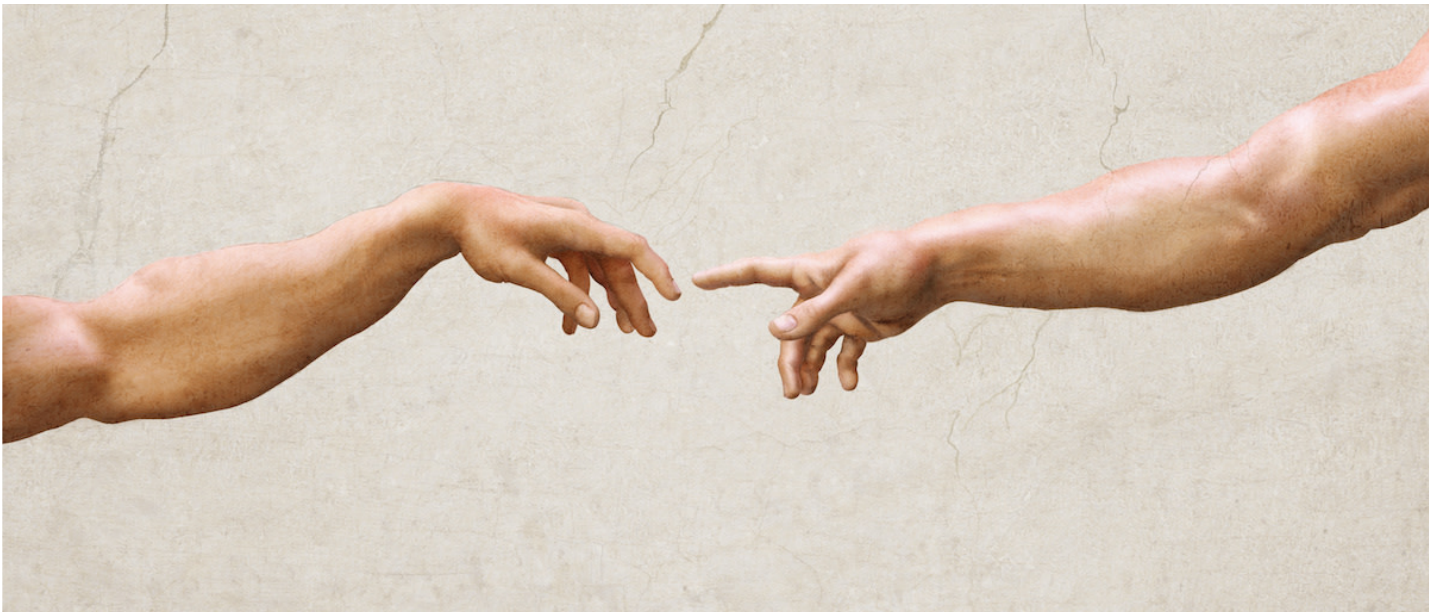
Michelangelo's famous fresco "Creation of Adam" from the Sistine Chapel ceiling shows his mastery of human anatomy and emotional expression through the iconic reaching hands.
Early life and training
Michelangelo was born in Caprese, a small town near Florence, Italy. His artistic journey began when he moved to Florence and received training from some of the period's most respected masters.
Florentine training
Note
Michelangelo's Artistic Education
Florence during the Early Renaissance provided the perfect environment for artistic development, with multiple master artists and wealthy patrons supporting young talent.
- Bertoldo di Giovanni: Michelangelo studied under this acclaimed sculptor
- Donatello: He also learned from this master sculptor's techniques
- Domenico Ghirlandaio: The young artist entered the workshop of Florence's most prominent painter
- Medici patronage: The wealthy Medici family noticed Michelangelo's talent and invited him to study their collection of ancient sculptures
This exposure to Florence's rich artistic environment during the Early Renaissance (1470s-1490s) surrounded Michelangelo with exceptional examples of painting and sculpture, providing him with an outstanding foundation for his career.
A brief history of Michelangelo's life
Early career achievements
Michelangelo produced important reliefs during his time with the Medici family, including "The Madonna of the Stairs" (c. 1491) and "The Battle of the Centaurs" (c. 1492). When the Medici family lost power in 1494, he briefly travelled to Venice and Bologna before settling in Rome.
Example
Worked Example: The Pietà Commission (1499)
At just twenty-three years old, Michelangelo received his first major public commission:
Step 1: French cardinal requests a Pietà sculpture for St. Peter's Basilica Step 2: Contract specifies it must be "the most beautiful sculpture in Rome" Step 3: Michelangelo delivers a technically brilliant work that establishes his reputation Result: Career-defining success that proved his exceptional abilities
The David sculpture (1501-1504)
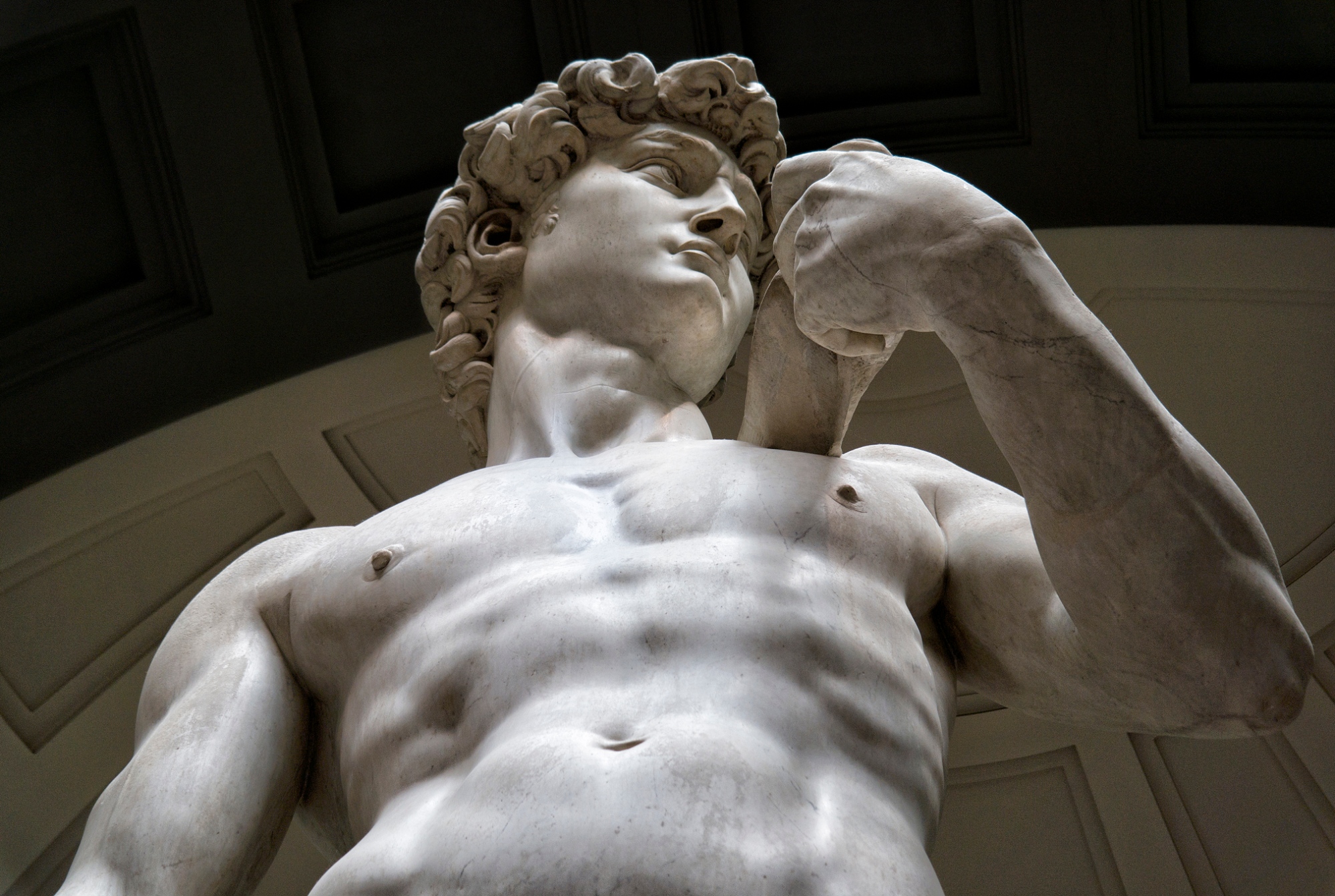
After completing the Pietà, Michelangelo was commissioned to create a sculpture of the biblical hero David for display in front of the Palazzo Vecchio in Florence. Working with a massive block of marble from Carrara (nicknamed "Il Gigante" or "the giant"), he spent over four years creating what became his most famous sculpture. The David represents Michelangelo's ideal image of mankind and demonstrates his complete mastery of human anatomy.
Later years in Rome (1534-1564)
In 1534, Michelangelo permanently moved to Rome, where he spent the rest of his life. During his later years, he focused more on poetry, paintings, and architectural designs, including work on the Medici Chapel and the Laurentian Library. He died in 1564 at the impressive age of 88.
Major artistic works
Throughout his prolific career, Michelangelo produced several works that rank among the world's most famous artworks. There are almost 200 known works by Michelangelo, including sculptures, paintings, and drawings.
Example
Worked Example: Sistine Chapel Project (1508-1512)
The Commission: Pope Paul III commissioned one of art history's most ambitious fresco projects
The Challenge: Paint the entire ceiling of the Sistine Chapel The Solution: Created interconnected scenes from Genesis Key Features:
- "The Creation of Adam" - most famous panel
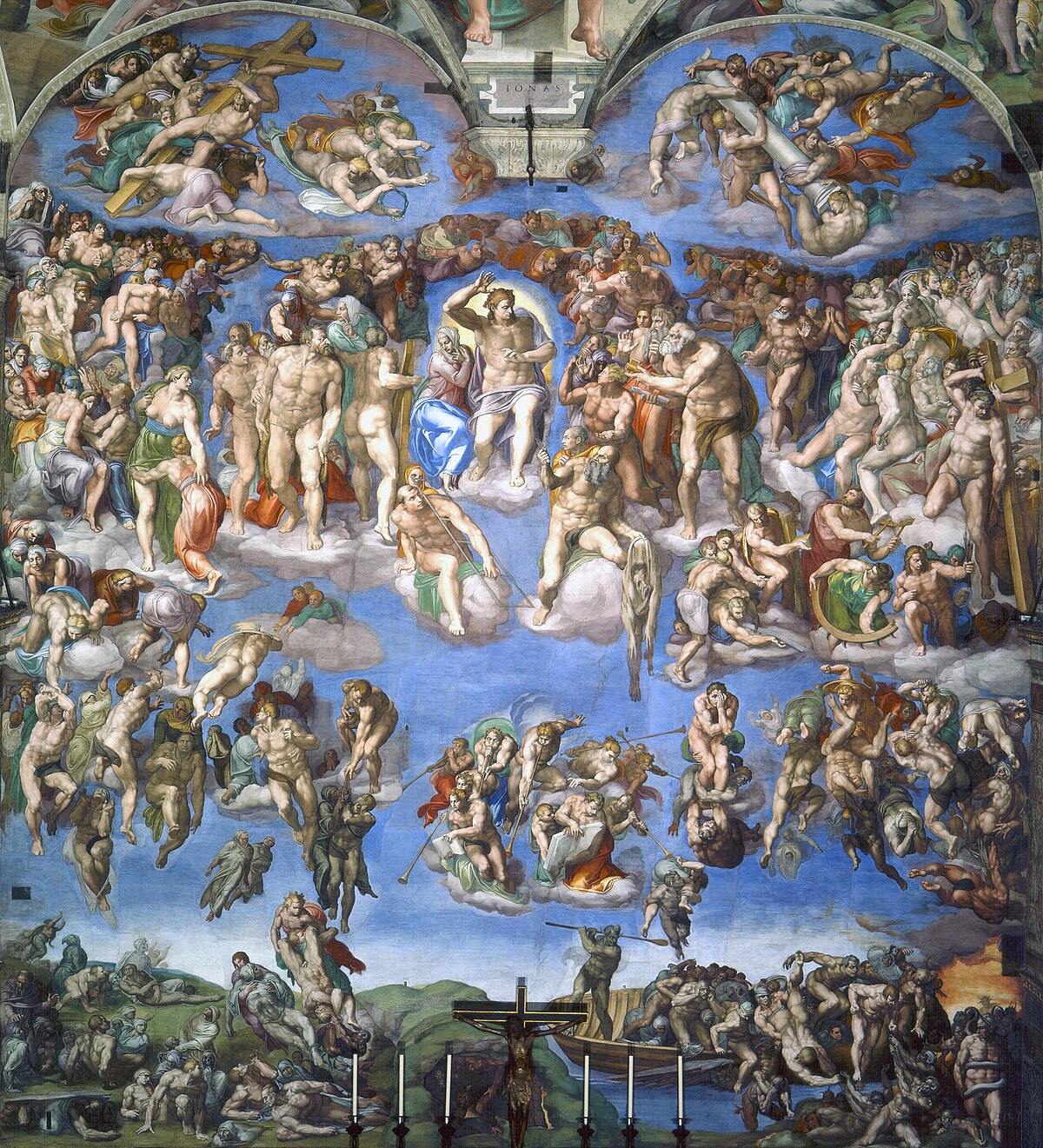
- "The Last Judgement" on altar wall
- Revolutionary use of human figures in complex poses
The Result: Masterpiece that defines High Renaissance painting
Key masterpieces to remember:
- Sistine Chapel frescoes (1508-1512) - Featuring "The Creation of Adam" and "The Last Judgement"
- Study for the Libyan Sibyl (1510-1511) - Best-preserved example of his preparatory sketches
- David (1501-1504) - Carved from a single marble block, embodies human perfection
- Pietà (1499) - The only sculpture Michelangelo ever signed, established his reputation

Artistic techniques and innovations
Mastering the human form
Michelangelo possessed extraordinary knowledge of human anatomy and could reproduce it masterfully in painting, drawing, and sculpture. He reportedly studied cadavers by candlelight to better understand human anatomy. During his time in Rome, he also studied surviving classical sculptures and ancient architectural ruins.
Note
Anatomical Studies
Michelangelo's dedication to understanding human anatomy went beyond what was typical for artists of his time. His anatomical studies by candlelight gave him insights that allowed him to create figures with unprecedented realism and emotional expression.
Drawing (disegno)
Drawing formed an essential part of Michelangelo's artistic process. Sketching the male nude was particularly important to his art-making, a practice shared by many Renaissance artists. His preparatory drawings show his careful planning and attention to detail.
Perfectionism
Michelangelo was a true perfectionist who frequently abandoned projects when he felt they didn't meet his exceptionally high standards. As he aged, his projects became increasingly ambitious, while popes, aristocrats, and princes demanded more of his work.
Important
The Price of Perfection
Michelangelo's perfectionism was both his greatest strength and a significant challenge. While it led to extraordinary artistic achievements, it also meant many commissioned works remained unfinished when they failed to meet his impossibly high standards.
Renaissance innovation
Michelangelo built upon techniques introduced during the Early Renaissance and elevated them to new heights. The figures in his Sistine Chapel paintings move through dynamically complex poses within convincingly three-dimensional space. His sculpture faithfully and naturalistically captures the human form with remarkable reverence.
What made Michelangelo a Renaissance artist?
Important
Defining Characteristics of Renaissance Art
Michelangelo exemplified the core ideals that defined Renaissance artistic achievement and cultural values.
Michelangelo exemplified many ideals of the Renaissance period:
- Improving on predecessors: His art used Early Renaissance tools and techniques but took them to an advanced level
- Classical inspiration: He studied ancient sculptures and architectural ruins to inform his work
- Human-centered focus: His art celebrated human potential and physical perfection
- Multiple talents: He worked successfully as a polymath across sculpture, painting, architecture, and poetry
- Technical mastery: He achieved extremely high technical skill across multiple artistic media
Michelangelo's lasting influence
Scholars credit Michelangelo's work with achieving a type of visual perfection that couldn't be surpassed. His art, along with works by Raphael and other Renaissance masters, set such high standards that later artists struggled to compete with this level of excellence.
Because they couldn't match such perfection, Michelangelo's successors developed a new artistic approach called Mannerism. Mannerist artists placed renewed emphasis on style over naturalistic representation. Instead of creating figures that occupied convincingly deep space like Michelangelo's work, artists chose to elongate their figures' proportions unnaturally, creating more complex compositions with vibrant colour palettes designed to keep viewers' eyes constantly engaged.
Note
The Birth of Mannerism
The artistic movement known as Mannerism emerged partly as a response to the impossibility of surpassing the technical perfection achieved by High Renaissance masters like Michelangelo. Rather than compete directly, Mannerist artists chose to emphasise style and complexity over naturalistic representation.
This shift in visual art style was significantly influenced by Michelangelo's body of work and the changing cultural environment surrounding these artists.
Remember!
Summary
Key Points to Remember:
-
Michelangelo (1475-1564) was known as "Il Divino" (The Divine One) and was a sculptor, painter, architect, and poet of the Italian Renaissance
-
Four major works to remember: David sculpture, Pietà, Sistine Chapel frescoes (including Creation of Adam), and Study for the Libyan Sibyl
-
Technical mastery: He studied human anatomy through cadaver examination and achieved exceptional skill in drawing (disegno), sculpture, and fresco painting
-
Renaissance ideals: He improved upon Early Renaissance techniques, studied classical art, and embodied the period's celebration of human potential and artistic excellence
-
Lasting legacy: His work influenced the development of Mannerism and established standards of artistic perfection that continue to inspire artists today