Transport Across Membranes (LC 2027) (Leaving Cert Biology): Revision Notes
📚Revision Notes
Transport Across Membranes
Introduction
Transport across membranes is a fundamental process in all living organisms. Cell membranes control what substances can enter and leave cells, maintaining the proper internal environment necessary for life. Understanding how different molecules move across these barriers is essential for grasping many biological processes.
Note
The ability of cell membranes to selectively control transport is what allows cells to maintain different internal conditions from their external environment, which is crucial for cellular function and survival.
Diffusion
Diffusion is the natural spreading out of molecules from an area where they are highly concentrated to an area where they are less concentrated. This movement happens because molecules are constantly moving randomly due to their kinetic energy.
Key features of diffusion
- Passive process - No energy input required from the cell
- Down the concentration gradient - Always moves from high to low concentration
- Caused by kinetic energy - Random molecular movement drives the process
- Continues until equilibrium - Stops when concentrations become equal
Examples of diffusion in biology
Diffusion occurs constantly in living organisms. When you smell perfume across a room, that's diffusion in action. In your body, oxygen diffuses from your lungs into your bloodstream, while carbon dioxide diffuses from your blood into your lungs to be exhaled.
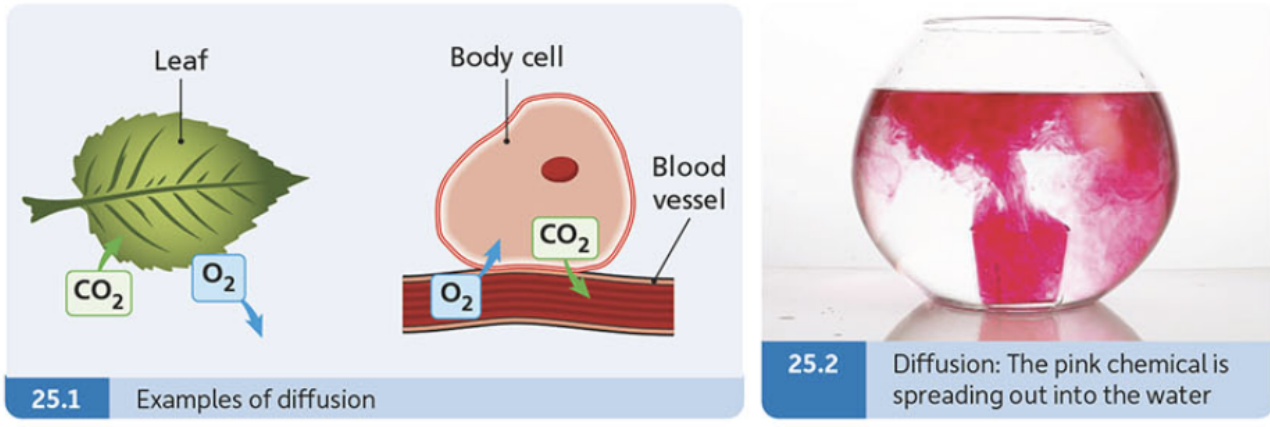
Plants also rely on diffusion for gas exchange during photosynthesis and respiration. Carbon dioxide diffuses into leaves through tiny pores, while oxygen produced during photosynthesis diffuses out.
Selectively permeable membranes
All biological membranes share a similar structure and function as selectively permeable barriers. This means they allow some substances to pass through while blocking others.
What can and cannot pass through
- Small molecules like water, oxygen, and carbon dioxide can pass through freely
- Large molecules such as proteins, starch, and sugars cannot pass through easily
- Specialised transport proteins help larger molecules cross when needed
Important
For essential processes like respiration, glucose must cross cell membranes, and proteins called hormones must also pass through to reach their target cells. Without selective permeability, cells couldn't control their internal environment.
Osmosis
Osmosis is a special type of diffusion that specifically involves the movement of water molecules. It occurs when water moves across a selectively permeable membrane from an area of high water concentration to an area of low water concentration.
Understanding key terms
Before exploring osmosis further, it's important to understand these terms:
Note
Key Definitions:
- Solvent - The liquid that dissolves other substances (water is the most common biological solvent)
- Solute - The substance that gets dissolved (like salt dissolved in water)
- Solution - The mixture of solvent and solute together
How osmosis works
Water molecules move constantly and randomly. When there's a selectively permeable membrane separating two solutions with different concentrations, more water molecules will move from the side with fewer dissolved particles (higher water concentration) to the side with more dissolved particles (lower water concentration).
The driving force is the difference in water concentration on either side of the membrane. This process continues until the water concentrations become equal, reaching equilibrium.
Osmosis and animal cells
Animal cells don't have cell walls, so they're particularly sensitive to changes in their surrounding water concentration. The effects depend on the concentration of the external solution compared to the cell's cytoplasm.
Isotonic solutions
When an animal cell is placed in a solution with the same concentration as its cytoplasm, the cell remains unchanged. Water moves equally in both directions across the membrane, so there's no net movement. This is the normal condition for most animal cells in the body.
Hypotonic solutions
If an animal cell is placed in a solution less concentrated than its cytoplasm, water will move into the cell by osmosis. The cell will swell and may eventually burst if too much water enters.
Important
This is why drinking only distilled water isn't healthy - it would cause your blood cells to swell dangerously.
Hypertonic solutions
When an animal cell is in a solution more concentrated than its cytoplasm, water moves out of the cell. The cell shrinks and becomes wrinkled or crenated. This happens to red blood cells when placed in very salty solutions.
Osmosis and plant cells
Plant cells respond differently to osmotic changes because they have rigid cell walls that provide structural support and prevent the cell from bursting.
Plant cells in hypotonic solutions
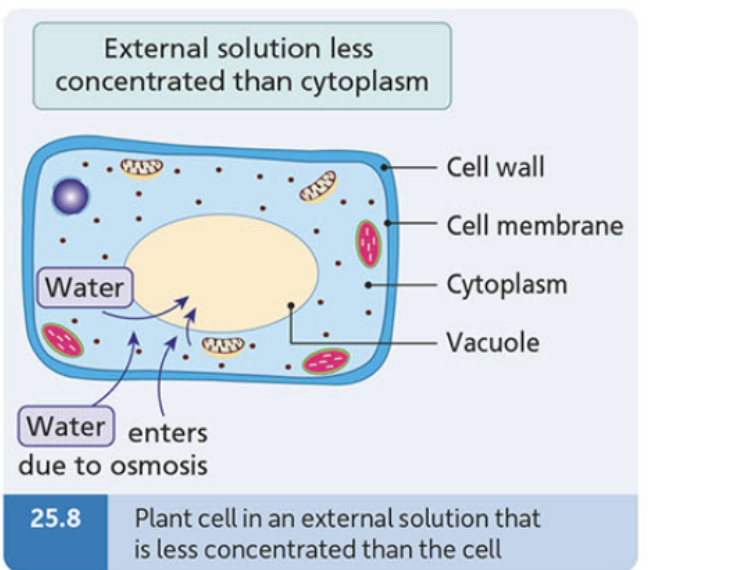
When a plant cell is placed in a solution less concentrated than its cytoplasm, water enters the cell by osmosis. The cell becomes turgid - swollen and firm.
Note
Turgor pressure is the outward pressure of the cytoplasm and vacuole against the cell wall. This pressure gives plant cells their strength and helps maintain the plant's structure.
Plant cells in hypertonic solutions
If a plant cell is placed in a solution more concentrated than its cytoplasm, water moves out of the cell. The cytoplasm shrinks and pulls away from the cell wall in a process called plasmolysis.
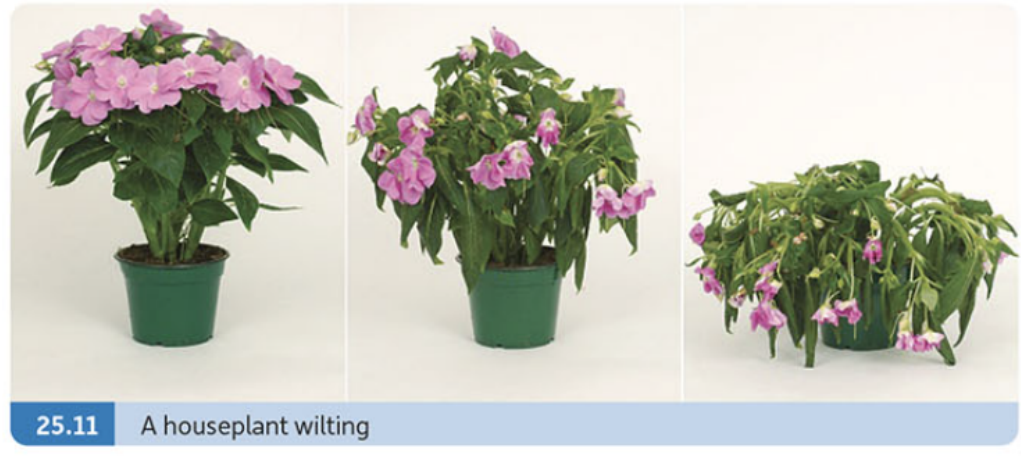
When plants lose water and become flaccid (limp), you can observe the effects in wilting leaves and drooping stems.
Role of osmosis in food preservation
Osmosis has been used for centuries to preserve food by preventing harmful bacteria and fungi from growing.
Salt preservation
When food is packed in salt, the high salt concentration creates a hypertonic environment. Water moves out of bacterial and fungal cells by osmosis, causing them to shrivel and die. This prevents spoilage and extends the food's shelf life.
Example
Food Preservation Example:
Step 1: Fresh meat is packed in salt Step 2: Salt creates a hypertonic environment around bacteria Step 3: Water moves out of bacterial cells by osmosis Step 4: Bacteria shrivel and die, preventing spoilage
Sugar preservation
Similarly, high sugar concentrations in jams and preserves work by the same principle. The concentrated sugar solution draws water out of microorganisms, preventing their growth.
Role of osmosis in plant health
Osmosis plays a crucial role in maintaining plant health and proper functioning.
Water absorption
Plant roots absorb water from the soil through osmosis when the soil has a higher water concentration than the root cells. This creates the turgor pressure that keeps plants upright and their leaves spread out to catch sunlight.
Maintaining plant structure
Turgor pressure from osmosis helps maintain the plant's shape and prevents wilting. When plants don't get enough water, they lose turgor pressure and begin to droop.
Guard cell function
The opening and closing of stomata (leaf pores) is controlled by osmosis in guard cells. Changes in turgor pressure cause these cells to change shape, regulating gas exchange and water loss.
Active transport
Unlike diffusion and osmosis, active transport requires energy to move substances across membranes. This process can move molecules against their concentration gradient - from low concentration to high concentration.
Key features of active transport
- Requires energy - Usually in the form of ATP (cellular energy currency)
- Against concentration gradient - Moves from low to high concentration
- Uses transport proteins - Specialised proteins carry molecules across membranes
- Highly selective - Can move specific molecules as needed
Examples of active transport
Active transport is essential for many cellular processes:
Example
Active Transport in Action:
- Root hair cells use active transport to absorb minerals from soil, even when mineral concentrations in soil are lower than inside the plant
- Nerve cells use active transport to maintain the electrical signals needed for brain and nervous system function
- Kidney cells use active transport to reabsorb useful substances from urine back into the bloodstream
Summary
Key Points to Remember:
- Diffusion moves molecules from high to low concentration without energy - like perfume spreading through air
- Osmosis is the diffusion of water across membranes - water always moves towards areas with more dissolved particles
- Plant cells become turgid in hypotonic solutions but can't burst due to cell walls, while animal cells may burst in the same conditions
- Food preservation works by using high salt or sugar concentrations to dehydrate harmful microorganisms through osmosis
- Active transport requires energy to move substances against their concentration gradient, enabling cells to accumulate necessary materials even when they're scarce in the environment