Roman Spectacle & Greek Tragedy (Leaving Cert Classical Studies): Revision Notes
📚Revision Notes
Roman Spectacle & Greek Tragedy
Spectacle in Roman society
Roman entertainment was all about creating massive public displays that would capture the imagination of the people. These spectacles served multiple purposes beyond simple entertainment, functioning as powerful tools of political control and social unity.
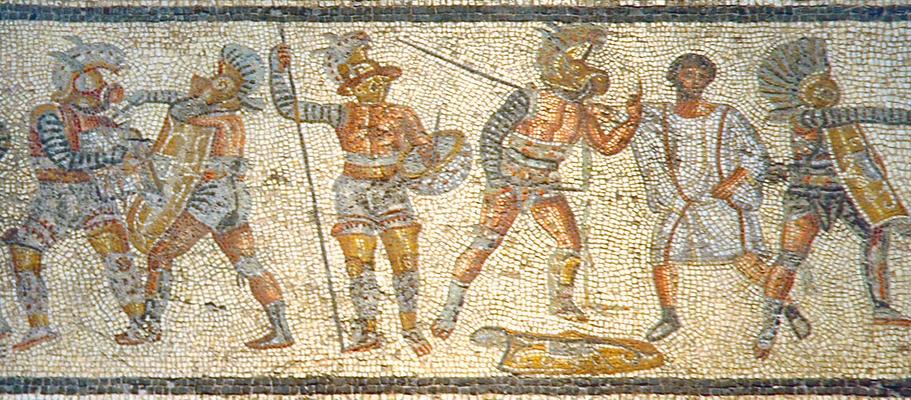
Types of Roman spectacles
The Romans developed several distinct forms of public entertainment that drew huge crowds:
- Gladiatorial games - Combat between trained fighters, often slaves or prisoners
- Venations - Wild animal hunts featuring exotic beasts from across the empire
- Chariot races - High-speed competitions that created passionate team loyalty
- Naumachiae - Elaborate staged naval battles, sometimes flooding entire arenas
- Public executions - Brutal displays that reinforced imperial justice
Venues for Roman entertainment
These grand displays required equally impressive venues:
- Colosseum - The most famous amphitheatre, capable of holding 50,000 spectators
- Circus Maximus - Massive chariot racing venue accommodating over 250,000 people
- Provincial amphitheatres - Smaller versions built across the empire to spread Roman culture
Role and significance of Roman spectacle
Roman spectacles functioned on multiple levels within society. They demonstrated the power and generosity of emperors through the provision of free entertainment and food distribution, famously summarised as "bread and circuses." These events reinforced key Roman values including bravery, discipline, endurance, and military prowess by celebrating these qualities in the arena.
Note
The spectacles served important social and political functions. They unified the population through shared experiences whilst simultaneously reinforcing class divisions through seating arrangements. As political tools, they distracted citizens from economic hardship and political problems whilst affirming imperial authority and Roman superiority.
Important
The Roman poet Juvenal captured this cynically in his famous observation: "The people that once gave away command, fasces, legions... now only want two things: bread and circuses."
Tragedy in Athenian society
Greek tragedy represented a completely different approach to public performance, emphasising intellectual and spiritual engagement rather than spectacle. These plays formed a central part of Athenian religious and civic life.
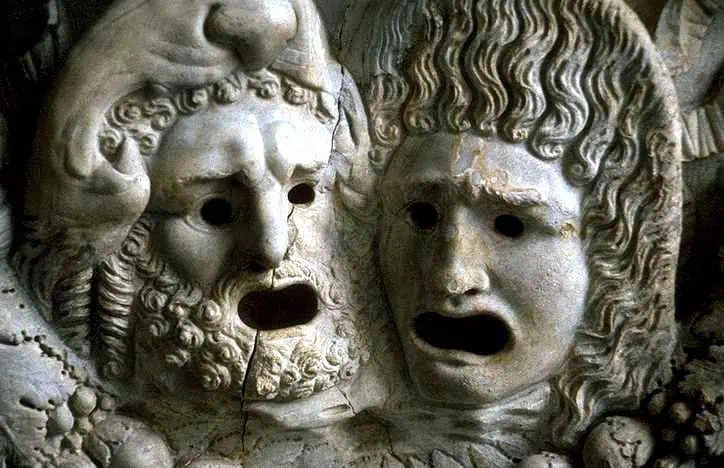
Types of Greek drama
Athenian theatre encompassed several dramatic forms:
- Tragedy - Serious plays exploring themes of fate, justice, and human suffering
- Comedy - Satirical works that often mocked contemporary politics and society
- Satyr plays - Lighter pieces featuring mythological characters, performed after tragic trilogies
Venues and occasions
Greek dramatic performances took place in specific religious contexts:
- Theatre of Dionysus - The primary venue in Athens, carved into the Acropolis hillside
- City Dionysia festival - Annual spring celebration honouring the god Dionysus
- Open-air theatres - Later built throughout the Greek world, accommodating thousands of spectators
Purpose and significance of Greek tragedy
Greek tragedy served as both religious duty and civic education. These performances were central to the City Dionysia festival, which combined religious observance, political display, and artistic competition. The plays explored profound moral, political, and religious questions including concepts of fate, justice, hubris (excessive pride), and divine law.
Note
Tragedy fulfilled important civic functions by encouraging citizens to reflect on their society, leadership, and values. Great playwrights like Aeschylus, Sophocles, and Euripides used mythological stories to comment on contemporary issues including warfare, democracy, family relationships, and religious duty.
Important
Aristotle defined the purpose of tragedy as evoking "pity and fear, to accomplish the catharsis of such emotions" - meaning the purification or cleansing of the audience's feelings through emotional experience.
Comparing Roman and Greek approaches
The differences between Roman spectacle and Greek tragedy reveal fundamentally different cultural values and purposes.
Purpose and function
Roman spectacle primarily served entertainment, political manipulation, and imperial propaganda. These events reinforced the power of the state and provided escapist thrills for the masses.
Greek tragedy functioned as religious duty, civic education, and moral reflexion. These performances encouraged deep thinking about ethical dilemmas and social responsibilities.
Scale and presentation
Important
Roman spectacles were deliberately huge and spectacular, focusing on physical action, violence, and visual excitement. The emphasis was on overwhelming the senses and creating memorable experiences.
Greek tragedy was more intimate despite large audiences, concentrating on dialogue, philosophical ideas, and moral dilemmas. The power came from words and emotions rather than visual spectacle.
Audience experience
Roman audiences sought excitement, thrills, and group identity through shared emotional responses to dramatic action and competition.
Greek audiences engaged in reflexion, catharsis, and civic duty through contemplation of complex moral and political questions.
Both traditions successfully united large groups of people, but through different methods: Romans through shared thrills and excitement, Athenians through shared ideas and religious ritual.
Modern entertainment parallels
Understanding these ancient traditions helps us recognise similar patterns in contemporary entertainment.
Sport as Roman spectacle
Note
Modern sports echo many aspects of Roman spectacle. They feature mass crowds, team loyalty, excitement, and serve as distractions from daily concerns. Like Roman events, sports can promote social unity whilst reinforcing cultural values and national identity.
Theatre, cinema, and television as Greek tragedy
Contemporary dramatic arts continue the Greek tradition by exploring morality, politics, identity, and personal conflict. Modern productions still aim to provoke thought, emotional response, and reflexion on social issues.
Mass media events
Note
Large-scale events like the Olympics, World Cup, and cultural festivals combine elements of both traditions. They provide spectacular entertainment whilst also carrying deeper significance related to national pride and shared social values.
Modern society, like ancient civilisations, uses entertainment both for pleasure and for shaping cultural identity and social values.
Remember!
Summary
Key Points to Remember:
-
Roman spectacle focused on mass entertainment, political control, and imperial propaganda through visual excitement and violence
-
Greek tragedy emphasised religious duty, civic education, and moral reflexion through dialogue and philosophical exploration
-
Both traditions served to unite communities but through different means - Romans through shared thrills, Greeks through shared ideas
-
Modern entertainment continues these patterns, with sports echoing Roman spectacle and dramatic arts continuing Greek traditions
-
Key quotes to remember: Juvenal's "bread and circuses" and Aristotle's concept of tragedy creating "pity and fear" for catharsis