Literary Genre (2026) (Leaving Cert English): Revision Notes
📚Revision Notes
Literary Genre
Overview
Literary Genre refers to the style in which a text is written or presented, whether as a novel, play, or film. It involves analysing how the author or director crafts the story, using various techniques to engage the reader or audience and deliver a compelling narrative.
Understanding Literary Genre allows you to appreciate the different techniques used in storytelling across various forms. This mode encourages you to examine how the medium (novel, play, or film) shapes the narrative and influences the audience's interpretation.
Key Points:
Narration and Point of View:
- How is the story narrated? Is it from a first-person or third-person perspective?
- What impact does the choice of narrator have on the audience's understanding and engagement?
- If narrated by a child or an unreliable narrator, how does this influence the story's interpretation?
Title Significance:
- Is the title of the text significant?
- What does it reveal about the story's themes or direction?
Character Development:
- Who are the main characters, and how are they developed throughout the story?
- In plays, how are characters introduced, and do we form opinions based on their actions or others' perceptions?
Foreshadowing and Suspense:
- Does the author or director use foreshadowing to keep the audience intrigued?
- How is suspense built and maintained throughout the story?
Language and Dialogue:
- How does the use of language (e.g., colloquial or formal) affect the tone and accessibility of the story?
- In films, how does dialogue contribute to character development and the narrative?
Symbols and Symbolism:
- Are symbols employed throughout the text? What do they represent?
- In plays, do props, lighting, or other stage elements serve as symbols?
Structure and Sequence:
- How is the story structured? Is it told chronologically, or does it use flashbacks?
- In plays and films, how does the sequence of events affect the narrative's progression?

*Symbolism in 'The Hunger Games' *
Climax and Conclusion:
- How does the writer or director bring the story to its climax and conclusion?
- What techniques are used to create a satisfying or thought-provoking ending?
Stage and Film Techniques:
- In plays, how do stage directions (lighting, clothing, furnishings) contribute to the storytelling?
- In films, how is the camera used as a narrative tool?
- How do lighting, juxtaposition, and pathetic fallacy convey mood and themes?
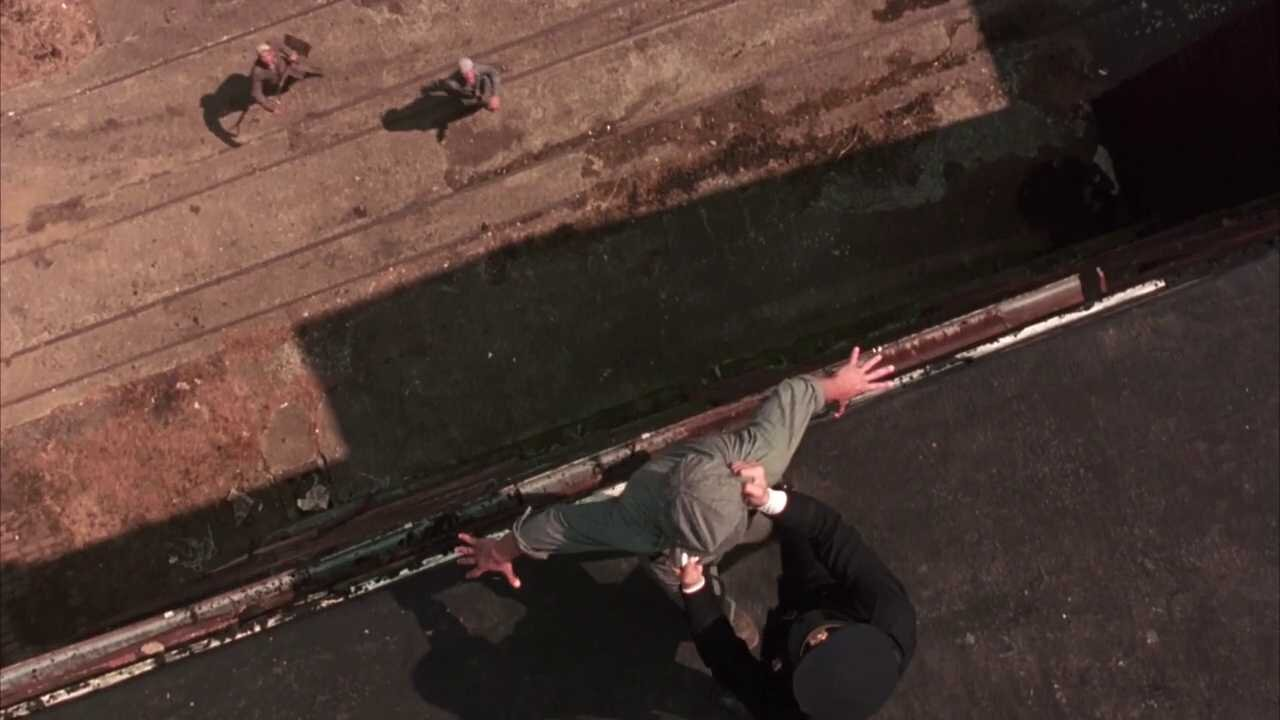
- How do lighting, juxtaposition, and pathetic fallacy convey mood and themes?
Note
This shot from The Shawshank Redemption effectively uses a high-angle perspective to convey vulnerability and tension. The viewer is placed above the action, looking down on the character, emphasising the precariousness of the situation. The vast drop and the character's desperate grasp heighten the sense of danger, drawing the audience into the emotional intensity of the scene. This technique showcases how film can manipulate visual elements to influence the viewer's perception and enhance the narrative.