Context & Writer’s Techniques (Leaving Cert English): Revision Notes
📚Revision Notes
Context & Writer's Techniques
Context in 'Othello'
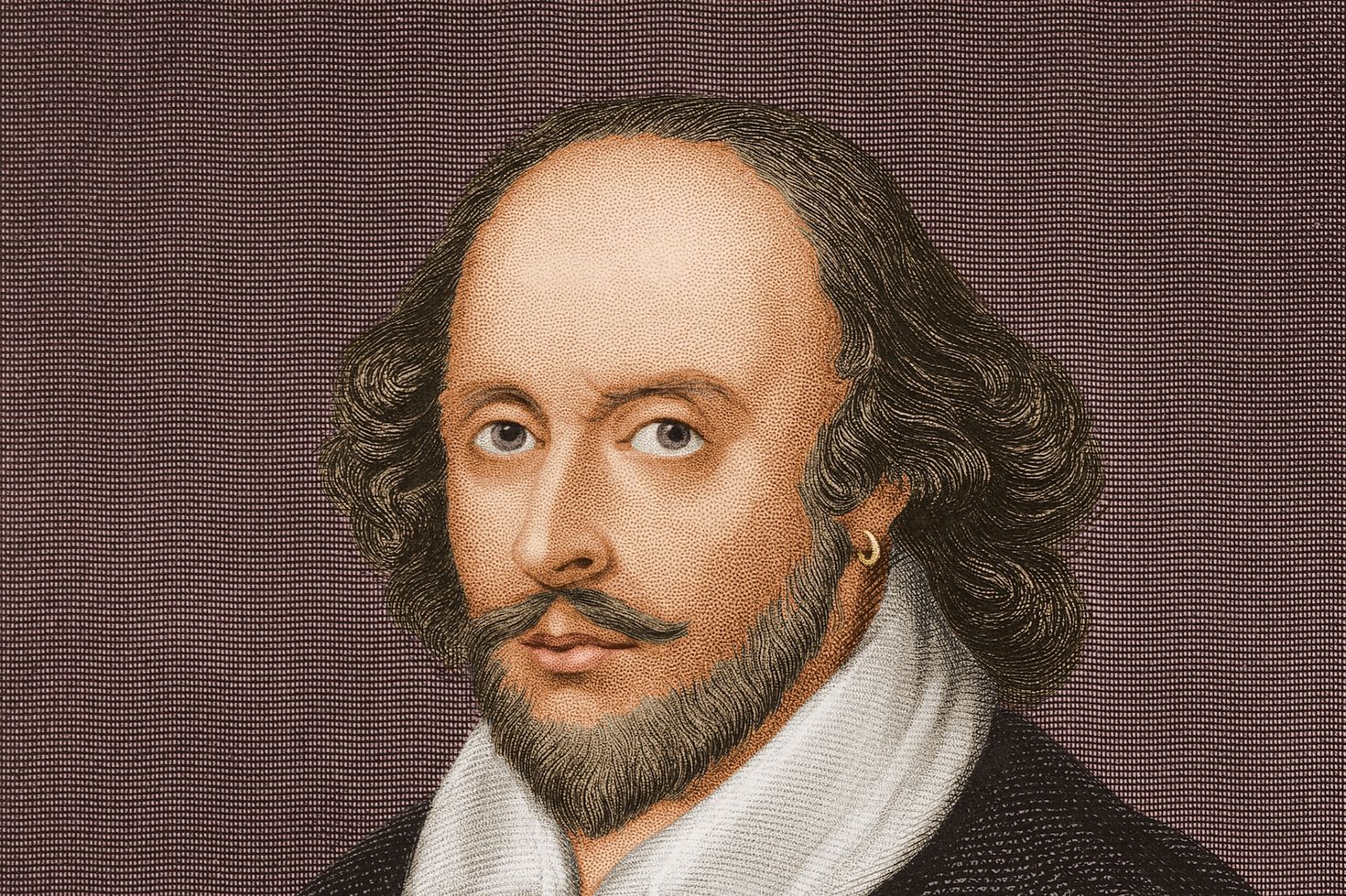
Shakespeare's Life
- Born in April 1564 in Stratford-upon-Avon, England.
- Attended a local grammar school, where he studied Latin and classical texts.
- Moved to London in the late 1580s to pursue a career in theatre.
- Became a prominent playwright and actor by 1592.
- Wrote for the acting troupe Lord Chamberlain's Men, later known as the King's Men.
- Married Anne Hathaway in 1582; had three children: Susanna, Hamnet, and Judith.
- Hamnet, his only son, died at age 11.
- Died in April 1616 at age 52.
History of the Play
- Written in 1603-1604.
- Likely first performed by the King's Men at Whitehall Palace on November 1, 1604.
- Initial reception was positive, praised for its intense drama and exploration of complex themes.
- Early performances captivated audiences with their exploration of jealousy, race, and betrayal.
- Historically, Othello was often played by white actors in blackface; it was not until the 20th century that black actors commonly took on the role.
- Adapted and performed in various forms over the centuries, with notable adaptations by Orson Welles (1951) and Laurence Olivier (1965).
Textual History
- First Quarto (1622): The first printed version of "Othello."
- First Folio (1623): Published posthumously in Shakespeare's First Folio with some textual differences from the Quarto.
- Differences: Variations between the Quarto and Folio versions lead to modern editions that often merge elements from both.
Literary Contexts
The Genre of the Play
- Tragedy: "Othello" is a tragedy, focusing on the downfall of the protagonist due to his fatal flaw and the manipulations of others.
- Domestic Tragedy: Incorporates elements of domestic tragedy, emphasising personal and intimate conflicts within a household setting.
Historical and Political Context
- Elizabethan and Jacobean Era: Written during a time of significant exploration, trade, and cultural exchanges between Europe and Africa.
- Venetian Empire: Set in Venice and Cyprus, reflecting Venice's role as a major trading hub and military power.
- Race and Colonialism: Reflects contemporary attitudes towards race and the presence of non-European individuals in Europe, highlighting issues of otherness and exoticism.
Philosophical Context
- Renaissance Humanism: Influenced by Renaissance humanism, emphasising the complexity of human nature and individual agency.
- Machiavellian Influence: Iago's manipulative and cunning behaviour reflects Machiavellian principles, exploring themes of power and deceit.
Cultural and Social Context
- Social Hierarchy and Class: Reflects the rigid social hierarchy and class distinctions of the time, with Othello as an outsider despite his military prowess.
- Gender Roles and Patriarchy: Explores the roles and expectations of men and women, particularly through the characters of Desdemona, Emilia, and Bianca.
- Honour and Reputation: Central themes of honour and reputation, particularly in the context of military and marital relationships.
- Race and Identity: Examines the impact of Othello's racial identity on his relationships and social standing, highlighting contemporary views on race and otherness.
Literary Influences
- Primary Source: Based on the Italian short story "Un Capitano Moro" by Cinthio, published in "Gli Hecatommithi" (1565).
- Classical Influences: Shakespeare drew on classical works, particularly those by Seneca, for elements of tragedy and dramatic structure.
Writer's Techniques in 'Othello'
Language and Diction
Poetic Language
- Shakespeare employs blank verse (unrhymed iambic pentameter) for the nobility, giving their speech a rhythmic and elevated quality.
- The prose is used for more informal conversations, often among lower-status characters or during moments of heightened emotional intensity.
Imagery and Metaphor
- Animal Imagery: Frequently used by Iago to dehumanise Othello and manipulate other characters.
- Examples: Iago describes Othello as a "Barbary horse" and talks about "an old black ram is tupping your white ewe," emphasising racial and sexual themes.
- Light and Dark Imagery: Symbolises good and evil, innocence and guilt.
- Examples: Desdemona is often associated with light and purity, while Othello's dark skin is used to contrast and highlight themes of otherness and exoticism.
Symbolic Language
- Handkerchief: A key symbol in the play, representing Othello's love for Desdemona and later becoming a false proof of her infidelity.
- Poison and Corruption: Iago's manipulations are often described in terms of poison and corruption, symbolising the insidious nature of his deceit.
Structure and Plot Devices
Tragic Structure
- Five-Act Structure: The play follows a classic five-act structure of exposition, rising action, climax, falling action, and denouement.
- Climax: The turning point occurs in Act III, Scene 3, when Othello is convinced of Desdemona's infidelity, marking his tragic fall.
Dramatic Irony
- The audience is aware of Iago's deceit and manipulation while Othello remains ignorant, creating tension and highlighting the tragic nature of Othello's misplaced trust.
- Examples: The audience knows about Iago's duplicity and true intentions, while characters like Othello and Cassio trust him implicitly.
Foreshadowing
- Shakespeare uses foreshadowing to hint at the tragic outcomes, building suspense and inevitability.
- Examples: Iago's early declarations of his hatred for Othello and his plans to manipulate him foreshadow the play's tragic events.
Characterization Techniques
Complex Characters
- Shakespeare creates multidimensional characters with profound psychological depth.
- Othello: A noble and honourable Moor, whose jealousy and insecurity lead to his downfall.
- Lago: A master manipulator and villain, whose motivations are complex and ambiguous, making him one of Shakespeare's most intriguing antagonists.
Soliloquies and Asides
- These provide insight into the characters' inner thoughts and motivations, particularly Iago's schemes and Othello's turmoil.
- Lago's Soliloquies: Reveal his plans and contempt for those around him, drawing the audience into his confidence.
- Othello's Soliloquies: Reflect his deepening despair and jealousy, highlighting his tragic flaw.
Dynamic Interactions
- The interplay between characters, particularly Othello and Iago, is marked by manipulation, deceit, and intense emotion.
- Examples: Iago's manipulation of Othello through insinuations and half-truths, leading to Othello's tragic decisions.
Dramatic Techniques
Irony and Paradox
- Shakespeare employs irony and paradox to underscore the play's themes of appearance versus reality.
- Examples: The irony of Iago being called "honest" throughout the play, despite being the most deceitful character.
- Paradox: Othello's love for Desdemona leads to her death, illustrating the paradoxical nature of his jealousy.
Symbolism and Motifs
- Handkerchief: Symbolises Othello's love and trust, later becoming a symbol of infidelity and betrayal.
- Poison and Corruption: Represent the destructive nature of Iago's manipulation and deceit.
Catharsis and Tragic Flaw
- Catharsis: The play's tragic resolution evokes a cathartic experience for the audience, culminating in Othello's and Desdemona's deaths.
- Tragic Flaw: Othello's jealousy and his vulnerability to manipulation are central to his downfall.
Sound and Rhythm
Alliteration and Assonance
- Shakespeare uses alliteration and assonance to enhance the musicality and emotional impact of the dialogue.
- Examples: The repetition of sounds in key speeches, such as Othello's final monologue, heightens the emotional intensity.
Stagecraft and Theatricality
Visual Spectacle
- Shakespeare's stage directions and descriptions create powerful visual spectacles, such as the storm in Act II that foreshadows turmoil.
- Effect: These scenes enhance the dramatic impact and underscore the play's themes of chaos and disorder.
Fluid Scene Changes
- Rapid shifts in location from Venice to Cyprus and various scenes within Cyprus create a dynamic and fast-paced narrative.
- Effect: This technique underscores the play's thematic exploration of displacement and cultural conflict.
Use of Prophecy and Superstition
- Characters frequently reference omens and superstitions, reflecting the ancient world's belief in fate and the supernatural.
- Examples: The handkerchief's history and significance as a charm or talisman.