World Language Groups (Leaving Cert Geography): Revision Notes
📚Revision Notes
World language groups
What are language groups?
Language groups are collections of languages that share common ancestral origins. These languages often show similarities in their grammar, vocabulary and pronunciation patterns. Language groups can be further organised into language families, which include multiple related languages that developed from the same source over thousands of years.
The concept of language groups helps us understand how languages evolved and spread across the world. This classification system is essential for understanding linguistic relationships and cultural connections between different societies.
Note
For example, the Indo-European language family includes languages such as English, Spanish, Hindi and Russian, all sharing roots that date back thousands of years. Despite their apparent differences today, these languages share fundamental structural similarities that reveal their common ancestry.
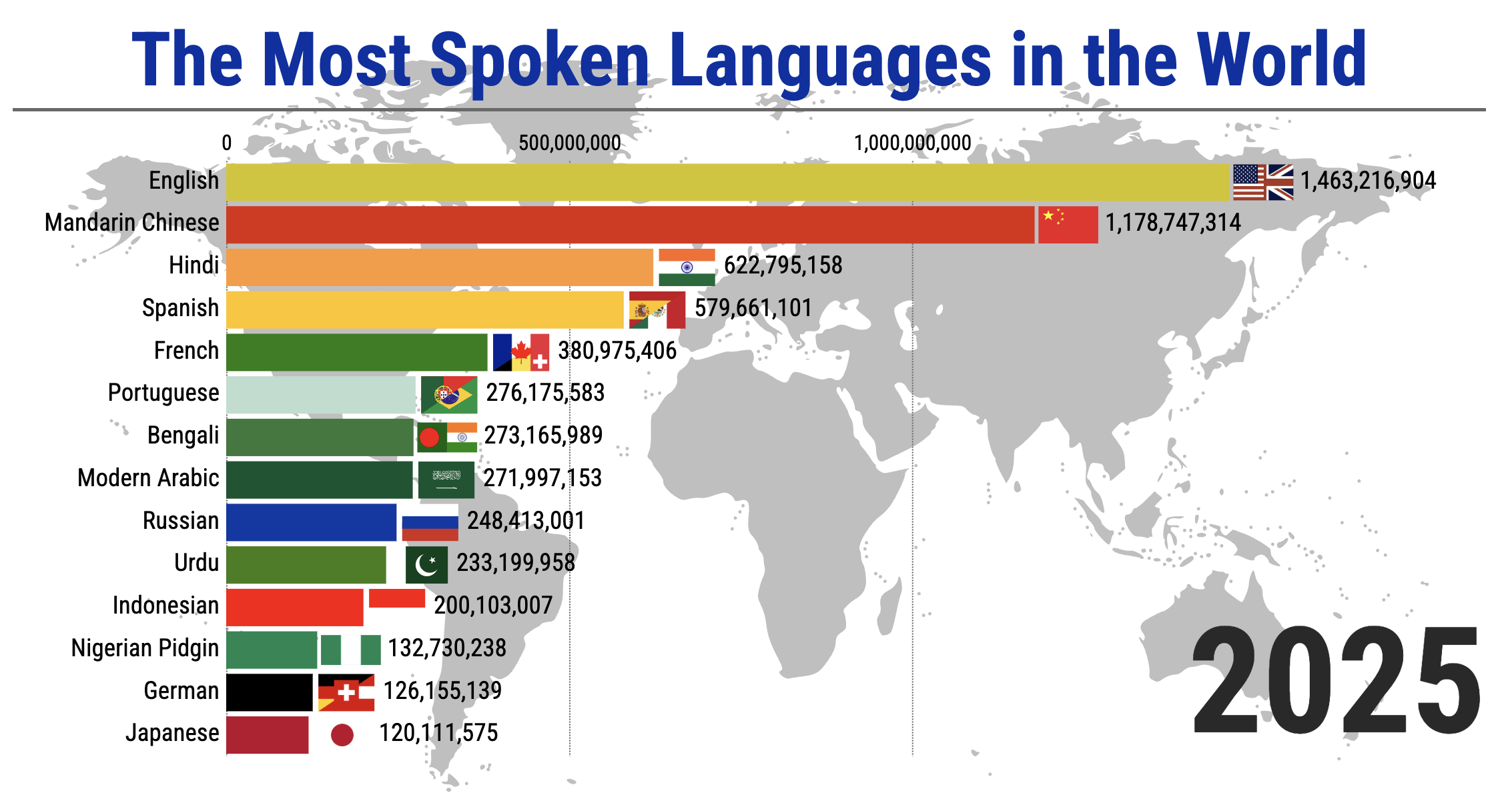
Major world language groups
There are four primary language groups that dominate global communication, representing the most significant linguistic divisions worldwide:
1. Indo-European
- Geographic spread: Largest language family globally, spoken by billions worldwide
- Key languages: English, French, Spanish, German, Hindi, Russian
- Significance: Most widespread language family due to historical expansion and colonisation
2. Sino-Tibetan
- Geographic spread: Dominant in East Asia
- Key languages: Chinese, Tibetan, Burmese
- Significance: Mandarin Chinese alone has over 1 billion speakers
3. Afro-Asiatic
- Geographic spread: Africa and Middle East
- Key languages: Arabic, Hebrew, Amharic
- Significance: Includes major religious and cultural languages
4. Niger-Congo
- Geographic spread: Predominantly Sub-Saharan Africa
- Key languages: Swahili, Yoruba, Zulu
- Significance: Swahili is spoken by over 100 million people
Note
These four language groups account for the vast majority of the world's speakers, demonstrating how language distribution reflects both historical migration patterns and modern global influence.
Global language diversity
Language serves as a powerful indicator of cultural identity worldwide. Currently, over 7,000 languages are spoken globally, creating rich cultural diversity across different regions.
However, this linguistic diversity faces serious threats. Nearly 40% of these languages are at risk of extinction.
Note
Linguistic homogenisation is the process by which distinct languages and dialects become increasingly similar or merge into a single dominant language, often due to globalisation and cultural exchange. This can reduce linguistic diversity, as smaller languages struggle to survive in a world that favours dominant ones like English, Spanish, or Mandarin.
Important
The rapid loss of linguistic diversity represents not just the disappearance of communication systems, but the erosion of unique cultural knowledge, traditional practices, and ways of understanding the world that have developed over millennia.
Summary
Key Points to Remember:
- Language groups consist of languages sharing common ancestral origins with similar grammar, vocabulary and pronunciation
- Four major world language groups are Indo-European (largest globally), Sino-Tibetan (dominant in East Asia), Afro-Asiatic (Africa and Middle East), and Niger-Congo (Sub-Saharan Africa)
- Over 7,000 languages exist globally, but 40% face extinction due to globalisation and linguistic homogenisation
- Geographic distribution of language groups reflects historical migration patterns and cultural connections