The Blitz (Leaving Cert History): Revision Notes
📚Revision Notes
The Blitz
Yet another key event in the Second World War was the Blitz. Below are some detailed notes on the Blitz and how it affected the people of Britain. These notes will prove invaluable when it comes to essay study and preparation because they provide key context into people's lives during the war. Many historians also argue that the Blitz brought with it a sense of unity within Britain and an even greater desire to beat Germany, especially once Hitler made the mistake of ending the Blitz and focusing his attention on the Soviet Union.
The Blitz
- The Blitz was a prolonged bombing campaign carried out by Nazi Germany against the United Kingdom during World War II. From September 1940 to May 1941, the Luftwaffe targeted major cities across Britain, aiming to demoralise the civilian population and cripple the country's industrial and military capabilities.
- London was particularly hard hit, with the capital experiencing 57 consecutive nights of bombing at the start of the Blitz. Other cities, including Coventry, Birmingham, Liverpool, and Manchester, also suffered significant destruction.
Initial Bombing Campaign
- The Blitz began on September 7, 1940, following the failure of the Luftwaffe to gain air superiority during the Battle of Britain.
- London was bombed for 57 consecutive nights, causing extensive damage and significant civilian casualties.
- The Luftwaffe aimed at industrial centres, ports, and infrastructure to disrupt Britain's war effort.
Impact on Major Cities
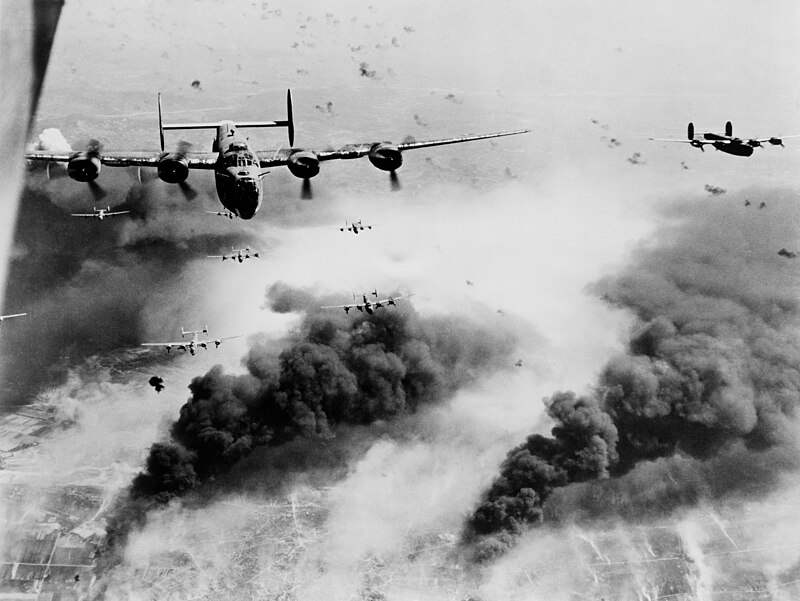
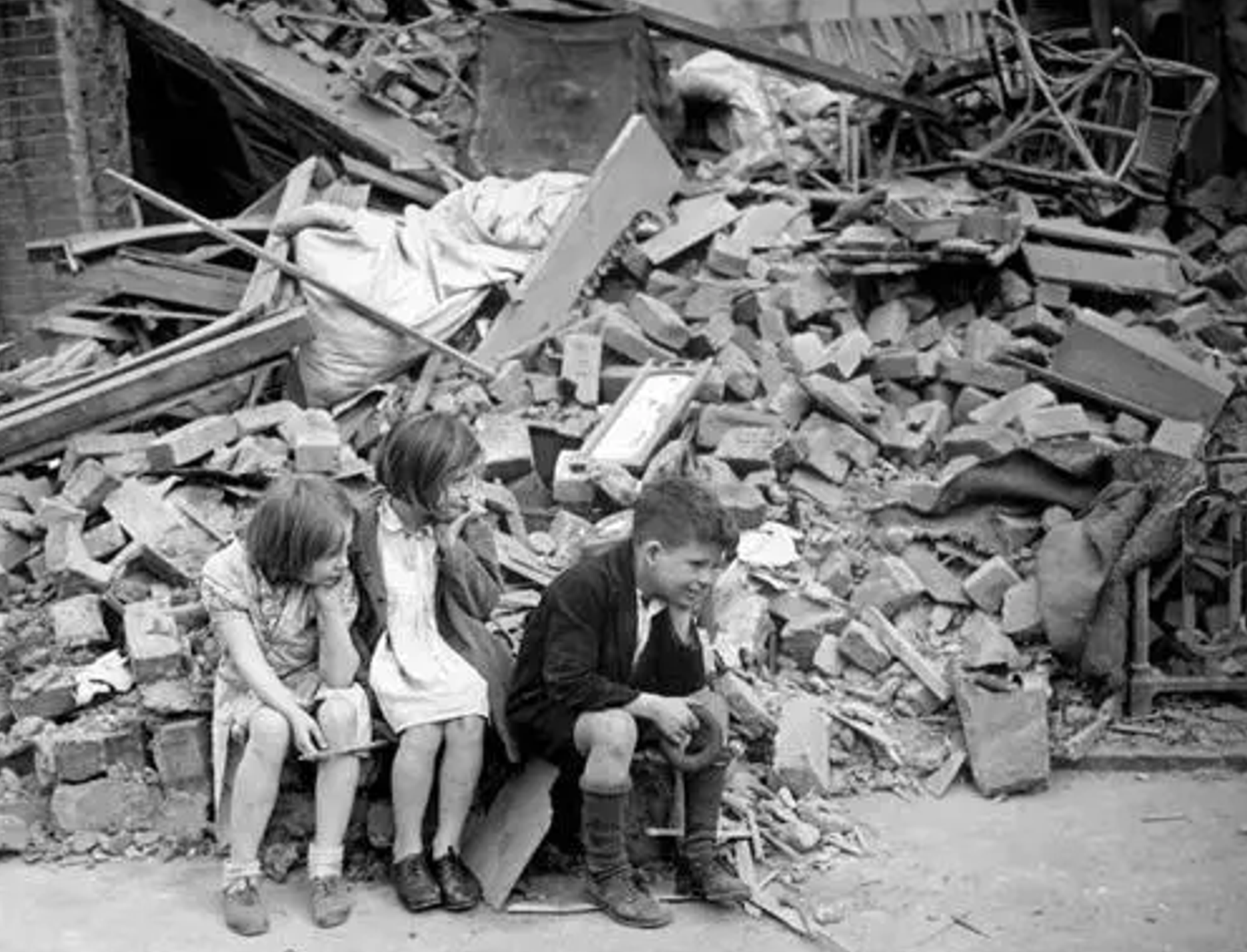
- The bombings caused widespread destruction of buildings, homes, and infrastructure. Over 43,000 civilians were killed, and thousands more were injured.
- On November 14, 1940, Coventry was subjected to a particularly devastating raid, destroying much of the city centre and its mediaeval cathedral.
- Factories and docks in cities like Birmingham, Liverpool, and Manchester were heavily targeted, affecting production and supply chains.
Civilian Response and Morale
- The government implemented ARP measures, including blackout regulations, air raid shelters, and the distribution of gas masks.
- Public shelters, such as the London Underground stations and Anderson shelters in gardens, became vital for civilian protection.
- Many children were evacuated from cities to the countryside to protect them from bombings.
- Despite the destruction, the Blitz fostered a strong sense of community and resilience among the British people. The "Blitz spirit" symbolised determination and unity in the face of adversity.
Government and Media Role
- The government used propaganda to maintain morale, emphasising the resilience and courage of the British people.
- Media reports were controlled to avoid spreading panic, focusing instead on stories of heroism and survival.
- Churchill's speeches and public appearances boosted morale and encouraged perseverance.
Long-term Effects
- The post-war period saw extensive rebuilding efforts, leading to modern urban planning and development in many affected cities.
- The Blitz strained Britain's economy, diverting resources to defence and reconstruction efforts.
- The experience of constant bombings left lasting psychological scars on the population, influencing British society for years to come.
Key Points to Remember
- The Blitz was a significant bombing campaign by Nazi Germany against the UK from September 1940 to May 1941, aiming to demoralise civilians and disrupt industry.
- Major Cities: London, Coventry, Birmingham, Liverpool, and Manchester were heavily bombed, resulting in extensive destruction and significant civilian casualties.
- Civilian Response: The British government implemented ARP measures, and the civilian population displayed remarkable resilience and community spirit.
- Government Role: Propaganda and censorship were used to maintain morale, and Prime Minister Winston Churchill played a key role in boosting public confidence.
- Long-term Effects: The Blitz led to extensive post-war reconstruction, economic strain, and lasting psychological impacts on the British population.