3: Rialacha na Scoile (Leaving Cert Irish): Revision Notes
📚Revision Notes
3: Rialacha na Scoile
An scéal (the story)
Pictiúr 1: Tionól na scoile
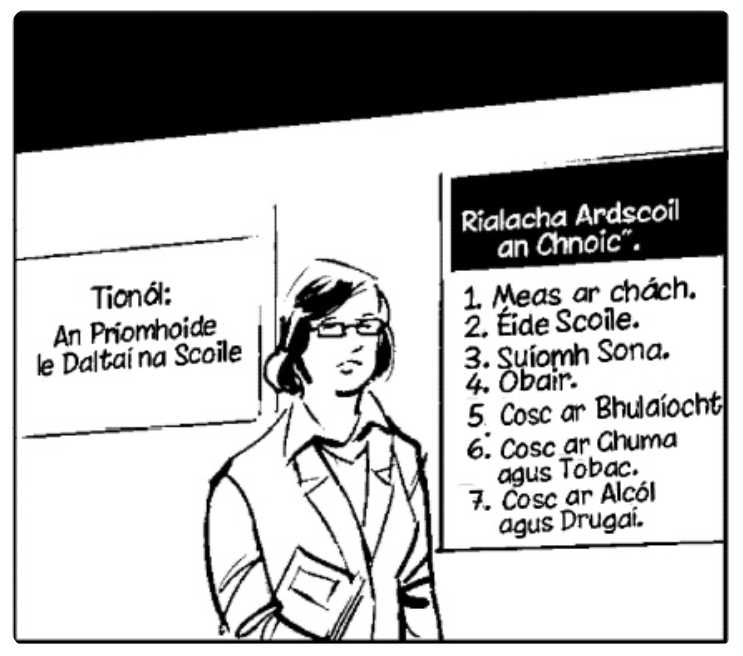
Sa chéad phictiúr, feicimid Bean Uí Shúilleabháin, príomhoide Ardscoil an Chnoic, agus í ar a slí go dtí an tionól seachtainiúil. Ag an tionól seo, labhraíonn sí le daltaí na scoile faoi imeachtaí na seachtaine agus, mar is gnáth, leagann sí amach rialacha na scoile. Cuireann sí béim ar mheas a léiriú do chách agus ar gan bulaíocht a dhéanamh. Deir sí go soiléir go bhfuil cosc ar ghuma, tobac, alcól agus drugaí ar scoil.
In the first picture, we see Mrs Sullivan, principal of Ardscoil an Chnoic, on her way to the weekly assembly. At this assembly, she speaks to the students about the week’s events and, as usual, sets out the school rules. She emphasises showing respect to everyone and not bullying. She states clearly that there is a ban on gum, tobacco, alcohol and drugs in the school.
Na rialacha:
- Meas ar chách (Respect everyone)
- Éide Scoile (School uniform)
- Suíomh Sona (Happy environment)
- Obair (Work hard)
- Cosc ar Bhulaíocht (No bullying)
- Cosc ar Ghuma agus Tobac (No gum or tobacco)
- Cosc ar Alcól agus Drugaí (No alcohol or drugs)
Pictiúr 2: Ag briseadh na rialacha
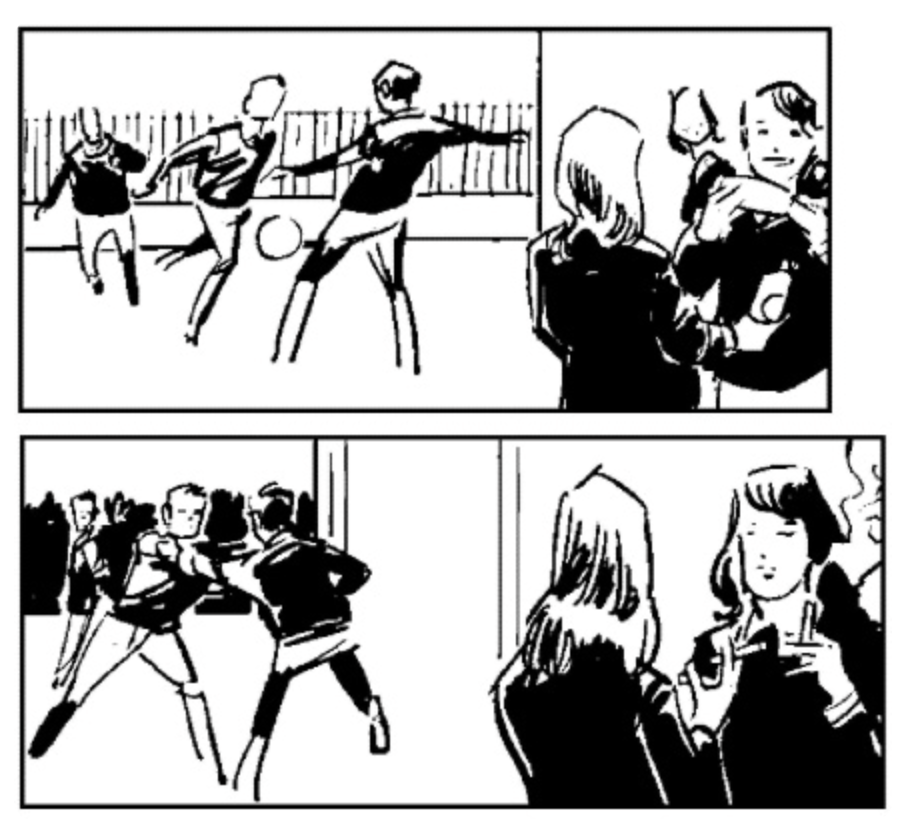
I bpictiúr a dó, is léir nach ndearna roinnt daltaí aird ar an gcaint ag an tionól agus feicimid iad ag briseadh na rialacha. Tá buachaillí ann ag imirt peile ach go tobann éiríonn troid eatarthu. Ní suíomh sona é sin ar chor ar bith! Ansin, feicimid cailíní taobh thiar den bhothán rothar agus iad ag caitheamh tobac, mar dá mba rud é nach raibh rialacha ar bith ann.
In picture two, it’s clear that some students paid no attention to the talk at the assembly and we see them breaking the rules. There are boys playing football but suddenly a fight breaks out between them. That is not a happy environment at all! Then we see girls behind the bike shed smoking, as if there were no rules at all.
Pictiúr 3: Múinteoirí ag tabhairt amach
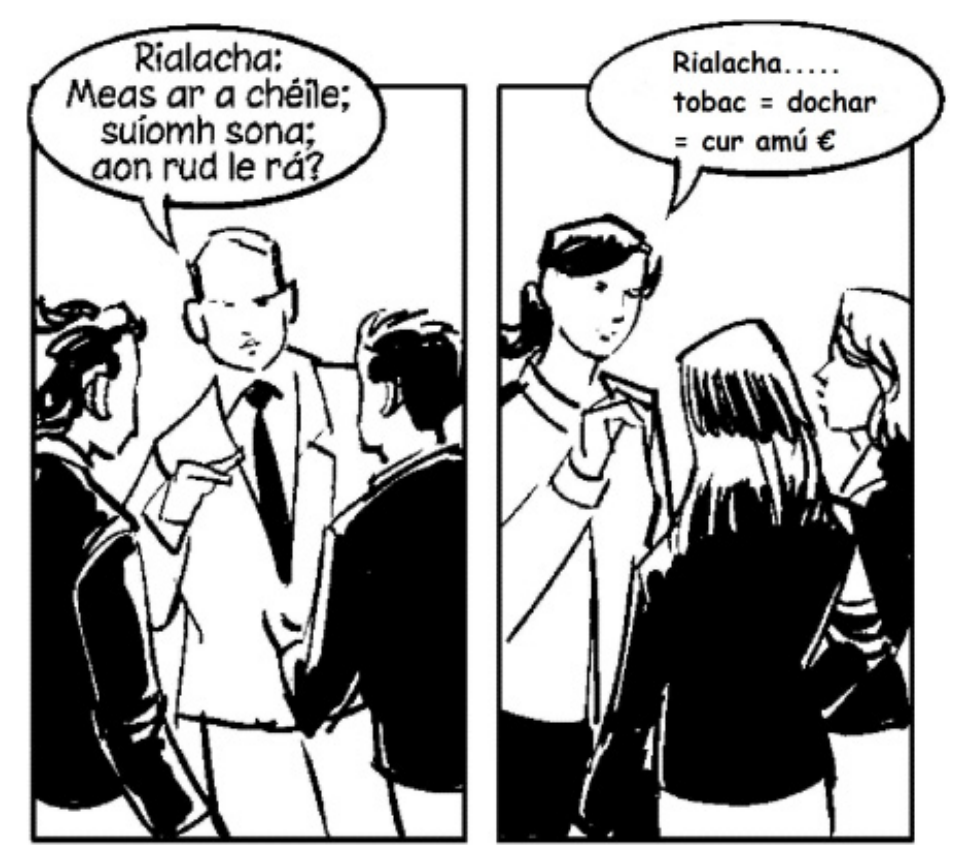
I bpictiúr a trí, beireann beirt mhúinteoirí, an tUasal Ó hAodha agus Bean Ní Chathasaigh, ar na daltaí a bhris rialacha na scoile. Tá siad an-chrosta agus tugann siad íde béil do na scoláirí. Cuireann an tUasal Ó hAodha i gcuimhne do na buachaillí gurb iad rialacha na scoile meas a bheith acu ar a chéile agus suíomh sona a chruthú. Fiafraíonn sé díobh an dtuigeann siad an dochar atá déanta acu.
In picture three, two teachers, Mr Healy and Ms Kavanagh, catch the students who broke the school rules. They are very cross and they give the students a scolding. Mr Healy reminds the boys that the school rules are to respect each other and create a happy environment. He asks them if they understand the harm they have caused.
I gcás na gcailíní, tá Bean Ní Chathasaigh ag tabhairt amach freisin. Deir sí go ndéanann tobac dochar dá sláinte agus gur cur amú airgid é, gan trácht ar an drochshampla atá siad ag tabhairt.
In the girls' case, Ms Kavanagh is giving out too. She says that smoking damages their health and it is a waste of money, not to mention the bad example they are setting.
Pictiúr 4: Tuismitheoirí ar buile
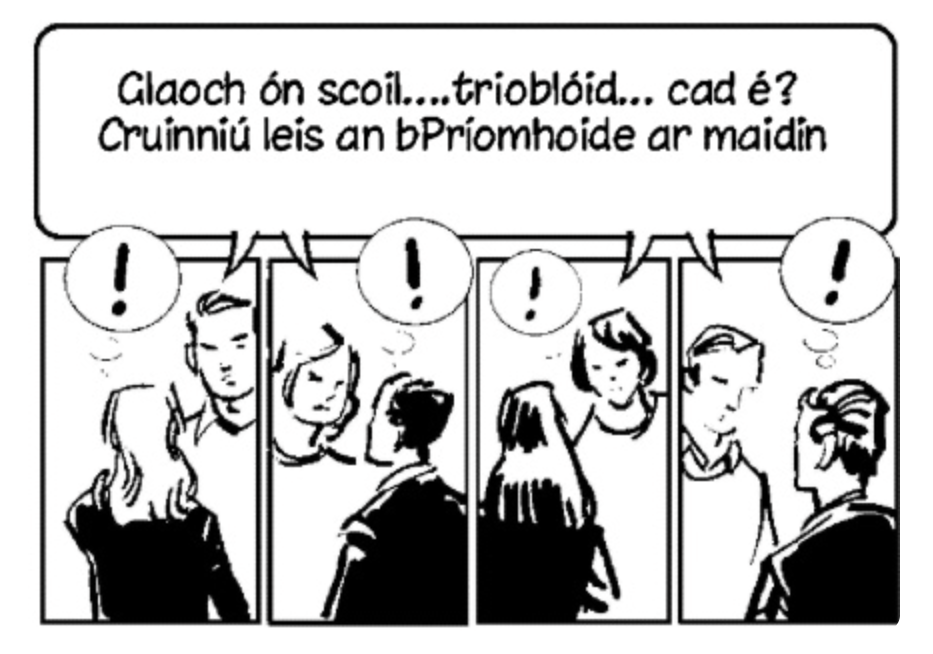
Nuair a théann na daltaí abhaile, bíonn scéal eile rompu. Deir a dtuismitheoirí gur fuair siad glaoch ón scoil sa tráthnóna ag rá go raibh a bpáiste i dtrioblóid. Ceistíonn siad na scoláirí agus fiafraíonn siad cad a tharla. Deir siad go mbeidh cruinniú acu leis an bpríomhoide ar maidin chun an scéal a phlé. Tá scanradh ar na daltaí agus tá a fhios acu go bhfuil siad i bponc ceart anois.
When the students go home, they have another problem to face. Their parents say they received a call from the school in the afternoon saying their child was in trouble. They interrogate the students and ask what happened. They say there will be a meeting with the principal in the morning to discuss it. The students are frightened and they know they are in a proper fix now.
Note
The phrase "i bponc" is an important colloquial expression meaning "in trouble" or "in a fix" - perfect for describing the students' predicament!
Pictiúr 5: Oifig an phríomhoide
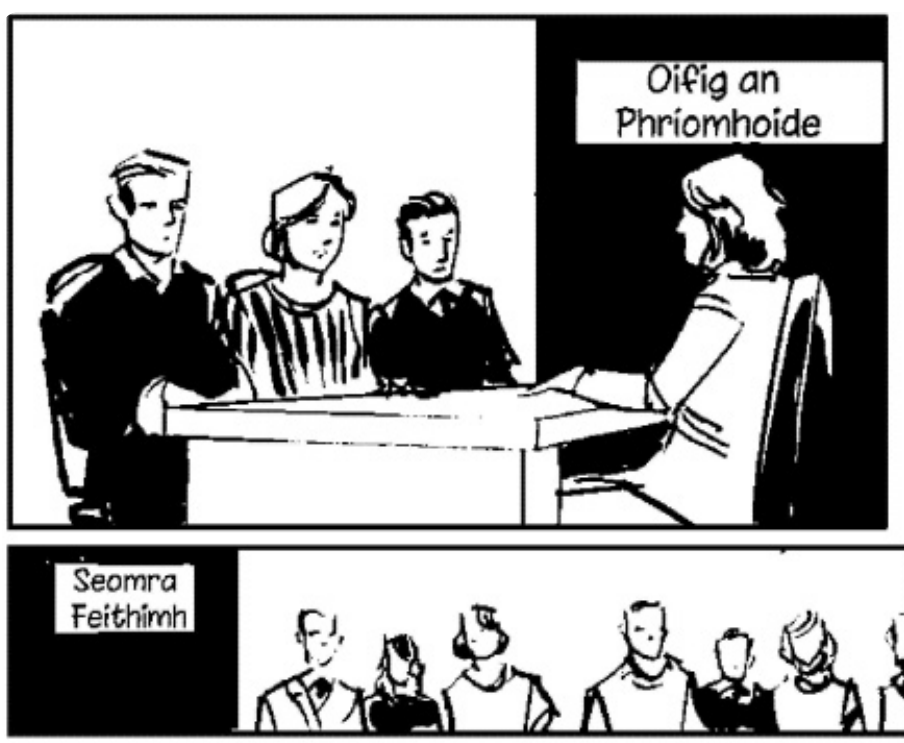
I bpictiúr a cúig, feicimid Seosamh, duine de na buachaillí troiblóideacha, lena thuismitheoirí os comhair na príomhoide. Tá na tuismitheoirí ar buile, agus tá náire ar Sheosamh. Míníonn an phríomhoide go díreach cad a tharla agus cén fáth go bhfuil pionós i ndán dóibh. Sa seomra feithimh, tá daltaí eile lena dtuismitheoirí ag fanacht lena seal.
In picture five, we see Joseph, one of the troublesome boys, with his parents in front of the principal. The parents are furious and Joseph is ashamed. The principal explains exactly what happened and why a punishment is coming. In the waiting room, other students are waiting with their parents for their turn.
Pictiúr 6: Coinneáil
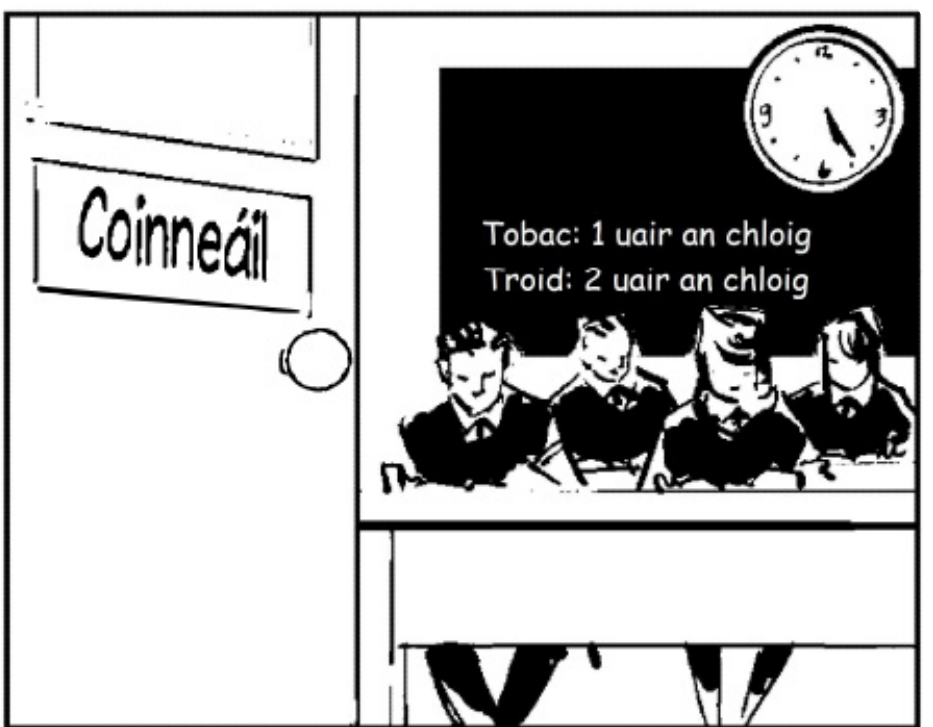
Sa phictiúr deireanach, feicimid na daltaí a bhris rialacha na scoile i gcoinneáil tar éis scoile. Is é an pionós as caitheamh tobac ná uair amháin i gcoinneáil tar éis scoile, agus is é an pionós as troid ná dhá uair an chloig i gcoinneáil. Tugtar obair bhreise dóibh agus caithfidh siad na rialacha a léamh arís. Tá ceacht foghlamtha acu anois — ní bhrisfidh siad na rialacha riamh arís!
In the final picture, we see the students who broke the school rules in detention after school. The punishment for smoking is one hour in detention and the punishment for fighting is two hours. They are given extra work and they have to read the rules again. They have learned a lesson now — they won’t break the rules ever again!
Important
Punishments (Pionóis):
- Caitheamh tobac (Smoking) = 1 hour detention
- Troid (Fighting) = 2 hours' detention
Ceisteanna le haghaidh an scrúdaithe
You might be asked questions like these about the pictures:
| Ceist (Question) | Freagra (Answer) |
|---|---|
| Cá bhfuil an príomhoide ag dul i bpictiúr a haon? (Where is the principal going in picture 1?) | Tá sí ar a slí go dtí an tionól seachtainiúil. (She's on her way to the weekly assembly.) |
| Cad a tharla ar an bpáirc imeartha i bpictiúr a dó? (What happened on the playing field in Picture 2?) | Thosaigh na buachaillí ag troid le linn an chluiche peile. (The boys started fighting during the football match.) |
| Cad é an pionós a fuair siad i bpictiúr a sé? (What punishment did they get in Picture 6?) | Fuair siad coinneáil tar éis scoile agus obair bhreise. (They got detention after school and extra work.) |
Note
Tip for the oral exam: Practice answering these questions smoothly. The examiner may ask follow-up questions, so be prepared to elaborate on each scene using the vocabulary from this chapter.
Gramadach thábhachtach
Here are some important grammar points used in this story:
An tuiseal ginideach (the genitive case)
The genitive case shows possession or relationship between nouns. Notice how the second noun changes:
Example
Example 1: Rialacha na scoile (the rules of the school)
Step 1: Identify the two nouns
- rialacha (rules) - first noun, stays the same
- scoil (school) - second noun, must change
Step 2: Apply the genitive rule
- scoil → scoile (adds -e ending)
Final result: rialacha na scoile
Example
Example 2: Imeachtaí na seachtaine (events of the week)
Step 1: Identify the two nouns
- imeachtaí (events) - first noun, stays the same
- seachtain (week) - second noun, must change
Step 2: Apply the genitive rule
- seachtain → seachtaine (adds -e ending)
Final result: imeachtaí na seachtaine
Example
Example 3: Cur amú airgid (waste of money)
Step 1: Identify the two nouns
- cur amú (waste) - first noun, stays the same
- airgead (money) - second noun, must change
Step 2: Apply the genitive rule
- airgead → airgid
Final result: cur amú airgid
Important
Common genitive patterns to remember:
- rialacha na scoile (the rules of the school)
- imeachtaí na seachtaine (the events of the week)
- cur amú airgid (waste of money)
Fiafraigh + de
The verb "fiafraigh" (to ask) takes the preposition "de" (of):
Example
Fiafraíonn sé díobh (He asks them)
Breaking it down:
- fiafraigh (to ask - base form)
- fiafraíonn (asks - present tense, 3rd person)
- de (of/from) + iad (them) = díobh
The preposition "de" combines with pronouns:
- de + mé = díom (of me)
- de + tú = díot (of you)
- de + sé/sí = de (of him/her)
- de + muid = dínn (of us)
- de + sibh = díbh (of you pl.)
- de + iad = díobh (of them)
Leis an + urú (eclipsis)
After "leis an" (with the), we use urú (eclipsis):
Example
Leis an bpríomhoide (with the principal)
Step 1: Start with the basic word
- príomhoide (principal) - starts with 'p'
Step 2: Apply eclipsis after "leis an"
- We add 'b' before the 'p': bpríomhoide
Final result: leis an bpríomhoide
Important
Common mistake to avoid: Don't forget the eclipsis after "leis an"!
- ✗ WRONG: leis an príomhoide
- ✓ CORRECT: leis an bpríomhoide
Foclóir tábhachtach
Focail ón scéal:
- Tionól = assembly
- Tionól seachtainiúil = weekly assembly
- Rialacha na scoile = school rules
- Meas a léiriú do chách = to show respect to everyone
- Bulaíocht = bullying
- Cosc = ban
- Guma = gum
- Tobac = tobacco
- Alcól = alcohol
- Drugaí = drugs
- Aird = attention
- Troid = fight / fighting
- Bothán rothar = bike shed
- Íde béil = a scolding / giving out
- Dochar = harm / damage
- Cur amú airgid = a waste of money
- Glaoch ón scoil = a call from the school
- Cruinniú = meeting
- I bponc ceart = in real trouble / in a real fix
- Ar buile = furious
- Náire = shame / embarrassment
- Seomra feithimh = waiting room
- Pionós = punishment
- Coinneáil = detention
- Obair bhreise = extra work
- Ceacht foghlamtha = a lesson learned
Briathra agus nathanna:
- Ag tabhairt amach = giving out (scolding)
- Ag imirt peile = playing football
- Ag briseadh na rialacha = breaking the rules
- Mar is gnáth = as usual
- Go tobann = suddenly
- Ar chor ar bith = at all
Ceisteanna don bhéaltriail
Here are some questions the examiner might ask you during the oral exam:
- Cad iad na rialacha scoile i do scoil féin? (What are the school rules in your own school?)
- An raibh tú riamh i dtrioblóid ar scoil? (Were you ever in trouble at school?)
- Cad é do mheas ar chaitheamh tobac? (What is your opinion on smoking?)
- An bhfuil córas i bhfeidhm in aghaidh bulaíochta i do scoil? (Is there a system against bullying in your school?)