Primary, Secondary, and Tertiary Sectors (Grade 10 NSC Matric Business Studies): Revision Notes
📚Revision Notes
Primary, Secondary, and Tertiary Sectors
What are business sectors?
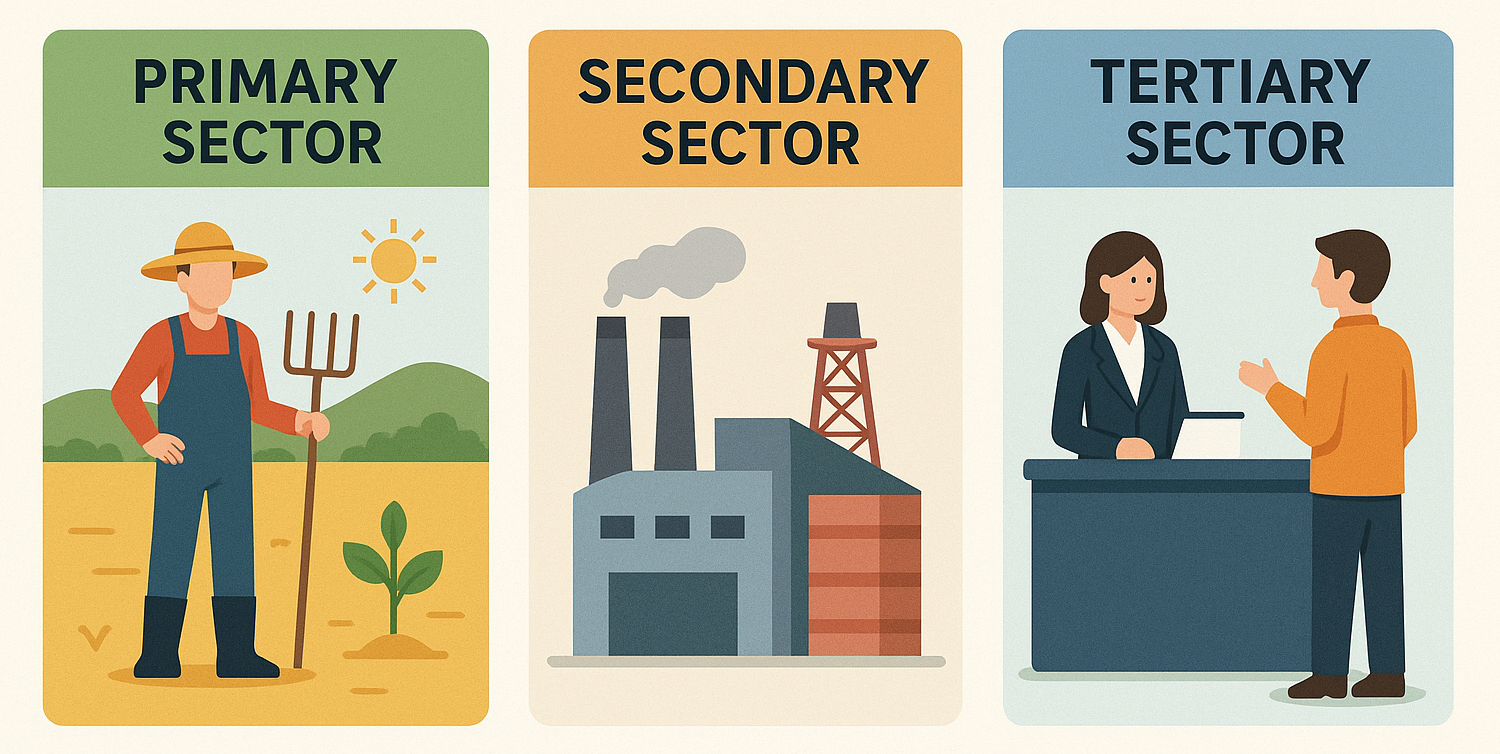
Business sectors are different groups of businesses that are organised based on the type of work they do. Think of it like sorting businesses into categories - just like how you might sort your school subjects into maths, languages, and sciences. In South Africa's economy, we classify businesses into three main sectors to understand how they contribute to our country's economic growth.
The main purpose of classifying businesses into sectors is to see how each group contributes to South Africa's economy and to understand how they work together to create the products and services we use every day.
Note
Key term: An industry refers to a specific group of businesses that produce a particular kind of good or service. For example, the tourism industry includes travel services, hotels, restaurants, and tourist attractions.
The three main business sectors
Primary sector
The primary sector includes businesses that extract or collect raw materials directly from nature. These are the businesses that get the basic materials we need before they can be turned into useful products.
What they do:
- Extract natural resources from the earth, sea, or land
- Collect raw materials that other businesses will use later
- Work directly with nature to gather resources
Examples of primary sector businesses:
- Agriculture: Farmers growing crops like maize, wheat, and vegetables
- Mining: Companies extracting gold, diamonds, platinum, and coal from South African mines
- Fishing: Boats catching fish and other seafood from our oceans
- Forestry: Companies cutting down trees for timber and wood products
Did you know? Mining contributed 14.4% to South Africa's GDP in September 2020, making it one of our most important primary sector activities.
Secondary sector
The secondary sector takes the raw materials from the primary sector and transforms them into finished or semi-finished products. This is often called the manufacturing sector because these businesses make new products.
What they do:
- Take raw materials and change them into useful products
- Add value to raw materials by processing them
- Create products that people and other businesses can use
- Play a critical role because raw materials on their own aren't very useful
Examples of secondary sector businesses:
- Construction: Building houses, schools, and roads using materials like cement and steel
- Factories: Making cars, furniture, clothing, and electronics
- Manufacturing: Producing food products, beverages, and medicines
- Electricity: Power stations generating electricity from coal or other sources
Important
Why the secondary sector is crucial: The secondary sector is essential because it takes materials that aren't immediately useful (like iron ore) and turns them into products we actually need (like cars or building materials). Without this transformation process, raw materials would have very limited value to society.
Tertiary sector
The tertiary sector provides services to both businesses and consumers. These businesses don't make physical products, but they offer services that help the economy function smoothly. The tertiary sector is also known as the service industry.
What they do:
- Provide services rather than physical goods
- Help transport, distribute, and sell products made in the secondary sector
- Support the activities of primary and secondary sectors
- Serve the needs of consumers and other businesses
Examples of tertiary sector businesses:
- Financing: Banks like FNB and Standard Bank providing loans and financial services
- Hospitality: Hotels, restaurants, and guesthouses serving tourists and locals
- Retail: Shops like Pick n Pay, Shoprite, and Checkers selling products to consumers
- Storage: Warehouses storing goods before they reach shops
- Tourism: Tour guides, travel agencies, and entertainment venues
- Transportation: Taxi services, airlines, and courier companies moving people and goods
How the sectors work together
The three sectors don't work independently - they form an economic chain of production where each sector depends on the others. Let's look at how this works using a practical example:
Example
Worked Example: The Bread Production Chain
Step 1 - Primary sector: A farmer grows wheat on their farm. When the wheat is ready, they sell the wheat grains to a food company.
Step 2 - Secondary sector: Sasko Bakery (a secondary sector business) takes the wheat and processes it at their flour mill to make flour. They then use this flour to produce bread, which is packaged and ready for sale.
Step 3 - Tertiary sector: The finished bread is transported to retailers like Shoprite or Pick n Pay. These shops (tertiary sector businesses) sell the bread to consumers like you and your family.
This shows how all three sectors work together to get a simple loaf of bread from farm to your table.
The relationship works both ways
The relationship between sectors isn't just one direction. The primary sector also depends on the secondary sector through interdependent relationships. For example:
- Mining companies (primary sector) need mining equipment like drills and machinery
- This equipment is made by manufacturing companies (secondary sector)
- So the primary sector depends on the secondary sector for tools and equipment
This shows how interconnected our economy is - each sector supports and depends on the others.
Why this classification matters
Understanding these three sectors helps us:
- See how South Africa's economy is structured
- Understand where jobs are created in different parts of the economy
- Recognise how businesses depend on each other
- Appreciate the role each sector plays in economic growth
Important
Exam tip: When answering questions about business sectors, always think about whether the business extracts (primary), makes (secondary), or serves (tertiary). This will help you classify any business correctly.
Summary
Key Points to Remember:
- Primary sector: Extracts and collects raw materials from nature (agriculture, mining, fishing, forestry)
- Secondary sector: Transforms raw materials into finished products through manufacturing and processing
- Tertiary sector: Provides services to businesses and consumers (retail, transport, tourism, banking)
- The sectors work together: They form an economic chain where primary provides materials to secondary, and tertiary helps distribute and sell the finished products
- All sectors are important: Each sector plays a vital role in South Africa's economy and they all depend on each other to function effectively