Population Growth (Grade 10 NSC Matric Geography): Revision Notes
📚Revision Notes
Managing Population Growth
Balancing population size with available resources is one of the most challenging tasks facing governments worldwide. As populations continue to grow, countries must find ways to manage this growth sustainably whilst ensuring their citizens have access to adequate resources and opportunities.
Note
The challenge of population management becomes increasingly complex as countries must balance economic development, resource sustainability, and individual reproductive rights while addressing the needs of growing populations.
What are population management strategies?
Population management strategies are long-term government plans designed to control and influence population growth rates. These strategies aim to limit the number of children families have, which helps reduce total fertility rates and birth rates over time.
Countries like China and India have implemented various population control policies over the past 40 years to address rapid population growth. These approaches have had mixed results, with both benefits and significant challenges emerging from their implementation.
Note
Population management requires careful consideration of cultural, economic, and social factors. What works in one country may not be suitable for another due to different demographic structures, cultural values, and political systems.
Case study: China's one-child policy

Background and implementation
In 1979, China faced a population crisis with nearly one billion people, two-thirds of whom were under 30 years old. The government worried that such rapid population growth would lead to widespread famine and resource shortages. To prevent this, the Chinese Communist Party introduced the controversial one-child policy.
The policy established strict rules: urban families could have only one child, whilst rural families were permitted two children maximum. This dramatic intervention aimed to slow China's population growth significantly.
How the policy worked
Incentives offered:
- Free contraception and sterilisation services
- Financial benefits for families with only one child, including annual salary bonuses
- Priority access to better housing, education, and healthcare
- Guaranteed employment opportunities for the single child
- Community recognition and honours for compliance
Controls implemented:
- Raising the minimum marriage age to 20 for women and 22 for men
- Requiring families to apply for permission before having a child
- In some cases, forcing women to use contraception or undergo abortions
- Imposing heavy fines on families exceeding the child limit
- Removing benefits from families who had additional children
Positive impacts of the policy
The one-child policy proved effective at reducing population growth. When introduced, the government aimed for a population of 1.2 billion by 2000. The actual 2000 census recorded 1.27 billion people. By 2008, experts estimated that 400 million fewer children had been born compared to what might have occurred without the policy.
The total fertility rate dropped dramatically to 1.7 by 2004, with urban areas achieving even lower rates of 1.3. This reduction helped ease pressure on China's land, water, energy, and other natural resources.
Negative consequences
The policy created several serious social problems:
Important
Gender imbalance: Traditional Chinese culture values boys more highly than girls. With families limited to one child, many couples expecting daughters chose to have abortions. Although illegal, this practice led to increased maternal mortality rates and abandoned baby girls in orphanages. The resulting unbalanced sex ratio means there may not be enough women for men to marry.
Ageing population concerns: The rapidly declining birth rate, combined with improved life expectancy, has created an increasingly elderly population. China's limited pension system means many couples now find themselves caring for their one child plus four elderly parents.
Example
The 4:2:1 Problem Explained
This demographic challenge illustrates China's ageing crisis:
- 4 elderly grandparents requiring care and support
- 2 working-age parents providing income
- 1 child who will eventually need to support everyone
This creates enormous financial and social pressure on the single child and reduces the working-age population supporting retirees.
Labour shortage risks: The declining birth rate threatens China's economy, which depends heavily on a large workforce. Future labour shortages could significantly impact economic growth.
Important
Human rights criticism: Many international observers have criticised China for violating people's reproductive rights, arguing that such policies would be impossible in democratic countries where citizens have more say in government decisions.
Future of the policy
Many Chinese women now express satisfaction with smaller families, particularly in urban areas where one child is often preferred. However, the government has been reluctant to completely abandon the policy. Even with controls in place, China's population continues growing at 8 per 1,000 people annually, adding 10 million people to the world's population each year.
Some relaxations have occurred, such as removing the requirement for families to seek permission for their first child, but major changes remain limited.
Case study: India's focus on birth control
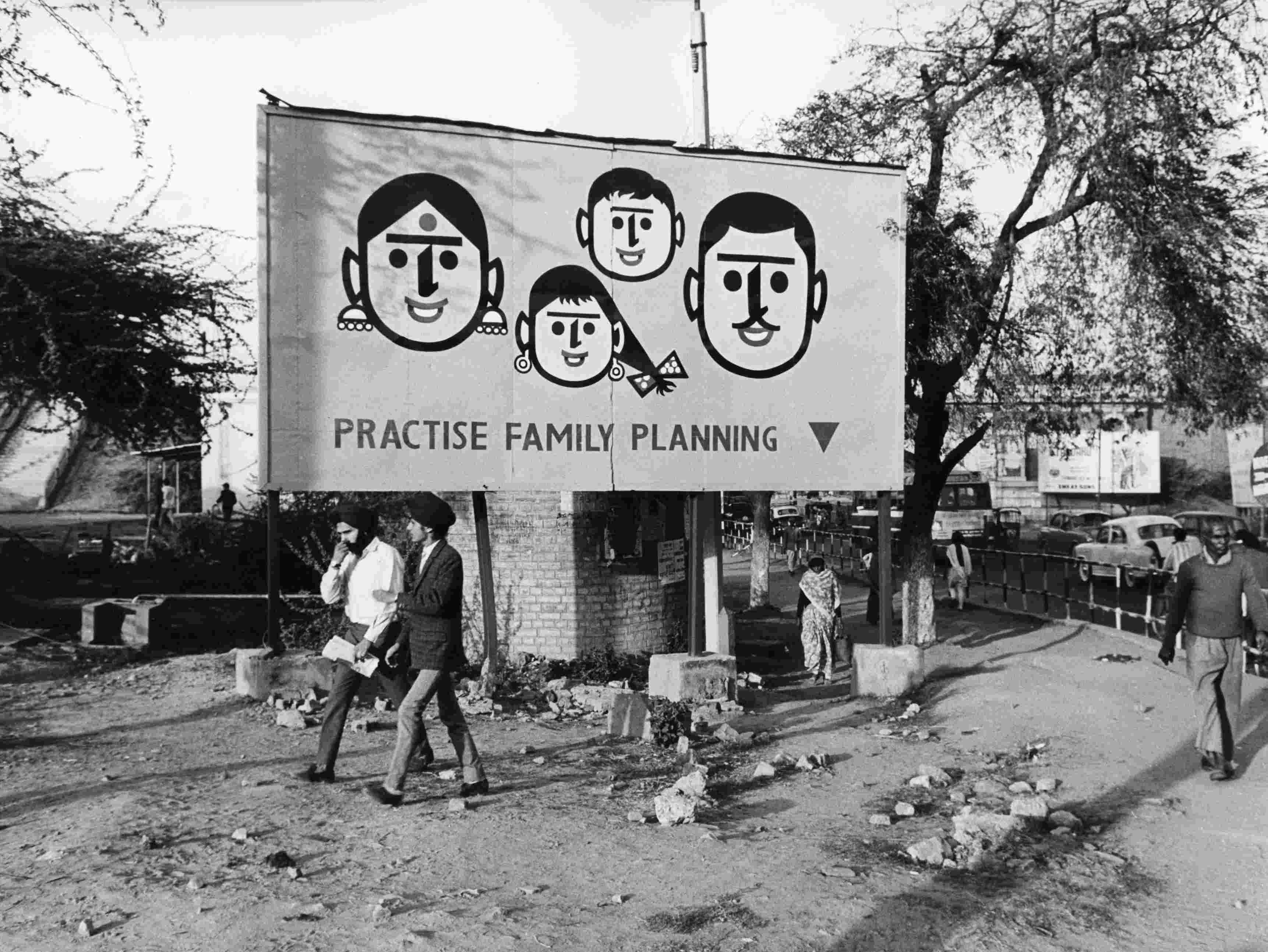
Background and approach
In 1952, India launched a national family planning programme aimed at reducing birth rates through improved access to contraception. Unlike China's mandatory approach, India's strategy has focused on voluntary participation and education.
The government established an extensive network of healthcare facilities providing information about birth control methods and making various contraceptive techniques available. Sterilisation of women became the most common form of contraception used.
Population education was integrated into school curricula to raise awareness about family planning from an early age.
Challenges with aggressive measures
Important
During the 1970s, the government briefly implemented forced sterilisation for men with more than two children. This harsh policy proved so unpopular that it contributed to Prime Minister Indira Gandhi being forced from office, demonstrating the importance of public acceptance in population policies.
Progress and data
India has achieved steady progress in reducing both birth rates and total fertility rates since the 1950s:
| Year | Birth Rate (per 1,000) | Total Fertility Rate |
|---|---|---|
| 1951 | 40.8 | 6.0 |
| 1981 | 34.0 | Not available |
| 1992 | 30.0 | 3.5 |
| 1997 | 26.4 | 3.3 |
| 2010 | 21.34 | 2.65 |
However, progress has been slower than hoped. By 2000, India's population reached one billion people, with about 27 million babies born annually. Today, 17% of the world's population lives in India on just over 2% of the world's productive land.
Reasons for slow success
Several factors have contributed to the gradual pace of change:
Demographic factors:
- Large youthful population - in 2009, half the population was under 25 years old
- Low marriage age - approximately 50% of girls marry below the legal age of 18
Cultural preferences:
- High infant mortality rates lead to desired pregnancies, as many women only choose sterilisation after having three or four babies
- Strong preference for male children means families often have multiple children to ensure at least one boy survives, particularly in rural areas
Access and education barriers:
- Poor access to contraception, especially in rural areas where 70% of the population lives
- Heavy focus on sterilisation rather than temporary contraception methods
- Limited education about alternatives creates an "all or nothing" mentality
- Emphasis on female rather than male sterilisation, despite male procedures being simpler and safer
- Low levels of female literacy and women's status, especially in rural regions
Regional success story: Kerala
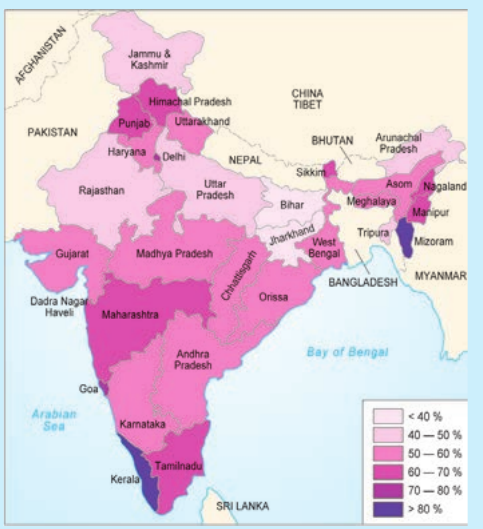
India's diversity means national averages hide significant regional differences. Kerala state demonstrates that targeted approaches can achieve remarkable success.
Example
Kerala's Success Story
In 2008, Kerala achieved impressive results:
- Birth rate: 15 per 1,000 (much lower than national average)
- Total fertility rate: 1.7 (compared to national average of 2.65)
Key success factors:
- Education focus: Women encouraged to remain in school until at least age 14
- Contraception access: 66% of women using contraception
- Healthcare improvements: Reduced infant mortality rates
- Women's status: Significantly improved women's rights and empowerment
Kerala's success resulted from several key initiatives that addressed the root causes of high fertility rates rather than just providing contraception. This comprehensive approach shows that education, healthcare, and women's empowerment can achieve significant results without coercive measures.
Summary
Key Points to Remember:
-
Population management strategies are long-term government plans to control population growth by influencing family size decisions
-
China's one-child policy was effective at reducing population growth but created serious social problems including gender imbalance, ageing population issues (the 4:2:1 problem), and potential labour shortages
-
India's voluntary approach focuses on education and contraception access, achieving steady but slower progress than China's mandatory system
-
Success factors include women's education, healthcare access, contraception availability, and improved women's status - as demonstrated by Kerala's achievements
-
Cultural and social factors significantly influence the effectiveness of population policies, highlighting the importance of understanding local contexts when designing interventions