Kinds of Population Movements (Grade 10 NSC Matric Geography): Revision Notes
📚Revision Notes
Kinds of Population Movements
Introduction to population movements
Throughout history, people have been constantly on the move. The first humans lived in Africa and gradually spread across the globe to populate every continent and major island. Even today, millions of people continue to move from place to place for various reasons and over different time periods.
When people move from one location to another, we describe this as migration. The individuals who participate in this movement are called migrants. Understanding the different types of migration helps us make sense of how and why populations shift around the world.
Note
According to international data, there were approximately 214 million people living as international migrants in 2009. This represents about 3.1% of the world's total population, meaning roughly one in every 31 people is a migrant.
International migration
International migration involves the movement of people across national borders from one country to another. This type of migration has two key components that describe the movement from different perspectives.
Emigration and immigration
Emigration refers to the process of leaving one's home country to live elsewhere permanently or for an extended period. From the perspective of the origin country, people are emigrating when they depart.
Immigration describes the same movement but from the receiving country's viewpoint. When people enter a new country with the intention of staying, they are immigrating to that destination.
Important
Memory Aid: Remember the difference this way:
- Emigration = Exit a country (both start with 'E')
- Immigration = Into a country (both start with 'I')
All countries have established laws and procedures that control immigration. People typically must apply for permission to immigrate and follow specific legal processes. Even when granted permission to immigrate, newcomers usually don't receive citizenship immediately. Instead, they may live in their new country for several years before becoming eligible for full citizenship rights and obtaining a passport from their adopted nation.
However, not all international movement follows legal channels. Some people cross borders without proper documentation or overstay permitted visits. These individuals are classified as illegal immigrants and can face deportation if discovered by authorities.
Regional migration
Regional migration encompasses movement that occurs within a single country's borders. This internal migration can take various forms, including movement between cities, from cities to rural areas, or most commonly, from rural areas to urban centres.
Rural-urban migration
The most significant pattern of regional migration globally is rural-urban migration - the movement of people from countryside areas to cities and towns. This phenomenon occurs when individuals and families leave agricultural or rural communities to seek opportunities in urban environments.
Rural-urban migration happens for numerous reasons including better job prospects, improved access to education and healthcare, and the attraction of urban amenities and services.
Example
Example: Rural-Urban Migration Drivers
Consider a farming family in rural Bangladesh:
- Push factors: Limited job opportunities, poor access to schools and hospitals, unreliable income from farming
- Pull factors: Factory jobs in Dhaka, better schools for children, modern healthcare facilities
- Result: The family migrates to the capital city seeking improved living standards
Urbanisation
When large numbers of people migrate from rural to urban areas, this leads to urbanisation - an increase in the percentage of a country's population living in cities and towns. Over time, urbanisation has accelerated worldwide, with an increasingly large portion of the global population now residing in urban areas.
Note
However, urbanisation patterns vary significantly between more developed and less developed countries. Developed nations typically experienced urbanisation gradually over many decades, while developing countries often face more rapid urban population growth that can strain infrastructure and services.
Voluntary and forced migration
Migration can be classified based on whether people have a choice in their movement. This distinction is crucial for understanding the different circumstances that drive population movements.
Voluntary migration
Voluntary migration occurs when people choose to move from one place to another of their own free will. These migrants make a personal decision to relocate, often seeking better opportunities, joining family members, or pursuing education or career advancement.
Examples of voluntary migration include students moving abroad for university studies, professionals relocating for better jobs, or retirees choosing to move to more pleasant climates.
Forced migration
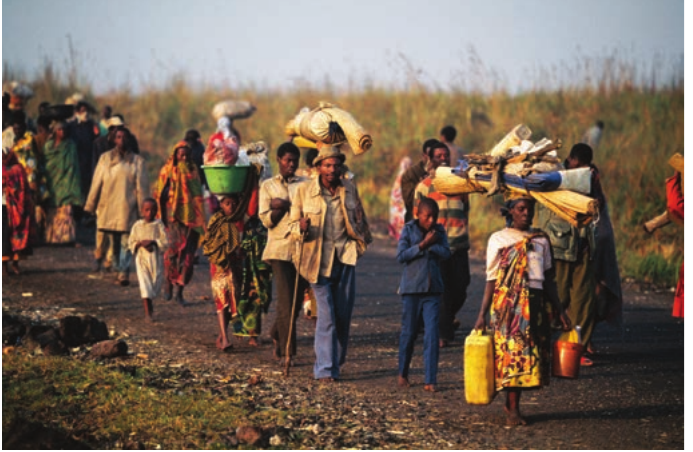
Forced migration happens when people must leave their homes due to circumstances beyond their control. These migrants don't have a real choice in their movement - they are compelled to relocate by external pressures or threats.
Important
Common causes of forced migration include:
- Natural disasters (earthquakes, floods, droughts)
- Wars and armed conflicts
- Political persecution and human rights violations
- Environmental degradation and climate change
- Large-scale development projects that displace communities
Remember: Refugees fleeing violence or persecution represent one of the most visible forms of forced migration.
The distinction between voluntary and forced migration isn't always clear-cut, as some people may feel they have limited choices even when not facing immediate physical threats.
Understanding migration patterns
Migration can be organised using a simple classification system that considers both the geographic scope (international versus regional) and the nature of the movement (voluntary versus forced). This framework helps us analyse and compare different types of population movements:
- International voluntary migration: People choosing to move between countries
- International forced migration: People compelled to cross borders due to external pressures
- Regional voluntary migration: People choosing to move within their home country
- Regional forced migration: People forced to relocate within their national borders
Summary
Key Points to Remember:
-
Migration is the movement of people from place to place, and those who move are called migrants
-
International migration involves crossing national borders and includes both emigration (leaving a country) and immigration (entering a country)
-
Regional migration occurs within countries, with rural-urban migration being the most common form leading to urbanisation
-
Voluntary migration happens by choice, while forced migration occurs when people must move due to circumstances beyond their control
-
Understanding these different types helps explain the complex patterns of human movement around the world today