Britain Takes Control of the Cape (Grade 10 NSC Matric History): Revision Notes
📚Revision Notes
Britain Takes Control of the Cape
Background to British control
By 1750, Britain had emerged as the world's leading industrial nation, dominating global trade networks with India and China. This industrial advancement created an enormous demand for raw materials to fuel British factories and maintain their economic superiority.
The situation in Europe dramatically changed when Napoleon overthrew the Dutch monarchy in 1795. Britain became increasingly concerned that Napoleon might seize control of the Dutch East India Company (DEIC), which would threaten vital British trade routes to the East. The Cape Colony served as a crucial halfway refreshment station for ships travelling to Asia, making its control essential for maintaining British commercial interests.
Important
Timeline of British Control:
- 1795: Britain first seized the Cape from the DEIC
- 1802: Britain temporarily withdrew during peace negotiations
- 1806: Britain permanently annexed the Cape when war resumed
In response to these threats, Britain deployed warships and seized the Cape from the DEIC in 1795. Although they withdrew in 1802 during a brief peace, Britain permanently annexed the Cape in 1806 when warfare resumed between Britain and France.

This takeover marked the beginning of a new era that would transform South Africa economically, socially, and politically. The change from Dutch to British rule brought new laws, labour systems, and approaches to governing that would have lasting consequences for all inhabitants of the region.
Impact on the indigenous populations
When Britain took control in 1806, the Dutch had already been established at the Cape for 154 years. During this long period, the original inhabitants had suffered devastating losses.
Important
Devastating Impact on Indigenous Peoples:
The Khoekhoe and San communities had been dramatically reduced in size due to three main factors:
- Warfare with European settlers
- Slavery and forced labour systems
- Smallpox epidemics introduced by Europeans
Those who survived this destruction faced limited options. Most became herdsmen, servants, and unskilled labourers working for European farmers and officials. The social structure that had existed for centuries was completely dismantled.
Some groups adapted by leaving their traditional areas. The mixed-race Griquas migrated to settle along the Orange River, while others established communities along the Kat River in the Eastern Cape. These groups spoke Dutch and acquired guns, which allowed them to dominate smaller chiefdoms in their new territories. However, this often led to further conflict and instability in the interior.
The British administration quickly implemented restrictive legislation. In 1809, they passed an anti-squatting law preventing black people from farming on vacant land within the Cape Colony. Two years later, in 1811, pass laws were introduced to control the movement of workers throughout the Colony. These laws severely limited the freedom and economic opportunities available to indigenous populations.
Changing labour patterns
The British brought fundamental changes to labour systems that had existed for over a century. In Britain itself, the slave trade ended in 1807, and slavery was completely abolished throughout the British Empire in 1834.
Rev. John Philip of the London Missionary Society played a significant role in campaigning for the end of slavery at the Cape.
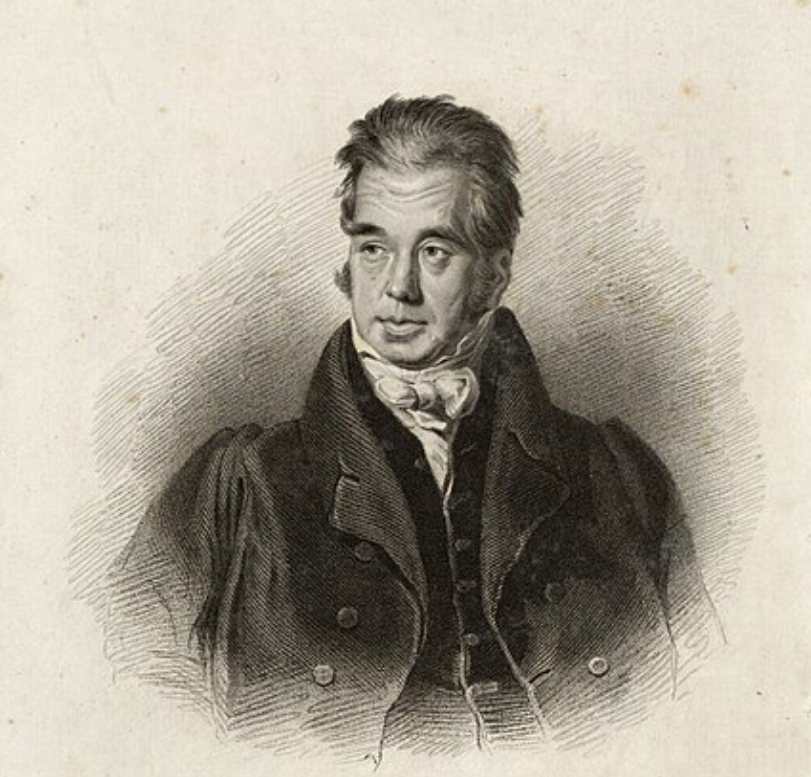
The British government passed Ordinance 50, a crucial law that granted all black servants equality before the law and freed them from forced labour obligations.
Note
Debating Britain's Motivations:
Historians continue to debate Britain's true motivations for abolishing slavery:
- Humanitarian reasons: Genuine moral opposition to the institution
- Economic self-interest: Desire for a free labour force that would be more productive
- Fear of rebellion: Concerns about slave revolts similar to the one in Haiti that could damage profits
However, the newly freed slaves did not achieve complete freedom. Additional laws punished labourers for breaking employment contracts, maintaining significant restrictions on their choices and movements.
The freed slaves pursued various paths after emancipation:
- Some continued as wage earners on the same farms
- Others left the Colony and joined the Griqua communities
- Many rented land owned by missionary societies
- Some became independent farmers and later received voting rights
These labour transformations completely disrupted the economic and social systems that Dutch colonists had relied upon for the previous 154 years, creating significant resentment and resistance.
The Boer response to British control
The Boers were angry
While many Dutch colonists adapted to British rule, others became increasingly furious about the changes, particularly the abolition of slavery. Farmers had invested substantial amounts of money purchasing slaves and viewed their loss as economic catastrophe.
The British offered compensation, but only if claimants travelled to Britain personally to collect it - an impossible requirement for most colonists living thousands of kilometres away.
Note
The Boer Manifesto of Grievances:
Piet Retief, one of the Dutch leaders, drafted a Manifesto outlining their main complaints:
- Desire to maintain traditional master-servant relationships
- Belief that justice was no longer available for burghers, only for black people
- Resentment over government taxation of their land
- Opposition to everything being made English
These grievances led approximately 15,000 Dutch colonists to leave the Cape Colony between 1834 and 1845.
The Great Trek became the first major expression of Afrikaner nationalism - an organised attempt to escape British imperial control and establish independent communities.

Trekking into the interior
The Dutch migrants, known as Voortrekkers, spread into the interior under various leaders who negotiated with African chiefs for land rights.
Louis Trichardt received a large area of land from Xhosa chief Hintsa. Hendrik Potgieter settled near Griqua territory, writing to their chief Adam Kok: "We are emigrants together with you." Andries Pretorius established his community on land controlled by Chief Moshoeshoe, attempting to form an alliance against British expansion.
The Voortrekkers supported Mpande in a Zulu succession dispute. When he became king, he granted them land around present-day Durban. However, in 1843, Britain annexed Natal, forcing another migration northward.
Example
The Two Boer Republics:
The Dutch established two independent Boer Republics:
- The Orange Free State (OFS)
- The South African Republic (ZAR)
Britain eventually recognised the ZAR's independence in 1852 and the OFS's independence in 1854.
Life in the Boer Republics
The Boer Republics required support from local African chiefs to survive. Initially, many chiefs welcomed the Boers as allies against the Ndebele. However, conflicts soon arose over land ownership and labour demands.
In these republics, land and cattle represented wealth, with government officials often paid in land rather than money. The Boers maintained their traditional practices of slavery and contract labour, despite British opposition.
The republics remained economically dependent on the Cape and Natal for manufactured goods including cloth, tools, guns, and ammunition. Large landowners collected rent from both white and African tenant farmers, creating a mixed agricultural economy.
Expanding frontiers and trade
British control facilitated the development of important trading centres:
- Grahamstown
- Port Elizabeth
- Port Natal (modern Durban)
Trade networks extended deep into the interior, with chiefdoms providing ivory and game products. Groups like the Griqua, Kora, and Barolong conducted raids for cattle and slaves. Delagoa Bay (modern Maputo) became a significant trading post where Boers, Portuguese, and Africans continued exporting slaves until the 1860s.
Interior chiefdoms sent men to Cape Town to purchase guns and other goods in exchange for ivory, ostrich feathers, and animal skins.
Note
Role of Missionaries:
Missionary stations were established throughout the interior by people from various churches seeking to convert Africans to Christianity. Some missionaries also aimed to extend British imperial influence.
Trade and migrant labour opportunities allowed Africans to break away from traditional chief control. African families seeking security or economic opportunities gathered around mission stations, where European-style schools were established.
This undermined traditional authority structures, challenging the unity of numerous Xhosa communities and weakening the power of traditional chiefs.
Xhosa responses: cooperation and conflict
Frontier wars
As settlers occupied increasing amounts of land on the Eastern frontier, conflict became inevitable. By the 1800s, the Xhosa had divided into two main branches living west and east of the Kei River.
Wars broke out in 1811, 1819, 1835, and 1846 between settlers and Xhosa groups. After the 1851-1853 war, the British gained control over Xhosa territory west of the Kei River, establishing British Kaffraria.

Although chiefs retained some independence, more land was allocated to settlers and missionaries. Colonial forces regularly raided eastern Xhosa territories, destroying crops and capturing cattle.
The prophecy and its consequences
In 1856, the Xhosa faced a devastating crisis. Lung disease swept through their cattle herds, rains destroyed most crops, and widespread starvation followed.
Example
The Cattle Killing Prophecy:
Nongqawuse, a 16-year-old traditional healer, claimed to have received a prophetic message from ancestors. The prophecy promised that if the Xhosa:
- Slaughtered all remaining cattle
- Destroyed all remaining crops
Then:
- Ancestors would drive whites into the sea
- The sun would rise and set in the East
- New cattle and crops would appear in abundance
The results were catastrophic:
- 300,000 to 400,000 cattle were killed
- About 20,000 Xhosa died from famine
- About 30,000 Xhosa were forced to seek work on settler farms
- Xhosa resistance to white settlers was finally broken
However, unlike other kingdoms, the Xhosa people survived as a distinct group. Their populations continued growing, with some becoming Christians, others becoming wealthy through trade in wool and wheat, and still others succeeding as tenant farmers, though white settlers ultimately took over much of their traditional land.
Summary
Key Points to Remember:
- Britain took the Cape in 1806 to protect trade routes to Asia and prevent French control
- Slavery was abolished in 1834, leading to major labour system changes and Boer anger
- The Great Trek (1834-1845) saw 15,000 Dutch colonists migrate inland to escape British rule
- Two Boer Republics were established - the Orange Free State and South African Republic
- Xhosa resistance was finally broken by the devastating cattle killing of 1856-1857, which killed up to 400,000 cattle and led to widespread famine