Overview (Grade 10 NSC Matric History): Revision Notes
📚Revision Notes
Overview
Introduction to colonial expansion after 1750
The period after 1750 marked a significant turning point in South African history. European colonial powers, particularly Britain, began expanding their control beyond coastal settlements into the interior regions of the country. This expansion completely transformed South African society, affecting indigenous populations, labour systems, and political structures.
Note
This colonial expansion fundamentally altered the trajectory of South African development, creating lasting impacts on social, economic, and political structures that would shape the country for centuries to come.
Why did colonial expansion accelerate after 1750?
The Industrial Revolution was the main driving force behind increased colonial expansion. Britain needed:
-
Raw materials for their growing factories and industries
-
New markets to sell manufactured goods
-
Strategic locations to protect trade routes

Important
The Industrial Revolution created an urgent demand for resources and markets that drove Britain to aggressively expand its colonial territories. This economic pressure was the key factor distinguishing post-1750 expansion from earlier, slower colonial growth.
The structure of colonial expansion
This topic covers three main areas where colonial expansion had the most impact:
Unit 1: Britain takes control of the Cape (1806)
Key developments:
- Britain occupied the Cape Colony in 1806
- The Dutch had controlled the area for 154 years before British takeover
- British laws forced major changes in colonial society
What you'll study:
- How indigenous populations were affected by British rule
- Changes in labour patterns and working conditions
- How the Boers responded to new British control
- The expansion of frontiers and trade networks
- Xhosa responses - both cooperation and conflict with colonisers
Unit 2: The Zulu kingdom and the colony of Natal
Key developments:
- British expansion into Natal region
- Conflicts with the powerful Zulu kingdom
- Development of new labour systems
What you'll study:
- Why Britain needed controlled labour in Natal
- The causes and consequences of the Anglo-Zulu wars
Unit 3: Co-operation and conflict on the Highveld
Key developments:
- Formation of independent Boer republics
- Complex relationships between different groups
What you'll study:
- The establishment of Boer republics
- Interactions with Moshoeshoe and his kingdom
The great transformation of South Africa
The Dutch response to British rule
When Britain took control of the Cape in 1806, the Dutch settlers (who had been there since 1652) were extremely angry. The British introduced new laws that completely changed their way of life. The most significant change was the abolition of slavery.
Note
The Dutch settlers had developed their way of life over more than 150 years of colonial rule. The sudden change to British control represented not just a political shift, but a fundamental challenge to their established social and economic systems.
The Great Trek (1830s-1840s)
When slavery was abolished, many Dutch farmers (called Voortrekkers) made a dramatic decision - they loaded their wagons and trekked into the interior in large numbers. This movement is known as the Great Trek.
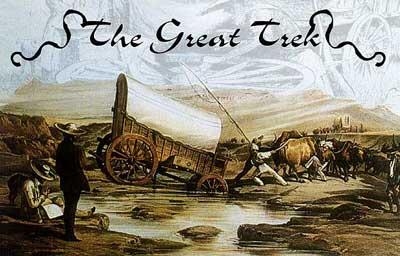
What the Voortrekkers experienced:
- Many hardships during their journey
- Clashes with various tribes as they moved through different territories
- Attempts to establish their own settlements
Example
The Great Trek Journey
The Voortrekkers faced enormous challenges during their migration:
- Families packed everything into ox-wagons and traveled for months
- They had to cross dangerous rivers and navigate unknown territories
- Many died from disease, hunger, and conflicts with local populations
- Despite these hardships, they were determined to escape British rule
The cycle of expansion continues
The Voortrekkers first settled in Natal, but Britain followed them and annexed (took over) that area too. Frustrated, the Voortrekkers moved even further into the interior and established two independent Boer republics - the Orange Free State and the Transvaal.
British expansion deepens
Britain didn't stop with the Cape and Natal. They:
- Imported Indian workers to labour on sugar plantations in Natal
- Took control of Zululand after the bloody Anglo-Zulu War
- Established protectorates over the Swazi and Sotho kingdoms
By the end of this period, British colonial expansion had reached deep into the interior of South Africa.
Important
This pattern of expansion created a cycle of conflict and displacement. Each time one group moved to escape colonial control, colonial powers followed and expanded their territories further, affecting even more indigenous populations and creating new tensions.
Key terms you need to know
Summary
Essential Vocabulary:
- Colonial expansion: The process of European powers extending their control over African territories
- Industrial Revolution: The period of rapid industrial growth in Britain that increased demand for raw materials
- Voortrekkers: Dutch farmers who migrated into the interior during the Great Trek
- Boer republics: Independent states established by Dutch settlers in the interior
- Anglo-Zulu War: Military conflict between Britain and the Zulu kingdom
- Protectorates: Territories controlled and protected by Britain but not directly governed
- Annexation: The process of taking over and incorporating territory into an empire
Study tip for examinations
Important
Exam Success Strategy:
When answering questions about this topic, always consider the interconnected nature of events. Colonial expansion wasn't just about politics - it affected:
- Economic systems (labour, trade, agriculture)
- Social structures (relationships between different groups)
- Cultural practices (traditional ways of life)
- Geographic boundaries (new borders, frontiers)
Remember!
Summary
Key Points to Remember:
- 1750 marked the beginning of accelerated colonial expansion driven by Britain's Industrial Revolution
- 1806 - Britain took control of the Cape from the Dutch, causing major tensions
- The Great Trek was the Dutch response to British rule and the abolition of slavery
- Colonial expansion created a cycle of conflict - as Europeans moved inland, they clashed with indigenous peoples and each other
- By the end of this period, British control extended from the Cape to the interior, fundamentally transforming South African society
- The expansion affected everyone - indigenous populations, Dutch settlers, British colonists, and imported workers all experienced major changes to their lives