The Zulu Kingdom and the Colony of Natal (Grade 10 NSC Matric History): Revision Notes
📚Revision Notes
The Zulu Kingdom and the Colony of Natal
The demand for controlled labour
During the 1870s, Britain discovered significant diamond deposits which led to massive investments in mining operations and sugarcane farming. This economic expansion created an urgent need for large numbers of workers.
Why Britain needed to control labour
The discovery of diamonds transformed the economic landscape, but Britain faced a major challenge. Local African communities were not willing to work as labourers because they were satisfied with their traditional way of life, focusing on their land and cattle. This created a serious labour shortage for British economic ventures.
Important
Britain's solution was to establish political control over African societies. They conquered independent chiefdoms and transformed them into Protectorates - territories under British control but not fully integrated into the British Empire.
The creation of protectorates
Britain established three main protectorates:
- Basutoland (modern-day Lesotho)
- Swaziland
- Bechuanaland (modern-day Botswana)
These protectorates served two key purposes:
- Chiefs had to collect taxes for both themselves and the British colonial government
- Chiefs were required to maintain loyalty and obedience to British authority
Note
Economic pressure was deliberately applied - Britain kept these protectorates economically disadvantaged, forcing people to seek work as migrant labourers in mines and plantations to survive.
Sugar plantations in Natal
In 1843, Britain officially established Natal as a colony and began developing large-scale sugarcane plantations. These plantations required enormous amounts of money to establish and needed many workers to operate successfully.

The problem of labour shortage
Local Africans were reluctant to leave their homes to work on plantations, creating a significant problem for British plantation owners.
The solution: Indian indentured labour
Facing this labour crisis, Britain made a dramatic decision to import workers from India. Between 1860 and 1911, over 150,000 Indians were brought to work on Natal's plantations under a contract labour system.
Example
How the contract system worked:
- Workers signed a five-year contract to work on the plantations
- After five years, they could either work elsewhere or sign a new contract
- After ten years of work, they received a free return trip to India
- Many chose to stay - they brought their families to settle permanently in Natal and became involved in trade
This system created a significant Indian community in Natal that would have lasting effects on South African society.
Mining and railway development
Coal mining expansion
Coal was discovered at Dundee in Natal, adding to the existing diamond and gold mining operations. This discovery increased the demand for workers even further.
Railway construction
Railways were built connecting the ports to the mines, requiring additional labour for construction and maintenance.
African resistance to mine work
Despite these economic opportunities, Africans preferred to work as tenant farmers, renting land from white landowners rather than working in the dangerous and difficult conditions of the mines.
Important
Consequence: This preference frustrated British investors, who pressured the government to force indigenous people into wage labour through political and economic control.
The Anglo-Zulu wars
Britain recognised that conquering the powerful Zulu kingdom was essential to securing a reliable supply of controlled labour.
Cetshwayo's reign (1872-1879)
Cetshwayo ruled the Zulu kingdom during this crucial period (1872-1879). When Britain assembled large military forces along the Zululand border, the king became understandably concerned about British intentions.
Attempts at peaceful resolution
Note
Cetshwayo initially tried to avoid conflict:
- He communicated with missionaries, stating clearly that he did not want war
- Despite these peaceful overtures, tensions continued to escalate
The ultimatum and war
After several border incidents, Britain issued an ultimatum to Cetshwayo - he must disband his army or face war.
Cetshwayo chose to fight. In January 1879, he launched a pre-emptive attack and achieved a stunning victory against British forces at the Battle of Isandlwana.
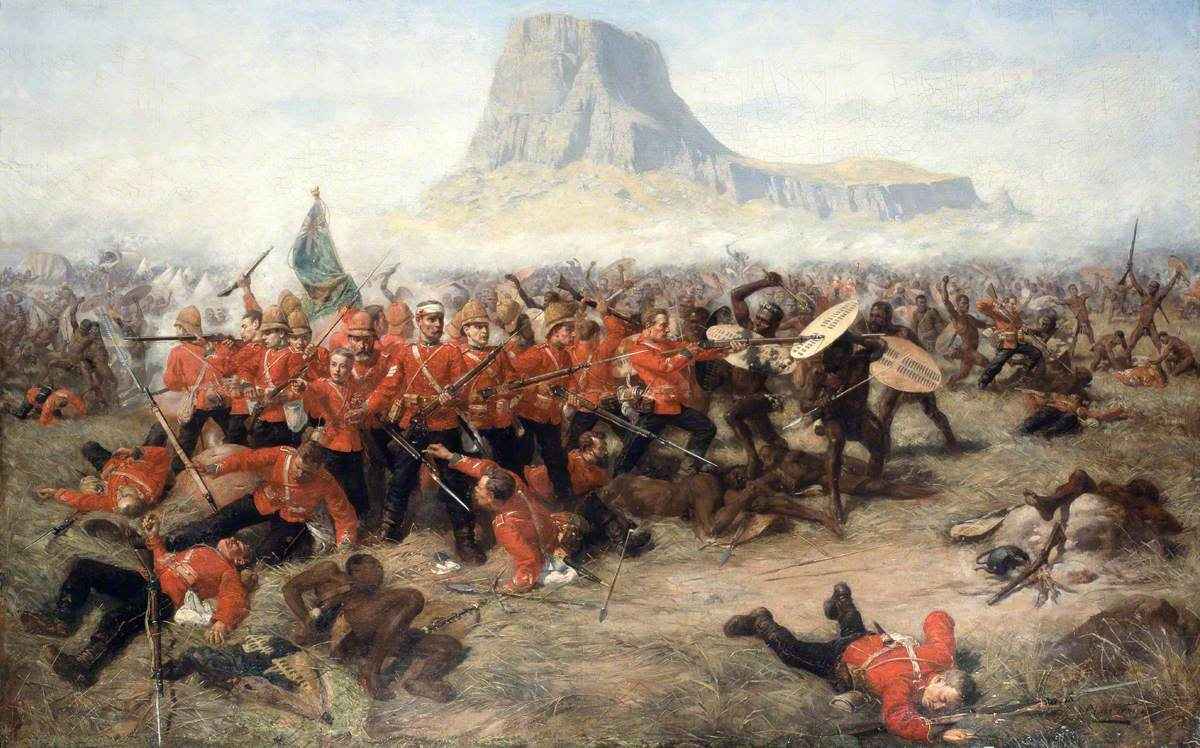
British victory
The war continued for six months until British forces captured the Zulu capital, Ulundi. Cetshwayo was captured and sent first to Cape Town, then to London.
Important
Britain's harsh response: They divided the Zulu kingdom into 13 separate areas and appointed their own chiefs to rule each area, effectively destroying Zulu political unity.
The Zulu Civil War
Cetshwayo's return and civil conflict
In 1883, Cetshwayo returned from exile, but his kingdom was already fractured. A devastating civil war over leadership erupted among the Zulu people.
Destruction of Zulu society
The civil war lasted eight years and had catastrophic effects:
- The conflict virtually destroyed the Zulu kingdom
- Thousands of Zulu homesteads were destroyed
- Having lost their land and cattle, Zulu men were forced to work on mines and plantations to survive
Land division
Important
The aftermath was devastating for the Zulu people:
- Zululand was divided between Boer farmers and Natal settlers
- The Zulus were left with only a small fraction of their original territory
- This forced displacement created the controlled labour force that Britain had sought
Other African kingdoms
The Pedi kingdom
Britain also conquered other African societies in the region:
- The Pedi people under Chief Sekhukuni were defeated
- This extended British control over additional territories and people
Completion of British control
By the 1880s, Britain had successfully annexed all the land between the Cape Colony and Natal, creating a continuous area under British political and economic control.
Summary
Key Points to Remember:
- Economic motivation: Britain's need for labour in diamond mines and sugar plantations drove colonial expansion after 1750
- Forced labour system: Britain created protectorates and imported 150,000 Indian indentured workers (1860-1911) to solve labour shortages
- Military conquest: The Anglo-Zulu War (1879) destroyed Zulu independence, with Cetshwayo's initial victory at Isandlwana followed by defeat at Ulundi
- Social destruction: The eight-year Zulu Civil War (1883-1891) completed the destruction of traditional Zulu society and forced men into wage labour
- Land dispossession: By the 1880s, Britain controlled all territory between Cape Colony and Natal, leaving African societies with minimal land and forcing them into the colonial labour system