Colonial Expansion: Portuguese and Dutch (Grade 10 NSC Matric History): Revision Notes
📚Revision Notes
Colonial Expansion: Portuguese and Dutch
Portugal and the destruction of Indian Ocean trade
The Portuguese played a major role in disrupting established trading networks in the Indian Ocean during the 15th and 16th centuries. Vasco da Gama became a key figure in this destructive process through his four voyages to India. Using superior cannon technology, he launched brutal attacks against Muslim trade routes and settlements along the East African coast. His approach was characterised by extreme violence - he seized any valuable goods he could find and showed no mercy to local traders.
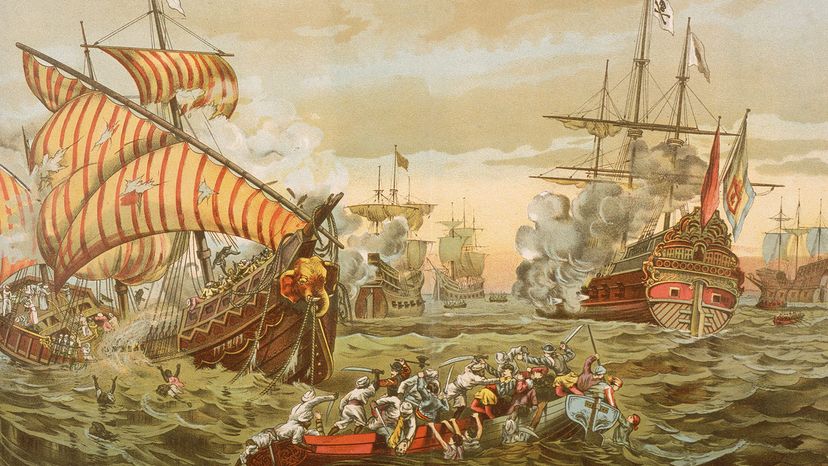
The Portuguese strategy proved effective in destroying the Arab-Swahili trading towns that had flourished for centuries. However, gaining complete control over the trade proved much more challenging than expected.
Note
The main problem was that small Arab trading vessels, called dhows, were highly manoeuvrable and could easily escape from the larger Portuguese gunboats. These traditional vessels had been used for centuries and were perfectly adapted to the coastal waters and trading conditions of the Indian Ocean.
The invasion of Munhu Mutapa's kingdom
Munhu Mutapa ruled over the territory we now know as Zimbabwe and had established profitable trading relationships with Swahili merchants along the east coast of Africa.
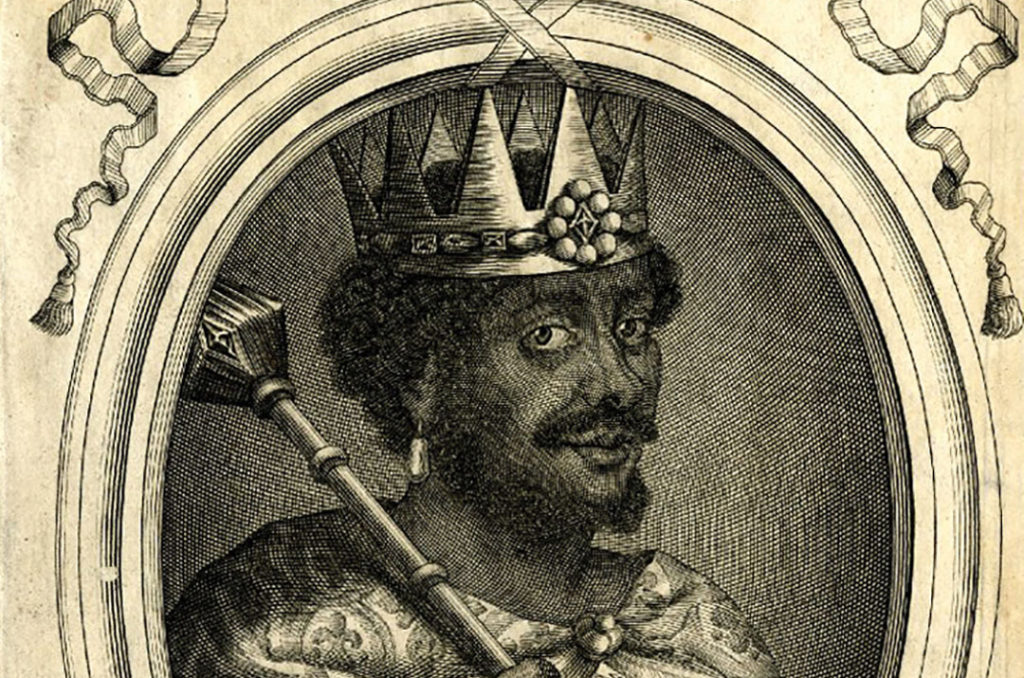
In 1569, the Portuguese king decided to take direct military action by sending an army to invade Munhu Mutapa's kingdom and other surrounding territories. Their primary motivation was to seize control of the region's gold mines.
Unlike the Portuguese, Munhu Mutapa preferred peaceful trade relationships and did not want military conflict. However, the Portuguese presented him with three non-negotiable demands:
- Expel all Arabs from his territory
- Convert to Christianity
- Hand over control of all gold mines to Portugal
Important
Faced with Portugal's overwhelming military power, Munhu Mutapa agreed to these terms and converted to Christianity. This decision allowed Portugal to dominate the region, extending their control over chiefdoms along the east coast, including areas of present-day Mozambique.
Consequences of Portuguese occupation
The Portuguese occupation proved to be largely unsuccessful and created devastating consequences for the region. Many Portuguese settlers died from malaria and other diseases, whilst constant warfare made the territory difficult to govern. The challenges of extracting gold from rock formations proved far more complex and expensive than anticipated.
Eventually, the Portuguese king lost interest in the venture and transferred control to a Portuguese viceroy, who later handed the territory over to private settlers. These settlers formed private armies of approximately 5,000 men and forced local chiefs to pay them taxes. By 1800, Portuguese influence had shrunk significantly - they were only actively trading around Delagoa Bay.
During this period, the Gaza kingdom of Soshangane grew increasingly powerful by trading slaves and ivory with the Portuguese.
Important
The overall results of the Portuguese invasion were catastrophic for the region:
- Complete destruction of Swahili trading settlements
- Destabilisation of established African kingdoms
- Collapse of the traditional gold trade
The Dutch East India Company in South Africa
During the 1600s, the VOC (Dutch East India Company, also known as DEIC) had become the world's wealthiest and most powerful trading organisation. The company operated an impressive fleet of 150 ships, including 40 giant warships, giving them enormous influence across global trade routes.
The Cape of Good Hope served as a crucial stopping point where passing ships could obtain fresh water supplies. By 1650, the Dutch faced increasing competition from England, France, and Portugal for control of lucrative trading routes.

Note
To protect their interests, the VOC established a military station at the Cape in 1652, initially intended as a refreshment station for their ships. This seemingly small outpost would eventually grow into a major colonial settlement.
Dutch expansion and conflict with the Khoekhoe
After working for the VOC for five years, Dutch employees were permitted to establish their own farms in the interior of South Africa. Since the local Khoekhoe people (shown below) were unwilling to work for the Dutch settlers, the colonists imported Malay slaves to labour on their wheat, vegetable, cattle, and wine farms.
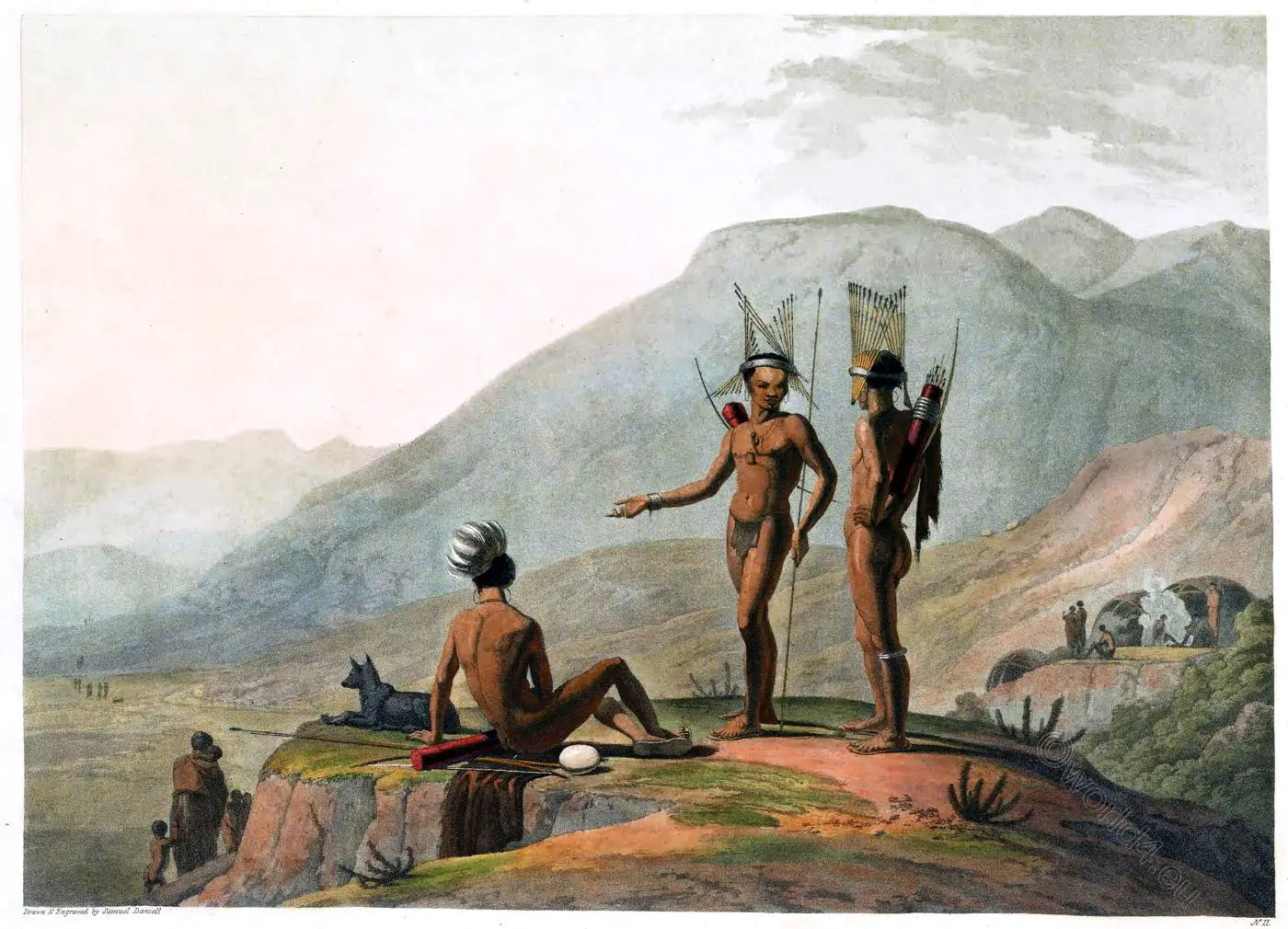
For 143 years, the VOC attempted to prevent expansion into the interior, struggling to control the independent-minded farmers known as trekboers. Despite these efforts, continuous raids and counter-raids occurred between the trekboers and the Khoekhoe people. The trekboers steadily seized more Khoekhoe land as Dutch settlements expanded, establishing towns such as Stellenbosch, Paarl, Genadendal, Worcester, Swellendam, and Graaff-Reinet.
Important
By 1800, warfare and smallpox epidemics had virtually destroyed Khoekhoe communities. Some survivors moved northward and formed the mixed-race Griqua communities, whilst others became servants and farm workers for Dutch settlers.
Colonialism and slavery
Slavery became a fundamental aspect of Dutch colonial society at the Cape. The slave population came from various regions around the world, though the majority were Malay people. The growth of slavery can be seen in these dramatic statistics:
Example
Growth of Slave Population at the Cape
1692: 337 slaves and 799 free people
1810: 30,421 slaves and 39,937 free people
This represents a massive increase over 118 years, with slaves eventually making up nearly half the total population.
Malay slaves worked in numerous occupations including coachmen, tailors, painters, shoemakers, carpenters, fishermen, blacksmiths, domestic workers, and farm labourers. The Dutch colonial authorities justified their harsh treatment of slaves through their belief that Christian civilisation gave them the right to treat enslaved people as "the lowest of the low."
Important
The system of racial discrimination was severe and dehumanising:
- Slaves faced brutal racial discrimination in all aspects of life
- They were treated as property rather than human beings
- Adult slaves were referred to as 'boy' and 'girl' regardless of their age
- Historical records document cruel punishments including whipping until death, branding with hot irons, and cutting off ears
The process of Dutch colonial expansion
The Dutch expansion followed a systematic pattern driven by economic motives. It began with greed and the desire for power, which created a need for wealth. This led them to take land by force from indigenous communities. Once they controlled the territory, they exploited the resources of local communities, which resulted in the destruction of these communities as people were absorbed as labourers. The final outcome was the establishment of wealthy settler landowners who controlled vast territories and enslaved populations.
Summary
Key Points to Remember:
-
Portuguese expansion (1569) focused on destroying Indian Ocean trade networks and seizing gold mines, particularly in Munhu Mutapa's kingdom (modern Zimbabwe)
-
Dutch expansion (1652) began as a refreshment station at the Cape but grew into a large colonial settlement based on slavery and land seizure from the Khoekhoe
-
Both colonial powers used extreme violence - the Portuguese with superior cannons and the Dutch through systematic oppression of slaves and indigenous peoples
-
The consequences were devastating for African societies - Portuguese expansion destroyed Swahili trading towns and destabilised kingdoms, whilst Dutch expansion destroyed Khoekhoe communities through war and disease
-
Slavery was central to Dutch colonial economy - by 1810 there were over 30,000 slaves, mainly from Malaysia, who faced brutal treatment and racial discrimination