Spanish Conquest in the Americas (Grade 10 NSC Matric History): Revision Notes
📚Revision Notes
Spanish Conquest in the Americas
Columbus arrives in America
In 1492, Christopher Columbus landed on a Caribbean island, mistakenly believing he had reached India. This moment marked the beginning of European colonisation in the Americas and had devastating consequences for indigenous peoples.

Note
Columbus's arrival represented the first sustained contact between Europe and the Americas, initiating a period of exploration, conquest, and colonisation that would fundamentally transform both continents.
Columbus's voyages and early impact
Columbus made several important discoveries and decisions during his time in the Americas:
- He incorrectly called the local Arawak people "Indians" because he thought he was in India
- The Spanish king and wealthy bankers funded Columbus's expeditions, expecting him to return 10% of any profits to them
- Columbus completed four separate voyages to what Europeans began calling the "New World" (meaning America)
- His primary goals were to claim land and gather wealth for the Spanish king and the Catholic Church
Devastating consequences for indigenous peoples
Columbus's arrival brought terrible suffering to the native populations through forced labour, disease, and violence.
Important
Population Collapse in Haiti:
The indigenous population suffered catastrophic decline:
- 1493: Approximately 100,000 people
- 1570: Only 300 people remaining
- This represents a devastating 99.7% decline caused by conquest and exploitation
Columbus also captured 500 Arawak people and transported them to Spain to be sold as slaves.
The Spanish conquest of the Aztec Empire
After Columbus's initial voyages, Spanish commercial companies began funding military expeditions led by professional soldiers called conquistadors. These expeditions aimed to conquer and colonise new territories for Spain.
The advanced Aztec civilisation
The Aztec Empire controlled the region we now call Mexico and had developed a sophisticated society with remarkable achievements in education, social organisation, and urban planning.

Example
Example: Aztec Education System
The Aztecs had developed one of the world's most comprehensive educational systems:
- All children received compulsory education regardless of social class
- Curriculum included: history, religion, warfare, trade, crafts, civic responsibilities, music, drama, and poetry
- This was revolutionary for the 15th century when most European children received no formal education
The empire also featured:
- Social structure: Aztec society included nobles, travelling merchants, ordinary citizens, peasants, and slaves
- Religious practices: The Aztecs practised human sacrifice, believing it caused the sun to rise, crops to grow, and brought favourable weather
Cortés and the conquest of 1519
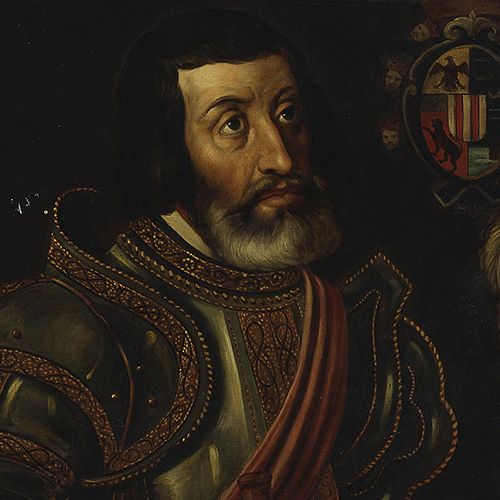
In 1519, the Spanish king sent Hernán Cortés with a small but well-equipped force to conquer the Aztec Empire.
Note
Military Technology Advantage:
Cortés brought superior European military technology:
- 500 men, 17 horses, and 10 cannons
- Horses were unknown in the Americas and created psychological warfare advantages
- Cannons provided devastating firepower against traditional Aztec weapons
The conquest unfolded through calculated deception:
- Initial diplomacy: Emperor Moctezuma II welcomed Cortés to his palace in the capital city of Tenochtitlan and exchanged gifts with him
- Violence and betrayal: Spanish troops massacred unarmed Aztec people during a religious ceremony and took the emperor hostage
The fall of the Aztec Empire
The conquest followed a brutal pattern that would be repeated throughout the Americas. Although the emperor was later killed, the Aztecs continued fierce resistance for several years.
After three years of warfare, the Aztec Empire finally collapsed due to disease and starvation among its people. The Spanish built Mexico City on the ruins of Tenochtitlan and named their new colony "New Spain."
The Spanish conquest of the Inca Empire
The Inca Empire was another advanced civilisation that fell to Spanish conquest through similar tactics of deception and violence.

The impressive Inca civilisation
The Inca Empire was one of the largest and most sophisticated civilisations in the Americas, demonstrating remarkable engineering and administrative capabilities.
Key achievements included:
- Scale: Approximately 12 million people speaking 20 different languages lived across 4,000 kilometres of territory along the Andes Mountain range on South America's west coast
- Engineering achievements: The Incas were renowned for their advanced engineering and architectural skills
- Infrastructure: They had built 14,000 kilometres of well-constructed roads for efficient and rapid transport across their empire
Pizarro's conquest of 1532
Francisco Pizarro led the Spanish conquest of the Inca Empire using tactics similar to those employed against the Aztecs. The timing of his arrival proved crucial for Spanish success.

Note
Strategic Timing:
When Pizarro arrived in 1532, the Inca Empire was severely weakened:
- Emperor Atahualpa had recently gained power after a devastating civil war
- Many Inca cities had been destroyed and their economy weakened
- This internal conflict made the empire vulnerable to Spanish conquest
Pizarro employed calculated deception:
- Deception and capture: Pizarro invited Emperor Atahualpa to a feast and then captured him while conquistadors slaughtered thousands of Incas
- Ransom demand: The emperor offered enormous amounts of gold and silver for his freedom
- Betrayal: Despite receiving the ransom payment, the Spanish executed the emperor anyway
The end of the Inca Empire
The conquest followed a pattern of prolonged resistance and eventual collapse:
- Guerrilla warfare: Fighting continued for several years after the emperor's death
- Internal weakening: Internal conflicts and jealousy weakened Spanish forces, leading to Pizarro's assassination
- Final collapse: The Inca Empire finally ended in 1572, and the territory became known as Peru
Slavery and forced labour systems
The Spanish developed brutal labour systems to extract wealth from their American colonies, affecting both indigenous peoples and enslaved Africans through systematic exploitation and control.
The encomienda system
Note
Understanding Encomienda:
The Spanish king created a system called encomienda that gave Spanish settlers control over indigenous peoples:
Official Purpose:
- Settlers were meant to protect certain indigenous communities
- They were supposed to teach indigenous people Spanish language and Catholic beliefs
Actual Reality:
-
Indigenous people had to provide settlers with labour, corn, wheat, chickens, and gold
-
This essentially created a system of forced labour similar to slavery

Mining and plantation labour
Spanish colonial economy depended on different forms of forced labour that generated enormous wealth for Spain:
- Mining operations: Previous owners of mines were forced to become labourers in those same mines
- Wealth extraction: Spain became extremely wealthy and the world's leading supplier of silver, taken from conquered Aztec and Inca territories
The Atlantic slave trade
Important
Scale of the Atlantic Slave Trade:
Spanish colonies relied heavily on enslaved African labour:
- Timeline: Between 1496 and 1820
- Scale: Approximately 10 to 15 million Africans were forcibly brought to the New World as slaves
- Work conditions: Enslaved people worked in mines and on coffee, sugar, tobacco, and cotton plantations
- Economic impact: This forced labour system became the economic foundation of Spanish colonial wealth
Global impact and colonial society
Spanish colonisation fundamentally transformed global economic and social systems, creating patterns of exploitation that would persist for centuries.
Economic transformation
Note
The Three-Way Colonial System:
Spanish colonisation created a global economic system with distinct roles:
- Europe's role: Provided capital (money for investment), markets (places to sell goods), and technology
- Africa's role: Provided enslaved people for forced labour
- The Americas' role: Provided raw materials and agricultural products from plantations
This system concentrated wealth in Europe while exploiting labour and resources from Africa and the Americas.
Racial hierarchy and social control
By the 16th century, Spanish colonists had developed ideologies to justify their control and exploitation.
Important
Justifying Colonial Control:
Colonists created belief systems to maintain their power:
- Racial supremacy beliefs: Colonists believed in a "natural order" that placed white Europeans at the top of a racial hierarchy
- Social structure: Colonial societies were organised around race, with white settlers controlling all wealth and power
- Bottom of the hierarchy: Indigenous labourers occupied the lowest positions, followed by enslaved Africans
These ideologies provided seemingly legitimate reasons for exploitation and would have lasting impacts on the Americas for centuries to come.
Summary
Key Points to Remember:
- Columbus's arrival in 1492 began European colonisation that devastated indigenous populations through disease, slavery, and violence
- Spanish conquistadors like Cortés (1519) and Pizarro (1532) used superior military technology and deceptive tactics to conquer advanced civilisations like the Aztecs and Incas
- The encomienda system forced indigenous peoples into labour while supposedly "protecting" and "civilising" them
- Between 10-15 million Africans were enslaved and transported to the Americas between 1496 and 1820 to work in mines and plantations
- Spanish colonisation created a global economic system based on European capital, African slave labour, and American raw materials, establishing racial hierarchies that justified European control