Events of the French Revolution (Grade 10 NSC Matric History): Revision Notes
📚Revision Notes
Events of the French Revolution
The French Revolution was a dramatic period of political and social upheaval that transformed France between 1789 and 1799. This timeline of events shows how France moved from absolute monarchy to republic, experiencing both reform and terror along the way.
Note
This revolutionary decade completely transformed not just France, but influenced democratic movements worldwide. The changes were so fundamental that they affected everything from politics and society to religion and daily life.
The Estate-General
In 1789, France faced a severe economic crisis that forced King Louis XVI to take desperate action. The king decided to summon the Estate-General - a representative assembly that had not met for over 150 years - to discuss solutions to the country's financial problems.

When the three estates gathered at Versailles on 5 May 1789, a major conflict immediately emerged over voting procedures. The traditional system gave each estate one vote, which meant the privileged First Estate (clergy) and Second Estate (nobility) could always outvote the Third Estate (commoners) by two votes to one. This unfair system would prevent any meaningful reforms.
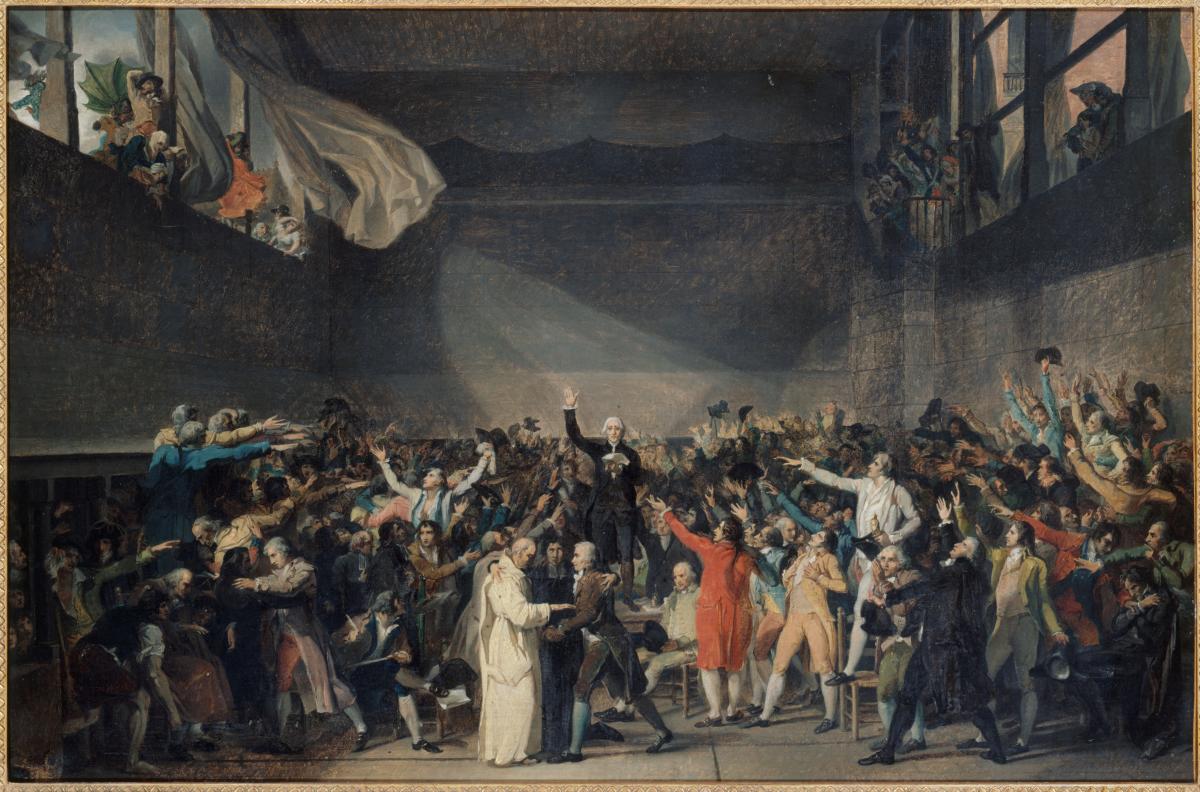
The Third Estate, representing 98% of the French population, refused to accept this voting method and boldly declared themselves the National Assembly. When they were locked out of their meeting place, they gathered on a nearby indoor tennis court and made the famous Tennis Court Oath on 20 June 1789. In this pledge, they swore not to separate until France had a new constitution.
Important
This was a revolutionary moment - for the first time, ordinary people were claiming political power. The Tennis Court Oath marked the beginning of popular sovereignty, where power came from the people rather than from divine right of kings.
The lesser nobility and lower clergy soon joined them, and King Louis XVI was forced to order all estates to join the Assembly with individual voting (one vote per person). This was a major victory for the Third Estate and marked the beginning of the end for the old system.
The ordinary people protest
While political changes were happening at Versailles, ordinary Parisians were becoming increasingly angry about their economic hardships. The situation worsened when King Louis XVI dismissed Jacques Necker, his popular financial advisor who had suggested that nobles and clergy should also pay taxes.
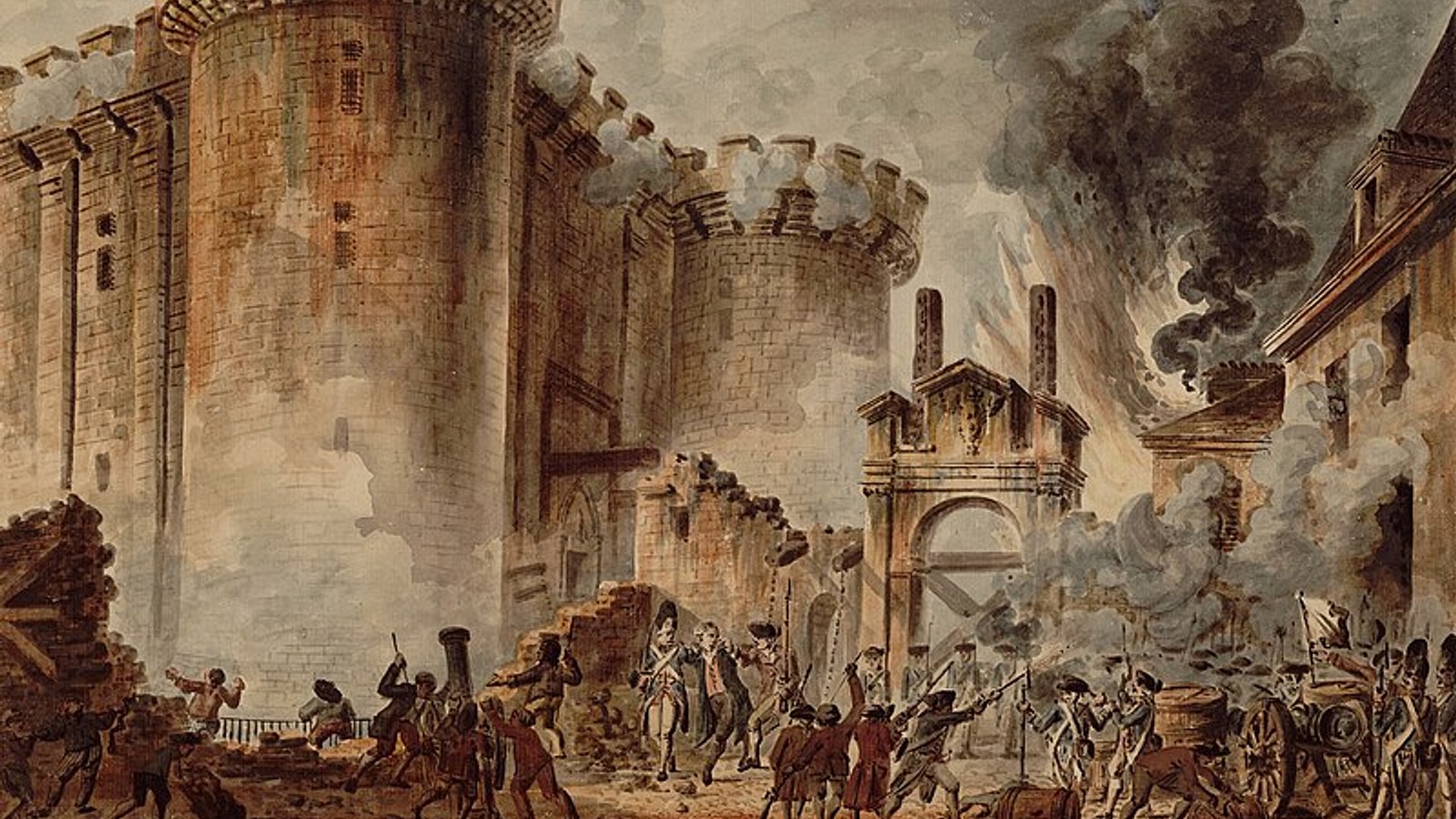
On 14 July 1789, a desperate, starving mob armed with pikes stormed the Bastille - a royal prison that symbolised the king's tyrannical power. The crowd was not just looking for weapons and gunpowder stored there; they were making a powerful statement against royal oppression.
After capturing the fortress, the triumphant mob paraded through Paris carrying the heads of some prison guards on their pikes as gruesome proof of their victory. This dramatic event became so significant that 14 July is now celebrated as France's national holiday, similar to how South Africans celebrate Freedom Day.
Note
The storming of the Bastille has become the ultimate symbol of popular revolution. Interestingly, the prison only held seven inmates at the time, but its symbolic importance as a representation of royal tyranny made it the perfect target for revolutionary anger.
The storming of the Bastille showed that ordinary people were no longer willing to accept their suffering quietly - they were prepared to use violence to achieve change.
Louis XVI started to lose his power
The revolution quickly spread beyond Paris as citizens across France began taking control of their local areas. They established new local governments and formed a National Guard under the leadership of La Fayette, a hero from the American War of Independence who understood the principles of liberty and democracy.
The once-mighty King Louis XVI was reduced to a humiliated figure, forced to wear the tri-colour cockade - the red, white and blue revolutionary badge that symbolised the new France. This public display showed everyone that the king was no longer in complete control.
Meanwhile, the revolution was destroying the old social order. Bread riots erupted in towns across the country as hungry people demanded food. Peasants rose up against their landlords, burning down the hated nobles' castles that represented centuries of oppression.
Many terrified nobles fled to foreign countries seeking help to restore the old system. These refugees became known as émigrés, and their departure weakened the opposition to revolutionary changes while also creating the threat of foreign intervention.
Women played their part
Women were not passive observers during the French Revolution - they actively participated in key events that shaped its course. In October 1789, approximately 7,000 hungry, angry women organised themselves and marched 22 kilometres from Paris to Versailles.

Note
The Women's March on Versailles was one of the earliest and most significant popular actions of the Revolution. These women came from various social backgrounds but were united by their shared experience of economic hardship and their determination to take direct action.
These women had heard rumours that Queen Marie Antoinette was hosting lavish banquets for her Flemish guards while ordinary people starved. With help from La Fayette and the National Guard, they forced the royal family to return to Paris as "virtual prisoners," housing them in the Tuileries palace where they could be watched more closely.
Another significant woman in the revolution was Charlotte Corday, who was passionate about stopping the escalating violence. She was particularly concerned about Jean-Paul Marat, a radical journalist whose newspaper articles were stirring up hatred and encouraging more bloodshed.
Corday went to Marat's house and found him working in his bath (he suffered from a painful skin condition). She stabbed him to death with a large knife she had hidden under her dress. This dramatic assassination became one of the most famous scenes of the revolution and is remembered today in a well-known painting.
Revolutionary reforms
By 1791, the National Assembly had gained control over the king, the government administration, and the army. They used this power to create sweeping changes that would transform French society forever.
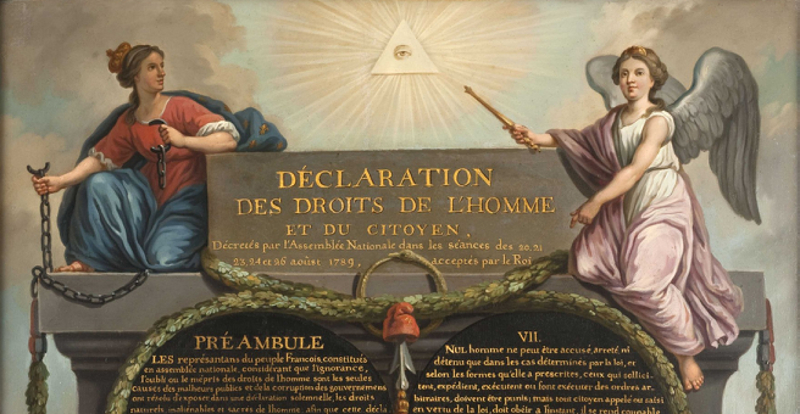
The Assembly drafted a groundbreaking document that gave all citizens liberty, equality, justice and a voice in government. This document was called 'The Declaration of the Rights of Man and of the Citizen' and became one of history's most influential statements about human rights.
Important
The Declaration of the Rights of Man and of the Citizen established fundamental principles that would influence democratic movements worldwide. Its ideas about individual rights, equality before the law, and popular sovereignty became the foundation of modern democratic thought.
The revolutionaries swept away the injustices that had existed for centuries. They created a limited monarchy with a parliament - known as a constitutional monarchy - where the king's power was restricted by law. The special privileges of nobles and clergy were completely abolished, and the clergy became civil servants paid by the government rather than by the Church.
These reforms represented a complete transformation from the Ancien Régime (old system) to a modern state based on the principles of equality and democracy.
The reaction to the reforms
Not everyone welcomed these revolutionary changes. Bitter opposition came from royalists, nobles and clergy who were furious about losing their power and privileges. Many of these opponents fled to foreign countries, hoping to convince other European monarchs to help them restore the old system.
The poverty-stricken town workers and peasants were also becoming frustrated because their economic problems remained unsolved despite all the political changes. They had supported the revolution expecting their lives to improve, but they were still struggling with hunger and hardship.
Note
This growing dissatisfaction among the common people who had initially supported the revolution would later fuel the more radical phase of the Revolution. Their continued economic struggles made them receptive to more extreme political solutions.
In June 1791, the royal family attempted to escape these mounting pressures by disguising themselves and trying to flee to Austria, where Queen Marie Antoinette's family could provide safety. However, they were recognised and arrested at Varennes near the border, then brought back to Paris in humiliation.

This failed escape attempt was a turning point because it convinced many people that the king could not be trusted and was actively working against the revolution.
The violent and radical phase of the revolution
In October 1791, a group of extreme revolutionaries called the Jacobins managed to gain control of the new Assembly. These radicals believed that only violent action could save the revolution from its enemies.
The situation became more dangerous when Prussia and Austria invaded France in April 1792, hoping to rescue the monarchy and prevent revolutionary ideas from spreading to their own countries. This foreign invasion created panic and paranoia among the French people.
Important
The foreign invasion marked a crucial turning point that radicalised the Revolution. The threat of external enemies trying to restore the old system convinced many French people that extreme measures were necessary to defend their revolutionary gains.
Wild rumours spread through Paris, and the Tuileries palace was stormed by an angry mob. The royal family became prisoners, and about 600 Swiss guards who had been hired to protect them were massacred by the crowd.
The Jacobins, led by Danton and Robespierre, began hunting down nobles and priests whom they saw as enemies of the revolution. More than 1,000 people were killed in what became known as the September Massacre in 1792.
The monarchy was completely abolished and France was declared a republic. Patriotic soldiers, filled with revolutionary enthusiasm, marched to defend the borders while singing the stirring new national anthem, "La Marseillaise."
In January 1793, the ultimate symbol of the old system's destruction occurred when King Louis XVI was executed by guillotine. The revolutionaries were now fighting enemies both inside and outside the country.

The terror continued - the end of the Revolution
The execution of the king sent shockwaves through the monarchies of Europe. Britain, Holland, Austria, Prussia, Spain and Sardinia formed a coalition and declared war on France, determined to crush the revolutionary threat.
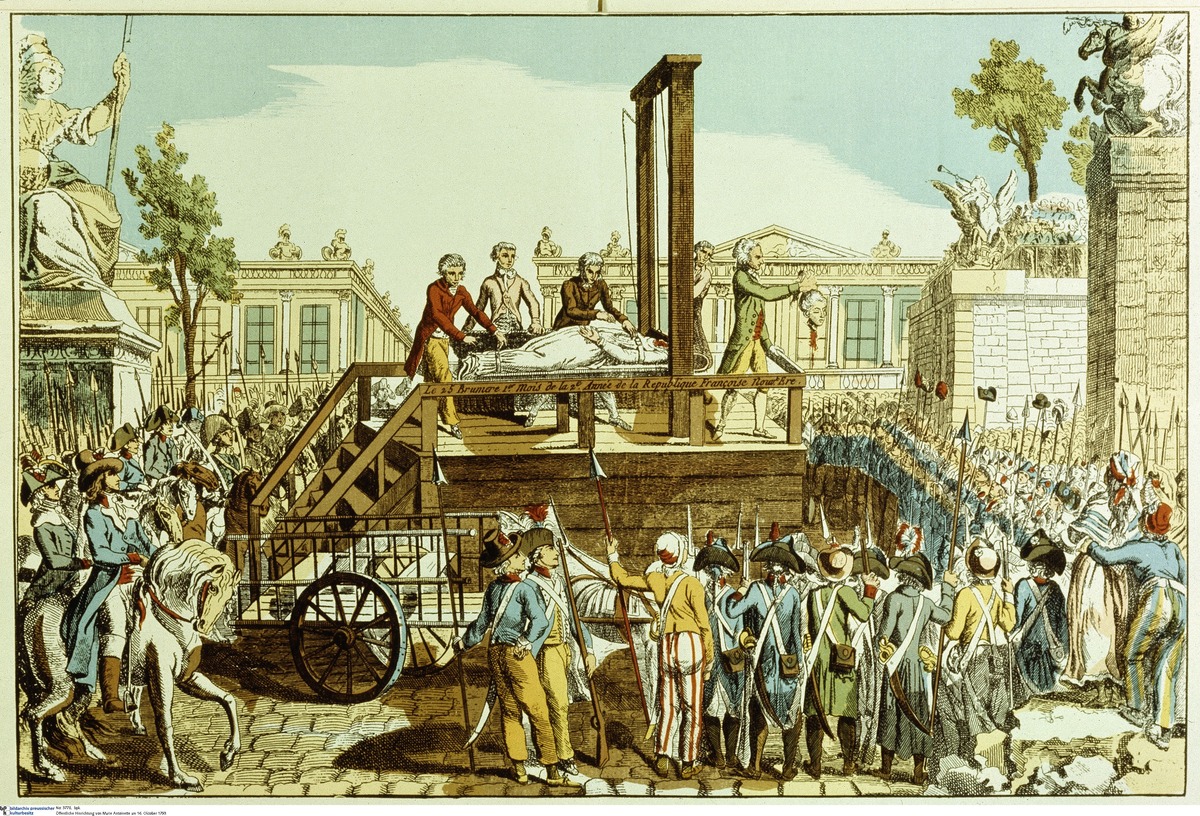
The Jacobins responded by forming the Committee of Public Safety and beginning the infamous Reign of Terror in September 1793, which lasted for 10 months. The fanatical Robespierre aimed to eliminate all enemies of the revolution, and approximately 40,000 suspected traitors were brutally executed by guillotine, including Queen Marie Antoinette.
Important
The Reign of Terror demonstrates how revolutions can spiral out of control. What began as a fight for liberty and equality became a period of mass executions where even revolutionary leaders like Danton were killed by their former allies.
The terror became so extreme that Robespierre even executed his friend Danton, who had wanted the killing to stop. However, Robespierre's reign of fear eventually turned against him when his own supporters decided he had gone too far. He was overthrown and guillotined, finally ending the terror.
In 1795, a new, more moderate government called the Directory was established. This five-member middle-class body ruled France for four years, but it proved to be corrupt, inefficient and unable to solve France's continuing financial problems.
The Directory's failures would eventually lead to its overthrow by a young military general named Napoleon Bonaparte, but that's another story entirely.
Summary
Key Points to Remember:
-
The Tennis Court Oath (20 June 1789) marked the moment when ordinary people first claimed political power, leading to the formation of the National Assembly.
-
The storming of the Bastille (14 July 1789) became the symbol of popular revolution and is still celebrated as France's national holiday.
-
The Declaration of the Rights of Man and of the Citizen (1791) established the principles of liberty, equality and justice that transformed French society.
-
The Reign of Terror (1793-1794) showed how revolutions can spiral into extremism, with approximately 40,000 people executed including King Louis XVI and Queen Marie Antoinette.
-
Women, ordinary workers, and peasants all played crucial roles in driving the revolution forward, proving that historical change comes from all levels of society, not just political leaders.