The Natives Land Act of 1913 (Grade 10 NSC Matric History): Revision Notes
📚Revision Notes
The Natives Land Act of 1913
The economic and social impact
Before 1913, thousands of African families lived independently through various farming methods including subsistence farming, tenant farming, and sharecropping. However, this traditional way of life was completely destroyed by a single piece of legislation - the Natives Land Act of 1913.
Origins of the act
The Land Act originated from British imperialism and had specific economic motivations:
- British colonists wanted to acquire more land and gain greater power
- They needed access to valuable minerals, particularly gold
- To make mining profitable, they required a large supply of cheap labour
- African people preferred farming to working in dangerous mines, as it provided a better quality of life
Note
The conflict between African farming preferences and British mining needs became a central driver of the devastating land legislation that followed.
How the act worked
The solution implemented by the British was straightforward but devastating - remove African people from their ancestral lands:
-
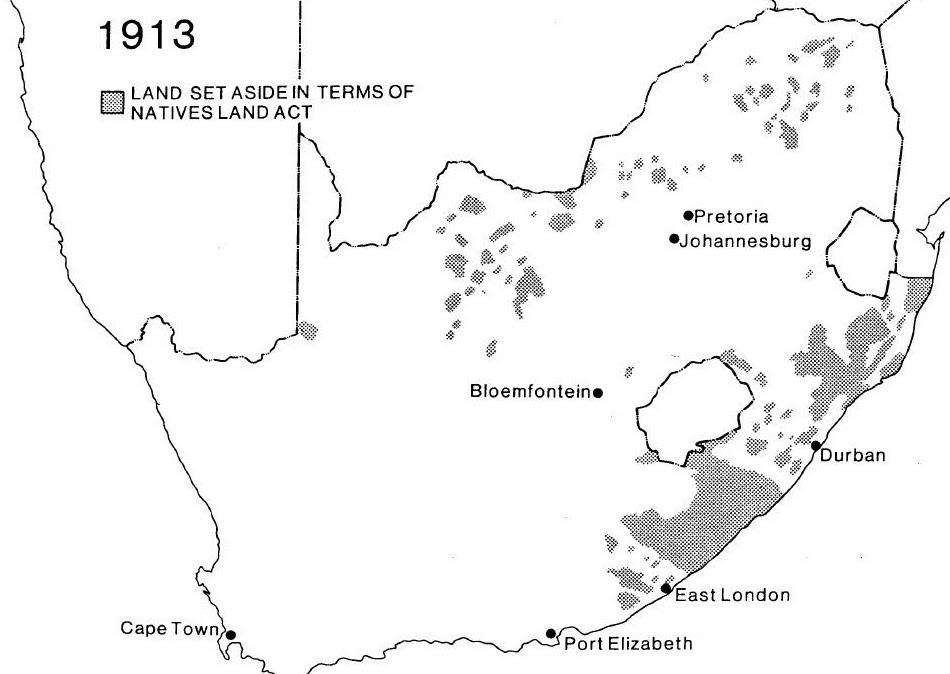
Forced removals: Africans were pushed into designated areas called reserves
-
Unequal land distribution: Despite making up 80% of the population, African people were allocated only 8% of the land (later increased to just 13%)
-
Loss without compensation: People lost their homes, schools, and churches without receiving any payment
-
Destruction of independence: The act removed African people's ability to support themselves through farming
Important
The stark inequality of land distribution - 80% of people receiving only 8% of land - reveals the true scale of dispossession under this act.
Consequences of the land act
The Land Act created a migratory labour system with severe social and economic impacts:
Economic consequences:
- Reserves became overcrowded and unsuitable for farming
- Men were forced to travel to towns and mines to find work
- This cheap labour supply helped make the mining industry extremely profitable
- The economy grew, but only white colonists benefited whilst African families suffered
Social consequences:
- Traditional African community structures were broken apart
- Families were separated when men left for work
- The foundations of the apartheid system were established
- Deep resentment developed between African people and white oppressors, lasting for generations
Note
The migratory labour system didn't just affect economics - it fundamentally restructured African society by breaking apart families and traditional community bonds that had existed for generations.
Sol Plaatje's documentation and resistance

Who was Sol Plaatje?
Sol Plaatje became the first general secretary of the African National Congress (ANC) in 1912. He was a remarkable intellectual who:
- Spoke eight different languages fluently
- Edited three newspapers
- Authored several books
- Became one of the most important early leaders in the fight against racial oppression
Witnessing the land act's effects
In 1913, Plaatje undertook an extraordinary journey to document the Land Act's impact:
Example
Plaatje's Documentary Journey
Plaatje travelled around the reserves on a bicycle to see conditions firsthand. What he witnessed shocked and horrified him - families displaced, communities destroyed, and widespread suffering. He recorded these experiences in his famous book "Native Life in South Africa", which provided crucial evidence of the Land Act's devastating effects on African communities.
Attempts to seek justice
Plaatje made several attempts to challenge the Land Act through legal and diplomatic channels:
First delegation (1914):
- Led an unsuccessful delegation to Britain to appeal against the Land Act
- Hoped the British government would overturn this unjust legislation
Second delegation (1917-1919):
- Returned to Britain in 1917 and organised another delegation in 1919
- This delegation also travelled to Canada and the USA seeking international support
- All these efforts proved unsuccessful
British response:
- Britain refused to interfere, claiming they could not intervene in the internal affairs of a self-governing dominion
- This response left African people without legal recourse and international support
Important
Despite Plaatje's tireless efforts and international appeals, Britain's refusal to intervene left African communities with no legal protection against the Land Act's devastating effects.
The foundations of the apartheid pattern
The Natives Land Act of 1913 marked the beginning of a systematic pattern of racial oppression that would worsen dramatically over time, particularly after 1948, and continue until apartheid officially ended in 1994.
Building blocks of apartheid
The Land Act worked alongside other discriminatory laws to create a comprehensive system of oppression:
- Pass laws: Restricted African people's movement and required them to carry identification documents
- Colour Bar Act: Prevented African people from holding skilled jobs
- Job reservation laws: Reserved certain types of work exclusively for white people
- Mining contracts: Became increasingly restrictive and exploitative
Long-term impact
Note
The Vicious Cycle of Oppression
These laws combined to create a systematic pattern where African people were kept in positions of poverty and dependence. They were denied opportunities for education, skilled employment, and economic advancement. This created deep-seated resentment against white oppressors - anger and frustration that was passed down through generations as the system became increasingly inhumane and discriminatory over the decades.
The Land Act essentially removed African people's chance to earn an independent living, forcing them into a system designed to benefit white colonists whilst keeping African communities impoverished and powerless.
Summary
Key Points to Remember:
- The Natives Land Act of 1913 destroyed traditional African life by forcing people off their ancestral lands into overcrowded reserves
- Land distribution was extremely unfair: 80% of the population (African people) received only 8% of the land, later increased to just 13%
- The act created a migratory labour system where men were forced to leave their families to work in mines and towns for low wages
- Sol Plaatje documented the suffering caused by the Land Act and led unsuccessful delegations to Britain, Canada, and the USA seeking justice
- The Land Act laid the foundations for apartheid - a system of racial oppression that lasted until 1994 and created generations of resentment and inequality