The South African War: 1899–1902 (Grade 10 NSC Matric History): Revision Notes
📚Revision Notes
The South African War: 1899–1902
Britain's increasing interest in South Africa with the discovery of minerals
The discovery of gold and diamonds in South Africa dramatically changed Britain's relationship with the region. Britain became desperate to gain control over these valuable mineral resources for several important reasons.
Note
The mineral revolution in South Africa fundamentally shifted the balance of power in the region, transforming what had been primarily agricultural territories into the focus of international imperial competition.
Why Britain wanted control of the mines:
- Britain feared that other European countries, particularly Germany, would gain influence over the mineral wealth first
- Germany was known to be friendly with President Kruger of the Zuid-Afrikaansche Republiek (ZAR)
- Mine owners wanted to modernise the industry and create a Union of South Africa
- This union would give them control over all the land and workforce, including both African chiefs' territories and white-owned farms
The competition for mineral wealth set the stage for the conflict that would follow between British imperial interests and Boer independence.
Political and economic struggle for control of the goldfields
The tensions
The struggle for control involved key British figures who were determined to extend imperial influence over the mineral-rich territories.
Key British figures and their roles:
- Joseph Chamberlain - British Secretary of State for the Colonies and a strong imperialist
- Lord Milner - Governor of the Cape, chosen by Chamberlain for his imperialist views
- Cecil Rhodes - Prime Minister of the Cape who had conquered territory across the Limpopo River (called Rhodesia, now Zimbabwe)
Rhodes used his media influence to build support for war. He owned important newspapers including The Johannesburg Star and the Cape Times, which helped stir up British public opinion in favour of conflict with the ZAR.

Boer concerns about British influence: The religious and conservative Afrikaners (Boers) felt threatened by the uitlanders (foreigners) who were changing their traditional way of life. President Kruger tried to maintain independence by building his own railway line to Delagoa Bay, avoiding dependence on British railway lines from the Cape and Natal.
The grievances of the uitlanders
The uitlanders were foreign workers, mainly British, who had come to the ZAR to work in the gold mines. They became increasingly frustrated with President Kruger's government, called the Volksraad, which they believed was corrupt and inefficient.
Note
The uitlanders represented a significant demographic shift in the ZAR, with their numbers growing rapidly due to the gold rush. This created tension between maintaining traditional Boer culture and accommodating the demands of a modernizing economy.
What the uitlanders wanted:
- Modern infrastructure including better transport, water, and sewerage systems suitable for a capitalist economy
- An end to the Boers' monopoly over the supply of dynamite and other mining essentials
- Political representation - they resented paying heavy taxes while having no say in government
- The right to vote without waiting 14 years of residence in the Republic
These grievances created the perfect opportunity for Rhodes to plan his takeover of the ZAR.
The Jameson Raid, 1895-6
Rhodes planned to use the uitlanders' complaints as justification for British intervention in the ZAR. His strategy involved getting the uitlanders to call on Britain for help against their "terrible treatment."
Example
The Jameson Raid: A Failed Imperial Adventure
Step 1: The Setup
- Dr Jameson was sent to Pitsani on the Bechuanaland border with 800 mounted police from Rhodesia
- Uitlanders smuggled guns in preparation for a coordinated uprising
Step 2: The Plan Falls Apart
- The uitlanders decided not to revolt as planned, despite having weapons
- Rhodes sent a message telling Jameson not to invade
Step 3: The Fatal Decision There are two versions of what happened next:
- Some telegraph lines had been cut and Jameson didn't receive the message
- Jameson saw this as an opportunity for fame and ignored Rhodes's orders
Step 4: The Inevitable Failure
- Kruger's commandos easily captured the invaders
- The raiders were punished and this became a triumph for the ZAR
Consequences of the failed raid:
- Rhodes was humiliated and resigned as Prime Minister of the Cape
- Britain's fears of a Boer-German alliance increased when the German Kaiser sent Kruger a congratulatory telegram
- Tensions escalated further when the ZAR bought large quantities of modern weapons from Germany
War breaks out
The final crisis began when Milner sent a telegram to Chamberlain claiming that British subjects were being treated like 'helots' (slaves). To prevent war, President Steyn of the Orange Free State organised a conference between Milner and Kruger at Bloemfontein.
The breakdown of negotiations:
- Milner demanded that uitlanders get the vote after five years of residence in the ZAR
- Kruger tried to compromise, offering voting rights after seven years
- Milner refused this offer
- Kruger said: "You just want my country"
In September 1899, British reinforcements sailed to South Africa and British troops were sent to the ZAR border. Kruger sent an ultimatum to Milner demanding that the troops be removed, but nothing happened. War was declared between the two Boer republics and Britain.
The two phases of the war
The first phase: October 1899 – September 1900
The war began with surprising Boer successes that shocked the British Empire and demonstrated the effectiveness of Boer military tactics.
Boer successes in the early phase: The Boers invaded Natal and the Cape, besieging the towns of Mafeking, Kimberley, and Ladysmith. This siege strategy meant that the Boers surrounded these towns, hoping that the British residents would eventually surrender due to starvation.

Important
The British experienced a 'Black Week' during which the 'Pride of the British Empire' was beaten by the Boers at Magersfontein, Stormberg, and Colenso. Nearly 3,000 men were killed or wounded, and many field-guns were lost.
British counter-attack: In February 1900, reinforcements arrived under Lord Roberts. A counter-offensive relieved the besieged towns:
- Roberts beat the Boers and took Bloemfontein in February
- Johannesburg fell in May
- Pretoria was captured in June
By September 1900, the ZAR was annexed by the British Empire. Kruger went to Switzerland - some sources say he went to seek help, while others claim he went into exile. Roberts left for Britain, leaving Lord Kitchener in charge to complete the peace arrangements.
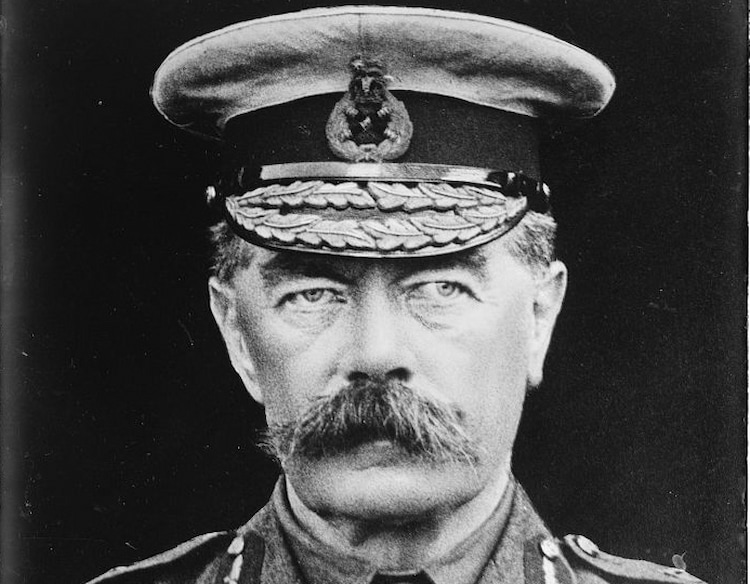
The second phase: guerrilla warfare
The Boer generals Botha, Steyn, De la Rey, De Wet, and Cronje refused to accept defeat and wanted to fight 'tot die bitter einde' (to the bitter end). They had a strong nationalistic spirit that kept them going.
Note
The transition to guerrilla warfare marked a significant shift in military strategy. The Boers abandoned conventional warfare and adopted tactics that would later influence military thinking worldwide, demonstrating how smaller forces could effectively resist larger, better-equipped armies.
Boer tactics:
- They formed themselves into commandos and raided the British using hit-and-run tactics
- These tactics caused significant damage to British forces
- For two years, fewer than 60,000 Boers fought a guerrilla war against 200,000 British soldiers
The Boer commandos survived by staying on farms where they were supplied with fresh horses and food from sympathetic farmers.
The scorched earth policy
To defeat the Boer guerrilla fighters, Lord Kitchener implemented a harsh strategy designed to cut off their supplies and support.
Important
Kitchener gave orders to burn all farmhouses, their contents, crops, and animals, and to put Boer women and children as well as their black farm workers into concentration camps. He hoped that the Boers would surrender when they saw their families suffering.
More than 30,000 farmhouses were systematically burned down using this strategy, which became known as the scorched earth policy, in order to defeat the Boers.
British concentration camps
The concentration camps became one of the most controversial aspects of the war, with devastating consequences for both Boer and black families.

Important
Shocking statistics:
- 116,000 Boer women and children were herded into 40 camps around the country, where about 26,000 died
- 115,000 blacks were sent to 66 camps, where over 14,000 died
Terrible conditions in the camps:
- Tents on bare land that were extremely hot in summer and freezing in winter
- Severe overcrowding
- Unhygienic conditions
- Lack of food, medicines, clean water, beds, and blankets
- Diseases like pneumonia, measles, enteric fever, dysentery, and malaria caused most deaths
Long-term consequences: The British actions during this war created a passionate Afrikaner nationalism that made them determined to protect their own people at all costs. The bitterness against the British was passed down from generation to generation, helping to influence the referendum vote in 1960 that saw South Africa become a republic, free from British rule, in May 1961.
The role of women and blacks in the war
The war involved not just soldiers but also civilians who played crucial roles in various capacities, often under dangerous conditions.
Women's contributions:
- Emily Hobhouse was a wealthy British lady who came to South Africa during the war
- She was horrified at the conditions in the concentration camps
- She campaigned tirelessly and raised funds for better rations, sanitation, and facilities in the camps
- Because of her efforts, the death rate in the camps decreased
- She is remembered as a heroine and honoured by being buried at the Women's Monument in Bloemfontein
- Nurses from all over the world came to South Africa to help nurse both sides
- Lady Sarah Wilson was the first woman to be appointed as a war correspondent
Note
The involvement of women in various capacities during the South African War marked an important development in women's participation in warfare, both as victims and as active contributors to relief efforts and journalism.
Black participation: About 100,000 blacks supported the British, thinking that if they joined the British side, they would get the vote when the British won. They were very useful to the British forces (though blacks who worked for the Boers performed similar roles):
- They knew the territory well
- They acted as spies and messengers
- They performed essential jobs such as cooking, looking after animals, and doing other camp chores
- Mahatma Gandhi organised 1,000 Indian stretcher-bearers for the British
The end of the war: peace negotiations
The Boers eventually surrendered because their commandos were worn down and their losses were enormous.
The Peace Treaty of Vereeniging was signed on 31 May 1902, establishing a negotiated settlement:
What the Boers gained:
- Promise of self-government in the future (but blacks had no political rights)
- Protection of the Dutch language
- Return of Boer prisoners who had been sent to St Helena, Bermuda, and Sri Lanka, with their guns returned
- British promise to help rebuild houses and re-establish farms
What the British gained:
- The Boers had to become British subjects under the Union Jack flag and the monarch
- The two Boer Republics became British colonies
This treaty set the foundation for the eventual formation of the Union of South Africa in 1910, though it excluded black South Africans from political rights.
Summary
Key Points to Remember:
- Mineral wealth was the key factor that intensified British interest in controlling South Africa, leading to conflict with the independent Boer republics
- The Jameson Raid (1895-6) was a failed British attempt to overthrow the ZAR government, which increased tensions and Boer distrust of Britain
- The war had two distinct phases: conventional warfare (1899-1900) where Britain eventually won, followed by guerrilla warfare (1900-1902) where Boer commandos used hit-and-run tactics
- The scorched earth policy and concentration camps were controversial British tactics that caused enormous suffering and created lasting bitterness among Afrikaners
- The Peace Treaty of Vereeniging (1902) ended the war but excluded black South Africans from political rights, setting the stage for future racial conflict in the union that would follow