The Union of South Africa: 1910 (Grade 10 NSC Matric History): Revision Notes
📚Revision Notes
The Union of South Africa: 1910
Background: post-war devastation and reconstruction
The period following the South African War (1899-1902) was marked by significant challenges that would eventually lead to the formation of the Union of South Africa in 1910.
Note
The South African War, also known as the Anglo-Boer War, lasted from 1899 to 1902 and left the country in economic and social ruins. Understanding its aftermath is crucial to comprehending why union became necessary.
The impact of war on different groups
The Boer community faced enormous hardship after their defeat. Thousands of lives had been lost during the conflict, and their farming communities were devastated. The British government recognised the need for reconstruction and allocated £19 million specifically to help Boer farmers modernise and rebuild their agricultural operations.
The black population experienced profound disillusionment following the war. Many black South Africans had supported Britain during the conflict, expecting that their loyalty would be rewarded with political rights, particularly the vote. However, their hopes were crushed when no such rights were granted after Britain's victory.
The economy was in ruins, with mines forced to close during the war years, bringing economic activity to a virtual standstill.
Milner's policies and their consequences
Lord Milner, the British High Commissioner, implemented policies aimed at creating lasting British control over South Africa.

The "anglicisation" strategy
Milner's primary goal was to establish a British majority in the country. His strategy included:
- Settlement schemes: Organising the immigration of approximately 1,200 British families to settle permanently in South Africa
- Cultural suppression: Attempting to make English the dominant language and culture, deliberately ignoring Boer traditions and heritage in a process known as "denationalisation"
Unintended consequences
Important
Rather than weakening Boer identity, Milner's policies had the opposite effect. The Boers became increasingly nationalistic and developed stronger resentment towards what they called "Milnerism" - British attempts to erase their cultural identity.
This backfire effect demonstrates how cultural suppression often strengthens rather than weakens group identity.
Economic recovery and labour challenges
The mining crisis
By 1902, there were only 45,000 black mineworkers available, far fewer than needed to restart the crucial mining industry. To address this labour shortage, the government made the controversial decision to import thousands of Chinese workers between 1904 and 1905.
Note
The use of Chinese labour became a major political issue, with critics arguing it depressed wages and working conditions for all workers. This decision would later influence political debates about labour and immigration policy.
Political shifts in Britain
In 1906, the Liberal Party won the British general election. The Liberals viewed the South African War as unjust and were more sympathetic to Boer concerns. This political change in Britain would prove significant for South Africa's future.
Rising tensions and the path to union
The return of Afrikaner political power
By 1908, Afrikaners had regained political control in key territories:
- The Transvaal (formerly the Zuid-Afrikaansche Republiek)
- The Orange Free State
- The Cape Colony
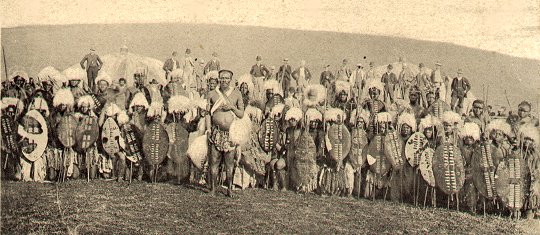
The Bambatha Rebellion (1906)
Chief Bambatha led a significant rebellion against government taxation in 1906. This uprising raised serious concerns among white politicians about their ability to maintain control over the black majority without British military support.
Note
The Bambatha Rebellion highlighted the fragility of white minority rule and demonstrated that African resistance remained strong despite military defeats. This fear of future uprisings became a driving force behind the push for political union.
Creating the union: negotiations and compromises
A draft constitution for a Union was developed through extensive negotiations between English-speaking and Afrikaner politicians. Several key issues required careful compromise:
The constitutional process
The franchise question
Important
One of the most contentious issues was voting rights. The proposed solution severely limited black political participation and created a system of racial exclusion that would define South African politics for decades.
The proposed solution severely limited black political participation:
- Only black voters in the Cape Colony who met existing qualifications would retain voting rights
- No political rights would be extended to black people in the Transvaal, Orange Free State, or Natal
Black political opposition
John Jabavu, a prominent African leader, organised significant resistance to these discriminatory proposals. In 1909, he coordinated an open letter signed by 1,000 British politicians protesting the exclusion of black people from political rights in most territories.
An eight-man delegation travelled to London in 1909 to present these concerns directly to the British government. However, the British authorities refused to interfere with the proposed constitution, stating they would not intervene in the affairs of a self-governing dominion.
Key constitutional compromises
After lengthy negotiations, English and Afrikaner representatives agreed on several important provisions:
The franchise arrangement: The existing black voting rights in the Cape would be "entrenched" in the constitution, meaning they could only be removed by a two-thirds majority in parliament - making such changes very difficult to achieve.
Important
The "entrenched" clauses were designed to protect Cape black voting rights, but they proved inadequate in the long term. Understanding why these protections failed is crucial for grasping how apartheid later developed.
Capital cities: Rather than choosing one capital, the new Union would have three capitals, distributing government functions across different cities.
Rural representation: Parliamentary seats in rural areas would require fewer voters than urban constituencies. This arrangement favoured Afrikaner farmers and ensured they could compete politically with English-speaking urban voters.
The birth of the Union
On 31 May 1910, the Union of South Africa was officially proclaimed with General Louis Botha as the first Prime Minister.

A divided unity
While the four former colonies (Cape, Natal, Orange Free State, and Transvaal) were now united under one flag and one government, the new country faced a fundamental contradiction.
Important
As contemporary observers noted, "Four colonies were united under one flag, but the country was not united."
The Union represented a political compromise between white English and Afrikaner communities, but it systematically excluded the black majority from meaningful political participation. This contradiction would define South African politics for the next 80 years.
Remember!
Summary
Key Points to Remember:
-
The Union of South Africa was formed on 31 May 1910 as a compromise between English and Afrikaner political interests after the devastation of the South African War
-
Milner's policies of cultural suppression backfired, strengthening Afrikaner nationalism rather than creating British dominance
-
Economic reconstruction included £19 million for Boer farmers and the controversial use of Chinese labour in the mines
-
The new constitution severely limited black political rights, with only Cape black voters retaining the franchise under "entrenched" clauses
-
Despite political unification, the Union remained deeply divided along racial and cultural lines, setting the stage for future conflicts over political rights and national identity