Legacies of Shaka (Grade 10 NSC Matric History): Revision Notes
📚Revision Notes
Legacies of Shaka
How has Shaka been remembered?
Shaka's memory lives on in modern South Africa through impressive monuments that demonstrate the high regard in which he is held by the Zulu people. Two major landmarks in KwaZulu-Natal honour his name and achievements.
The first is uShaka Marine World, a popular tourist destination located on the Durban beachfront. This modern attraction serves as a living tribute to Shaka's enduring influence in the region.
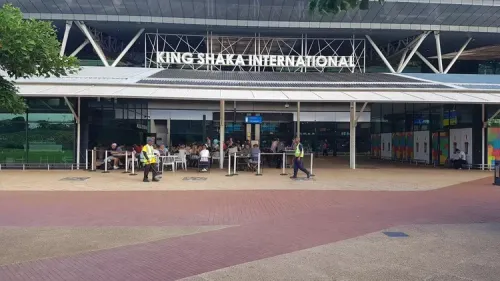
The second monument is King Shaka International Airport, situated 35 kilometres north of Durban. This major international gateway to South Africa bears his name, showing how Shaka's legacy extends beyond historical memory into contemporary infrastructure.
Note
These monuments provide clear evidence that modern Zulus continue to hold their founding leader in exceptionally high esteem. They view Shaka as the creator of the Zulu nation and take pride in his historical significance.
Shaka's portrayal in the past and in the present
Challenges in studying Shaka's history
Understanding the real Shaka presents significant challenges for historians. A simple internet search reveals over 9,160,000 sources of information about him, making it extremely difficult to separate reliable historical facts from myths and legends.
Important
The abundance of sources creates a major problem: historians must carefully evaluate which accounts are trustworthy and which are based on folklore or biased perspectives.
Different viewpoints about Shaka's character
Historical opinions about Shaka vary dramatically, but they all share one common flaw - they are biased and subjective. However, most historians would agree on one key point: Shaka was undoubtedly the creator of a military revolution through his innovative warfare tactics.
Some writers have compared Shaka to Napoleon Bonaparte, calling him the "Black Napoleon" and describing him as the greatest military commander to emerge from Africa. This comparison highlights his strategic genius and battlefield innovations.
Eyewitness accounts from white traders
The main eyewitness reports about Shaka came from three white traders who had direct contact with him:
- Farewell
- Fynn
- Isaacs
However, these accounts must be approached with caution for several reasons:
Important
Problems with reliability:
- Farewell's diary was lost and rewritten from memory 20 years later, making its accuracy questionable
- The traders may have provided accurate descriptions initially, but their motivations changed over time
- After acquiring land in the region, these traders wanted to portray Shaka as extremely violent and "bloodthirsty" to justify British annexation of Natal, which would make their land valuable
Descriptions of violence: The traders described various punishments Shaka imposed for crimes such as murder, rape, robbery, adultery, treason, cowardice, and spying. They called these "bloody atrocities." However, it's important to note that England at this time had over 200 offences punishable by death, including minor crimes like cutting down trees, begging, and stealing small amounts of money.
Evidence of Shaka's psychological problems
Multiple sources suggest that Shaka experienced serious mental health issues during the final four years of his life. This evidence comes from both eyewitness accounts and oral traditions passed down through generations.
Example
Example: Extreme Mourning Period
After his mother Nandi's death, Shaka's unstable behaviour became evident:
Step 1: He commanded a period of extreme mourning that caused terrible destruction
Step 2: He prohibited all sexual relations, banned crop planting, and forbade milk consumption
Step 3: All pregnant women and their husbands were killed during this period
Step 4: Oral sources report that a man named Gala eventually convinced Shaka to end this destructive mourning period
Additional concerning incidents:
- Isaacs witnessed Shaka massacre 170 young men and women based on suspicions of adultery
- Oral traditions reveal that Shaka's army became increasingly dissatisfied with his leadership because he refused to give them rest periods, leading to mass desertions
The impact of the Mfecane
Shaka's reign had devastating consequences that extended far beyond the Zulu kingdom. The period of warfare and displacement known as the Mfecane resulted in immense human suffering.
Important
Historical estimates suggest that over two million people became starving and homeless during this period. The destruction affected not only Shaka's enemies but also his own people, who endured ten years of continuous warfare and its terrible consequences.
Shaka's complex legacy
Despite the conflicting accounts and evidence of his later psychological problems, Shaka remains a forceful, authoritarian, and controlling character who inspired both fear in his enemies and followers. His complex personality and actions have been interpreted in various ways throughout history.
The mixture of legends, myths, eyewitness reports, oral traditions, and evidence of both heroic and cruel behaviour has contributed to different portrayals of Shaka in films and books. Some present him as a romantic hero, while others depict him as a bloodthirsty tyrant.
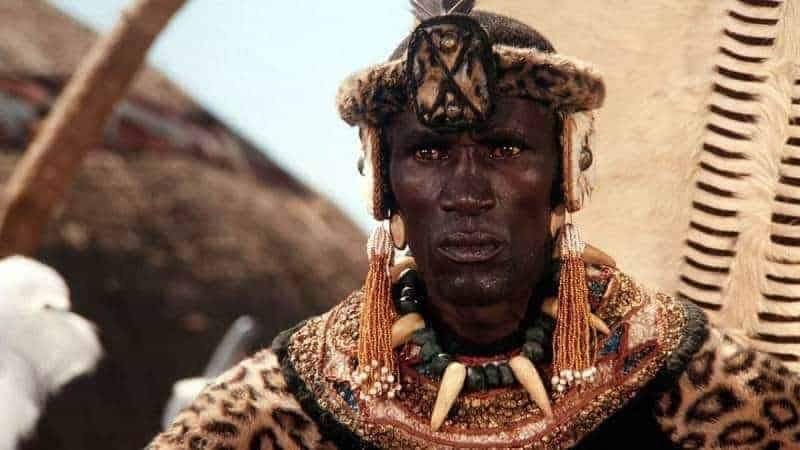
Note
However, one aspect of Shaka's legacy cannot be disputed: his crucial role in forming a united Zulu people. The modern Zulu nation takes tremendous pride in their heritage and the lasting legacy that Shaka created for them.
Summary
Key Points to Remember:
- Two major monuments (uShaka Marine World and King Shaka International Airport) show how modern Zulus still honour Shaka's memory
- Historical sources about Shaka are problematic - they include biased eyewitness accounts, myths, legends, and oral traditions that are difficult to verify
- Shaka was definitely a military genius who created revolutionary warfare tactics, earning him the nickname "Black Napoleon"
- Evidence suggests psychological problems in Shaka's later years, including extreme mourning practices and mass killings
- The Mfecane period caused massive suffering with over two million people becoming homeless and starving during his reign
- Shaka's greatest legacy was creating a united Zulu nation that continues to take pride in their heritage today