Political Changes in Southern Africa: 1750–1820 (Grade 10 NSC Matric History): Revision Notes
📚Revision Notes
Political Changes in Southern Africa: 1750–1820
The period between 1750 and 1820 witnessed dramatic political transformations across southern Africa. Two major developments shaped this era: the expansion of Tswana chiefdoms in the interior and the rise of powerful military states in the east, particularly under leaders like Zwide.
The interior: expansion of southern Tswana chiefdoms
Background and causes of expansion
After 1750, southern Tswana communities began a significant period of expansion, expanding into areas south of the Vaal River and surrounding regions. This expansion was not simply about finding new land - it represented a fundamental shift in the political landscape of the region.

Note
The expansion of Tswana chiefdoms represented more than simple migration - it was a transformation of the political landscape that would have lasting effects on the region's development.
The driving force behind these changes was fierce competition for three crucial resources:
Important
Critical Resources Driving Expansion:
- Land for grazing and settlement
- Cattle as wealth and status symbols
- Trade opportunities with the Cape Colony and, indirectly, with Mozambique
These three elements formed the foundation of power and wealth in Tswana society, making competition for them inevitable and intense.
The rise of powerful chiefs
The expansion period created opportunities for ambitious leaders to gain power through new forms of wealth. Chiefs who, in some regions (particularly near the Cape frontier), successfully imported European goods like guns gained advantages over their rivals. These leaders also controlled valuable trading commodities including cattle, ivory, and animal skins.
Wealthy chiefs used their resources strategically to buy the loyalty of smaller chiefs, creating larger, more powerful political units. This process led to the consolidation of power and the emergence of more centralised chiefdoms.
The Hurutshe: a dominant community
Among the various Tswana communities, the Hurutshe emerged as one of the largest and most influential. Many southern Tswana groups claimed descent from the Hurutshe royal line, which gave this community significant political legitimacy and influence across the region.
Military changes and raiding groups
By 1800, some communities had adapted to the changing political environment by adopting a raiding lifestyle. In some regions, particularly near the Cape frontier, access to horses and guns provided important military advantages.
Important
Raiding Communities and the Kora
In addition to Tswana groups, other raiding communities such as the Kora (Koranna) played a major role in this period. The Kora were not Tswana, but Khoikhoi-descended groups who used horses and guns to raid settlements, control trade routes, and extract tribute from weaker communities.
In the east: the rise of the Ndwandwe under Zwide
Environmental pressures and warfare
The eastern regions of southern Africa faced severe challenges during this period. A period of drought in the late 18th century (around the 1790s) created widespread competition for resources, leading to increased warfare as different groups struggled for survival.
This environmental pressure forced smaller clans to make difficult choices about their future. Many decided to join with stronger chiefdoms for protection and access to resources, accelerating the process of political consolidation.
Military developments: the amabutho system
Zwide, the leader of the Ndwandwe, made effective use of age-based military organisation known as amabutho. This system organised men into regiments based on age rather than strictly on clan identity, improving coordination and discipline.
Important
Military Organisation: Amabutho
This system made the Ndwandwe military more unified and efficient in several key areas:
- Taking land from other groups through coordinated attacks
- Raiding neighbours for cattle and resources
- Controlling trade routes to dominate regional commerce
The amabutho system represented a significant shift away from purely clan-based military organisation and would later be further developed by leaders such as Shaka.
Zwide's rise to power
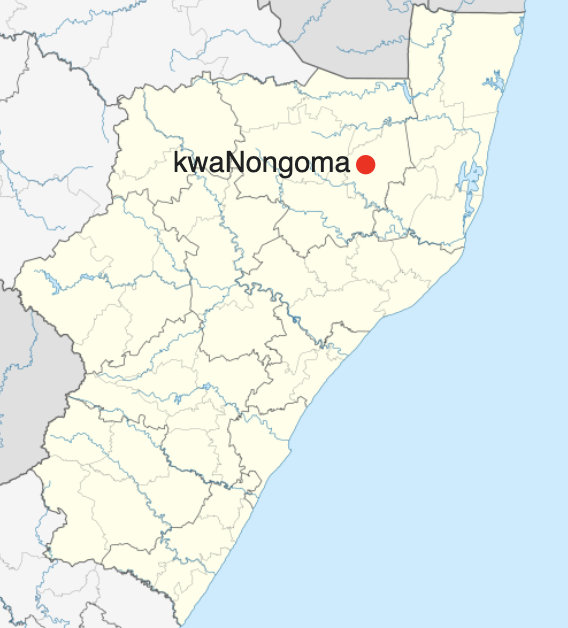
In the early 19th century, when Zwide came to power, the Ndwandwe clan was already growing in military strength in the northern regions of what we now call KwaZulu-Natal. His leadership marked the beginning of a new era of military dominance in the area. Below you can see the location of Zwide's kraal, kwaNongoma.
The defeat of the Mthethwa
Zwide's ambitions extended beyond mere survival - he aimed to expand his borders and defeat his enemies, particularly the powerful Mthethwa chiefdom. After a series of violent raids and conflicts, the Ndwandwe gained a significant advantage over the Mthethwa.
Note
In a particularly significant moment, Zwide captured Dingiswayo, the chief of the Mthethwa, and later had him killed, eliminating his major rival and strengthening Ndwandwe power in the region.
Following this, the Ndwandwe set out to dominate the region that would later be known as Zululand, establishing themselves as a major power.
Historical significance
These political changes between 1750 and 1820 laid the foundation for later developments in southern African history. The military innovations, political consolidation, and competition for resources during this period would influence conflicts and state formation well into the 19th century.
Summary
Key Points to Remember:
- After 1750, Tswana chiefdoms expanded into areas south of the Vaal River and surrounding regions due to competition for land, cattle, and trade
- Powerful chiefs gained control by importing European goods like guns (especially near the Cape frontier) and buying loyalty from smaller chiefs
- The Hurutshe were an influential Tswana community, with others claiming descent from their royal line
- Environmental pressures like drought in the late 18th century intensified warfare and political consolidation in the east
- Zwide strengthened Ndwandwe power using the amabutho system and gained advantage over the Mthethwa, including the killing of Dingiswayo in the early 19th century