Political Revolutions in Southern Africa: 1820–1835 (Grade 10 NSC Matric History): Revision Notes
📚Revision Notes
Political Revolutions in Southern Africa: 1820–1835
Introduction
The period between 1820 and 1835 was a time of dramatic political change in southern Africa. This era, known as the Mfecane (in Nguni areas) and Difaqane (in Sotho areas), involved widespread warfare, migration, and the formation of new kingdoms. These political revolutions transformed the region from relatively stable chiefdoms into a landscape of powerful centralised states and displaced populations.
The changes began with military innovations and ambitious leaders who used new tactics to conquer neighbouring groups. This created a domino effect across southern Africa, as defeated peoples fled to new areas, sometimes conquering others or forming defensive alliances.
Note
The terms Mfecane and Difaqane both describe the same period of upheaval, but from different linguistic perspectives. Mfecane comes from Nguni languages, while Difaqane comes from Sotho languages, reflecting how this period affected multiple cultural groups across the region.
The break-up of the Ndwandwe kingdom
The political upheaval began with the conflict between two powerful groups: the Zulu under Shaka and the Ndwandwe under Zwide. After the death of Dingiswayo, Shaka allied the Mthethwa with the Zulu, setting the stage for a major confrontation.
Shaka's military revolution
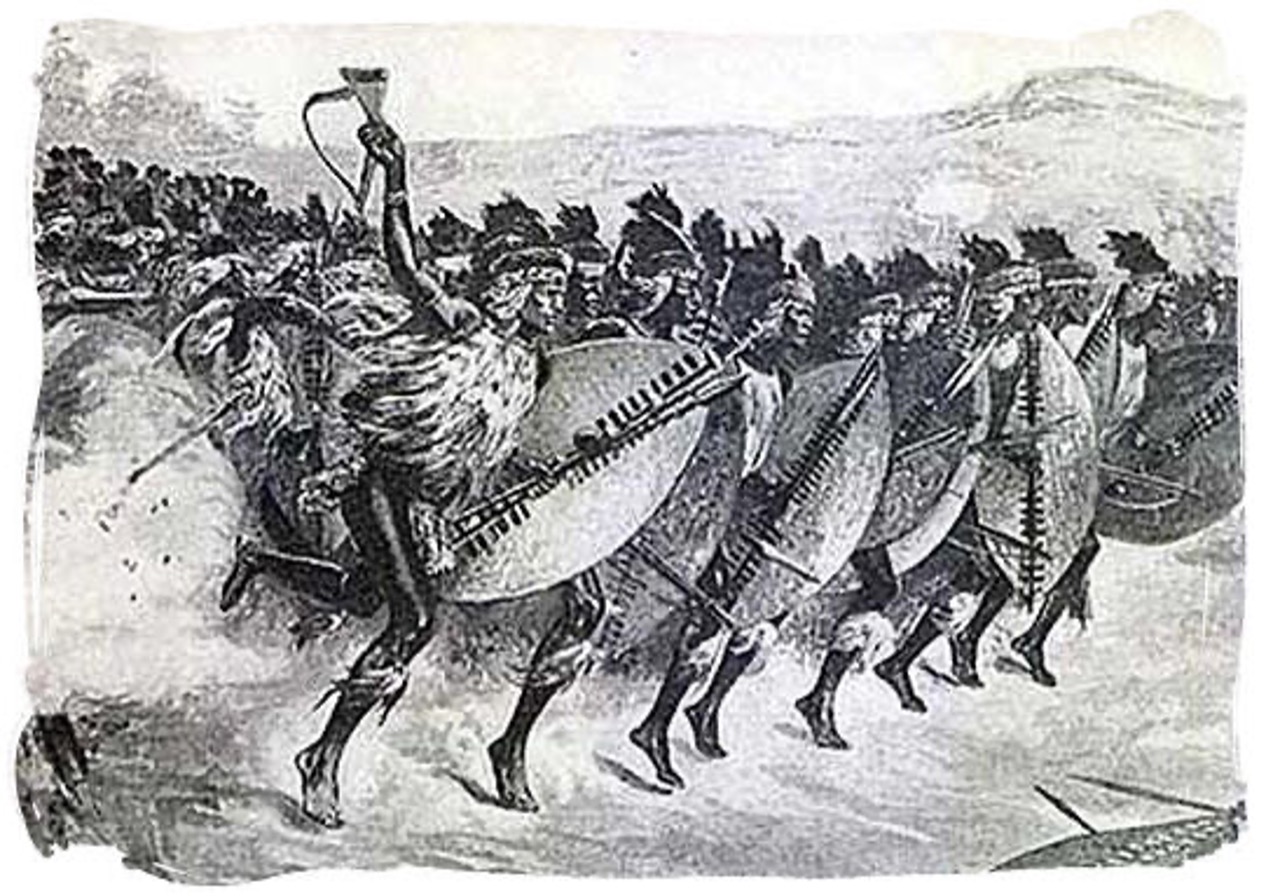
Shaka introduced revolutionary military tactics that gave him decisive advantages:
- The "horns of the bull" attack formation - a strategic battle formation that surrounded enemies
- The short stabbing spear (assegai) - replaced the traditional long throwing spear for close combat
- Superior military organisation and discipline
Important
Shaka's military innovations were not just tactical changes - they represented a complete transformation of warfare in southern Africa. The shift from long throwing spears to short stabbing spears forced warriors into close combat, requiring greater discipline and courage, which fundamentally changed the nature of battle.
The Ndwandwe-Zulu wars
The wars between these two powers lasted approximately four years. Shaka's new military methods proved devastatingly effective against the larger Ndwandwe forces. In one famous battle, Shaka used a clever tactical retreat, drawing his hungry and exhausted enemies deep into his territory for nearly a week before launching a surprise attack that defeated them completely. Zwide lost five of his sons in that single day.
Example
Tactical Example: Shaka's Strategic Retreat
Step 1: The Deception - Shaka ordered his forces to retreat, appearing to flee from the larger Ndwandwe army
Step 2: The Pursuit - Zwide's forces followed for nearly a week, becoming hungry and exhausted as they moved deeper into Zulu territory
Step 3: The Surprise Attack - When the Ndwandwe were at their weakest, Shaka launched a devastating counterattack
Result: Complete victory for the Zulu, with Zwide losing five sons in a single day
Consequences of Ndwandwe defeat
The defeat had far-reaching consequences:
- Zwide's fate: Sources disagree on whether Zwide was killed or fled to the Pedi region where he later died
- Ndwandwe dispersal: Some groups abandoned their lands and migrated to Zambia, Malawi, and Mozambique
- New alliances: Some Ndwandwe joined other rising kingdoms like the Shangane in Gaza and the Swazi
- Submission: The majority who remained submitted to Shaka's authority
Eventually, Zulu warriors reached Zwide's headquarters at Nongoma, where they celebrated by singing Ndwandwe victory songs to trick the guards into letting them enter the stronghold.
The rise of the Zulu state and its consolidation under Dingane
Shaka's origins and rise to power
The story of Shaka has become legendary, though historians debate whether some accounts are myth or historical fact. According to oral tradition and white trader accounts:
Shaka was the illegitimate son of Senzangakhona, heir to a small Zulu chiefdom. His mother Nandi became the chief's wife, but later she and her children were expelled from the tribe. They eventually found refuge with the Mthethwa under Chief Dingiswayo.
Dingiswayo recognised Shaka's military talents and allowed him to reorganise the Mthethwa's fighting methods. When Shaka's father died in 1815, he became leader of the Zulu. Three years later, after Zwide murdered Dingiswayo, Shaka united the two tribes.

Building the Zulu military machine
With thousands of soldiers under his command, Shaka transformed his army into a highly efficient and deadly military force. His innovations included:
- Rigorous training and discipline
- The amabutho system - age-based military regiments that also served administrative functions
- Standardised weapons and tactics
- Strict military codes and loyalty oaths
Note
The amabutho system was revolutionary because it served multiple purposes beyond military organisation. These age-based regiments also functioned as administrative units, labour forces, and social structures that helped integrate different clans into a unified Zulu identity.
The Mfecane and Difaqane
Shaka's conquests triggered what historians call the Mfecane (in Nguni-speaking areas) and the Difaqane (in Sotho-speaking areas) - series of bloody wars and migrations that affected the entire region.
The Mfecane had contradictory effects on the northern Nguni population:
- Unity: Many clans joined the growing Zulu nation
- Division: Thousands fled and scattered to other regions of South Africa
- Terror tactics: Towards the end of his rule, Shaka used increasingly brutal methods to maintain loyalty and frighten enemies, including British traders
Important
The Mfecane/Difaqane represents one of the most significant population movements in African history. The ripple effects of Shaka's military campaigns displaced hundreds of thousands of people, fundamentally reshaping the demographic and political landscape of southern Africa.
Shaka's death and Dingane's succession
In 1828, Shaka was assassinated by his half-brother Dingane, who then took control of the Zulu state. Dingane continued Shaka's expansionist policies, waging wars against neighbouring groups including the Ndebele, Mpondo, and Voortrekkers over the following years.
Northern interior: the rise of the Ndebele kingdom under Mzilikazi
Mzilikazi's flight from Shaka
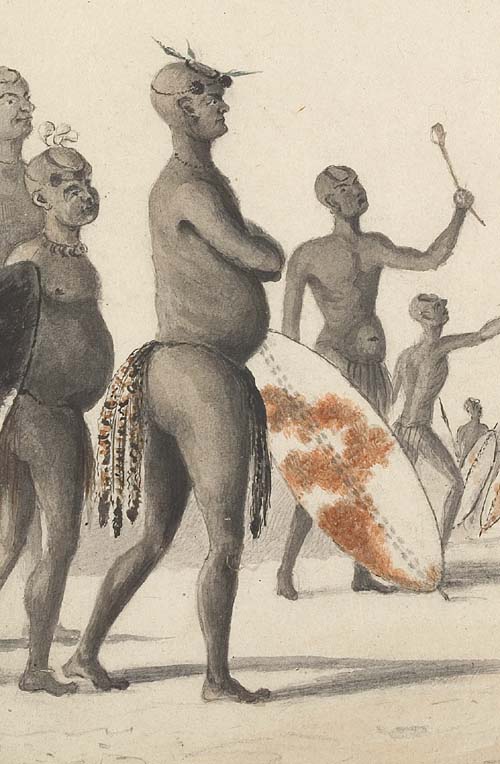
Mzilikazi was originally one of Shaka's favoured generals and Zwide's grandson. He had fled when Zwide killed his father and found welcome among the Zulu. However, Mzilikazi eventually disobeyed Shaka's orders - not for the first time - and an impi (military force) was sent to punish him.
Formation of the Ndebele kingdom
Mzilikazi fled north with approximately 300 warriors, causing massive destruction across the Highveld. His actions had several important consequences:
- He formed the Ndebele tribe from his original Zulu followers and conquered Sotho clans
- After attacking Tswana chiefdoms, the Ndebele grew to about 8,000 people
- Mzilikazi acquired guns through trade, which helped maintain his military advantage
- His strict governance system successfully united diverse clan members into a stable state
Expansion and conflicts
The Ndebele engaged in continuous warfare over 20 years, including a major attack on the Voortrekkers at Vegkop in 1836. In 1837, facing pressure from both Zulu forces and Voortrekker commandos, Mzilikazi led his people across the Limpopo River, where they established a new capital called Bulawayo and became a dominant power in modern-day Zimbabwe.
Note
Mzilikazi's ability to maintain unity among his diverse followers - original Zulu warriors and conquered Sotho and Tswana groups - demonstrates remarkable leadership skills. His success in integrating different ethnic groups into a cohesive fighting force became a model for other leaders during this period.
Southern interior: the emergence of Moshoeshoe and the Sotho kingdom
Moshoeshoe's early leadership
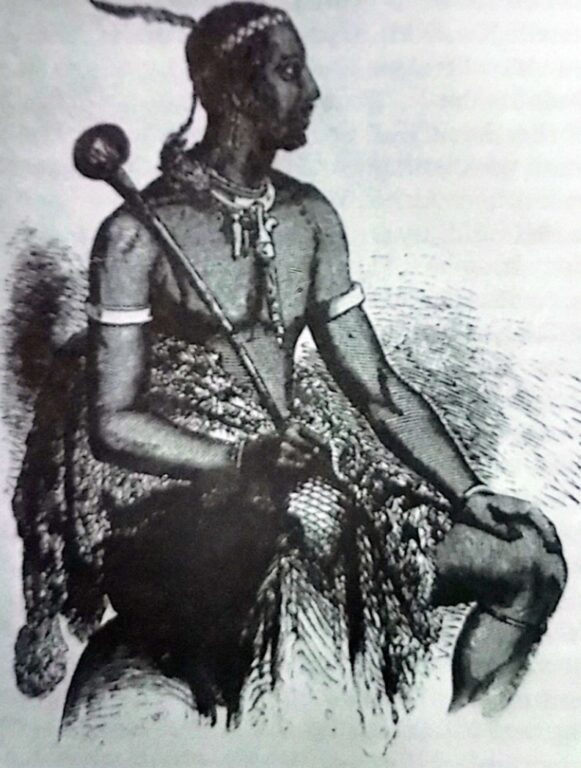
Moshoeshoe, chief of a Sotho group, began his career as a simple cattle herder. The upheaval of the Mfecane forced him to develop new survival strategies.
Defensive strategies
Moshoeshoe's approach differed significantly from other leaders of the period:
- In 1820, he moved his people to the slopes of the Butha Buthe Mountain for defensive purposes
- He avoided direct confrontation with raiders, sometimes offering cattle as tribute instead of fighting
- When besieged in 1824, he and his followers moved to Thaba Bosiu, a mountain fortress that provided excellent natural defence
Important
Moshoeshoe's strategy of avoiding direct military confrontation was revolutionary for its time. While other leaders focused on military conquest, Moshoeshoe prioritised the survival and growth of his people through diplomacy and strategic positioning.
Building the Sotho nation
Moshoeshoe's leadership style emphasised inclusion and diplomacy:
- He offered protection and settlement opportunities to displaced groups and leaders
- By 1840, his followers numbered approximately 40,000 people
- He attempted to maintain friendly relations with British missionaries
- His kingdom eventually became the British Protectorate of Basutoland (1868), which is today the independent nation of Lesotho
Personal characteristics
Moshoeshoe was known for his discipline and moral leadership - he never drank alcohol or smoked, had 30 to 40 wives, and lived to the advanced age of 84, dying in 1870.
Boer, Kora and Griqua raiders
Trekboer expansion
In the early 19th century, there were initially only a few trekboers in the southern interior. However, after 1834, hundreds joined the movement known as the Great Trek.
Conflicts over land and resources
These European settlers brought new dynamics to the region:
- They established farms with cattle and sheep on land that traditionally belonged to southern Sotho groups
- Continuous conflicts arose between trekboers and Sotho communities until Moshoeshoe requested British protection
- Some Tswana groups also adopted raiding lifestyles, becoming known as the Kora
The Griqua raiders
The Griqua were a mixed-race community descended from Khoekhoe, Europeans, Malay, and African slaves. They were organised into two main groups under leaders Waterboer and Adam Kok. The Griqua frequently raided the Ndebele and Moshoeshoe's people, capturing slaves and cattle which they sold to Cape Colony markets.
Note
The Griqua represent an interesting example of how the upheaval of this period created new identities and communities. As a mixed-race group with access to firearms and horses, they occupied a unique position in the conflicts of the era, sometimes serving as intermediaries between European and African societies.
Other states and paramountcies
Gaza kingdom
In the present-day Mpumalanga and Limpopo provinces, Soshangane formed the Gaza kingdom, named after his grandfather. His success came from:
- Maintaining strict discipline through the amabutho system
- Controlling trade in ivory and slaves with Mozambique
- Building the largest territorial kingdom of the period
However, the Gaza kingdom only lasted until 1897, as internal divisions eventually weakened Soshangane's creation. Soshangane died in 1856.
Swazi nation
Sobhuza led the Dlamini branch of the Ngwane people. When forced to flee from Zwide's territory, they settled in what is now Swaziland. There, Sobhuza's group encountered small Sotho and Nguni communities, defeating them individually and incorporating them into their growing tribe.
Sobhuza's success came from:
- Using the amabutho system to resist raids from Shaka and other powerful leaders
- Expanding power through both conquest and diplomacy
- Creating what became the modern Swazi nation
Pedi kingdom
In the area now called Mpumalanga, Chief Sekwati built the Pedi kingdom by offering protection to communities devastated by raids from various groups including the Zulu, Ndwandwe, Gaza, and Swazi.
Sekwati's methods included:
- Restocking cattle herds through organised raids
- Ensuring subordinate loyalty by sharing captured resources
- By 1828, he had become the dominant power in his region
Mpondo kingdom
The Mpondo lived south of the Zulu across the Mzimkhulu River. Chief Faku strengthened his kingdom by:
- Absorbing refugees fleeing from the Mfecane
- Successfully surviving Zulu invasions in 1824 and 1828
- Becoming a significant power south of the Zulus
Southern Tswana groups
The southern Tswana communities suffered severe disruption during the 1820s raids and were nearly completely destroyed. Only after 1836 were they able to regroup under their traditional family structures. The presence of missionary Robert Moffat helped some clans survive the Ndebele raids.
Conclusion
The period from 1820 to 1835 represents one of the most transformative eras in southern African history. The political revolutions of this time fundamentally changed the region's landscape, creating new kingdoms while destroying others.
Key themes of transformation
Several important patterns emerge from this period:
- Military innovation: New weapons and tactics, particularly Shaka's military reforms, gave certain groups decisive advantages
- State formation: Strong leaders like Shaka, Mzilikazi, and Moshoeshoe built centralised kingdoms from previously fragmented chiefdoms
- Migration and displacement: The Mfecane/Difaqane caused massive population movements across southern Africa
- Competition for resources: Land, cattle, and trade opportunities became increasingly contested
- The role of trade: Access to guns and European goods became crucial for survival and expansion
The amabutho system's importance
The amabutho (age-grade military) system proved central to political power during this period. It provided rulers with:
- Military organisation and discipline
- Administrative control over subjects
- Economic production through labour service
- Social cohesion across different ethnic groups
Important
The amabutho system was perhaps the most crucial innovation of this period. It wasn't just a military structure - it was a complete social and political system that allowed leaders to integrate diverse ethnic groups, maintain economic productivity, and exercise administrative control over large territories.
Long-term consequences
The political revolutions of 1820-1835 had lasting effects:
- Modern nations like Lesotho, Swaziland, and Zimbabwe trace their origins to this period
- The disruption created opportunities for European colonisation
- New ethnic identities (like "Zulu" and "Ndebele") were forged from previously separate groups
- The transformation from a relatively peaceful region to one characterised by intense competition for land fundamentally altered southern African society
This period demonstrates how military innovation, ambitious leadership, and competition for resources can rapidly transform entire regions, creating both opportunities and tremendous human suffering.
Summary
Key Points to Remember:
-
Shaka's military innovations (horns of the bull formation and short stabbing spear) triggered the Mfecane/Difaqane period of upheaval across southern Africa
-
The amabutho system was crucial for political control, military organisation, and economic production in the new kingdoms
-
Major new states formed included the Zulu kingdom, Ndebele kingdom under Mzilikazi, Sotho kingdom under Moshoeshoe, and the Gaza kingdom under Soshangane
-
Migration and displacement affected thousands of people as defeated groups fled to new areas, sometimes conquering others or forming defensive alliances
-
Competition for land and resources transformed southern Africa from a relatively peaceful region into one of fierce territorial conflicts that would shape the modern political map