Biodiversity and Classification Schemes (Grade 10 NSC Matric Life Sciences): Revision Notes
📚Revision Notes
Biodiversity and Classification Schemes
What is biodiversity?
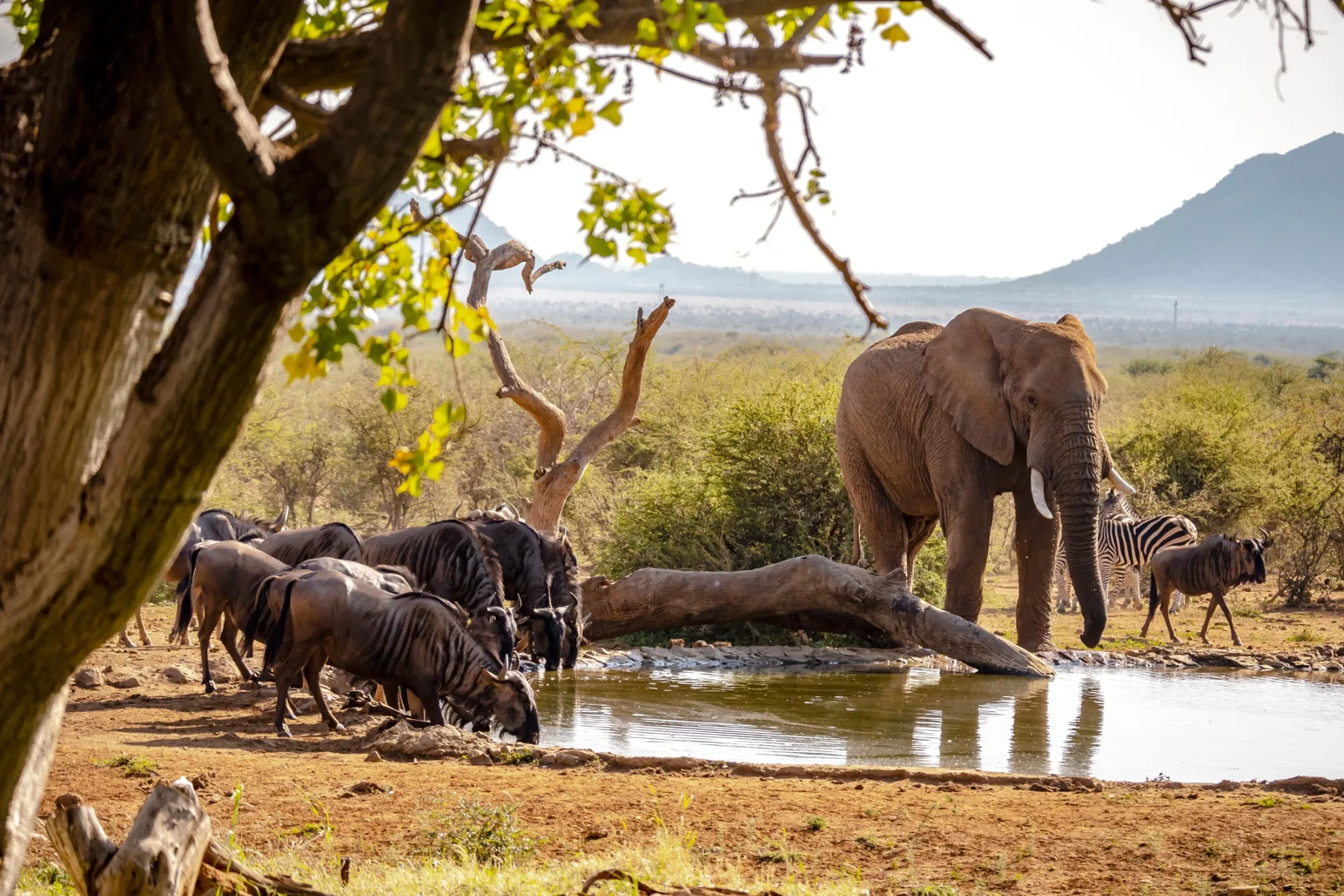
Biodiversity refers to the variety of different life forms found in an ecosystem, biome, or across the entire planet. It includes the genetic differences within species, the variety of different species, and the relationships between organisms and their natural environments.
Scientists have identified over 1.7 million different species of animals, plants, and algae worldwide. However, biodiversity varies greatly across different regions depending on several key factors.
Note
Factors affecting biodiversity distribution:
Biodiversity patterns across the globe are influenced by multiple environmental factors that create suitable conditions for different species to thrive:
- Temperature and climate conditions
- Rainfall patterns and water availability
- Soil types and nutrient content
- Geographic features and terrain
- Presence and interactions with other species
South Africa as a biodiversity hotspot
South Africa is considered a biodiversity hotspot - a region with exceptionally high biodiversity that needs protection. Despite covering only about 1% of Earth's total surface area, South Africa contains remarkable species diversity:
- 10% of the world's known bird, fish, and plant species
- 6% of the world's mammal and reptile species
The Western Cape region contains one of the world's six most important plant growth areas, with the fynbos biome being particularly rich in species. Many of South Africa's species are classified as either:
- Indigenous: Species that naturally occur in South Africa
- Endemic: Species found only in South Africa and nowhere else in the world
Important
Threats to biodiversity:
This natural wealth faces serious threats from human population growth and increasing environmental pressures. Conservation efforts are critical to protecting South Africa's unique biodiversity for future generations.
Understanding classification schemes
Taxonomy is the scientific practice of classifying and naming living organisms. Scientists use classification systems to organise the enormous diversity of life into manageable groups based on shared characteristics.
Classification helps us understand relationships between different organisms and makes it easier to study and communicate about the natural world. Think of it like organising a massive library - without a good system, it would be impossible to find anything!
The taxonomic hierarchy
Modern classification follows a hierarchical system with seven main levels, arranged from most general to most specific:
- Kingdom - Very broad groups (e.g., animals, plants)
- Phylum - Major body plan differences
- Class - Similar structural features
- Order - Similar lifestyles or behaviours
- Family - Closely related groups
- Genus - Very similar organisms
- Species - Organisms that can breed together
Example
Memory Aid for Classification Levels:
A helpful mnemonic to remember the taxonomic hierarchy is:
"Kwaito People Come Out From Gauteng Singing"
- Kingdom - Kwaito
- Phylum - People
- Class - Come
- Order - Out
- Family - From
- Genus - Gauteng
- Species - Singing
This South African-themed mnemonic makes it easier to remember the order of taxonomic levels from broadest to most specific.
History of classification systems
Aristotle's early classification
Aristotle (384-322 BC), a Greek philosopher, created one of the earliest classification systems. He divided organisms into two main groups: plants and animals. His system was used for many centuries, though it was quite simple compared to modern approaches.
Linnaeus and modern classification
Carl Linnaeus (1707-1778) was a Swedish botanist who revolutionised how we classify and name living things. He developed a more sophisticated system that forms the basis of modern taxonomy. Linnaeus classified organisms based on similarities in form and structure, dividing them into plant and animal kingdoms.
Note
Linnaeus's contribution to science:
His most important contribution was creating the binomial nomenclature system we still use today. This standardised approach allows scientists worldwide to communicate clearly about specific organisms, regardless of local common names or language differences.
Binomial nomenclature system
Binomial nomenclature is the scientific naming system developed by Linnaeus. Each organism receives a two-part name consisting of:
- Genus name (always capitalised)
- Species name (always lowercase)
The scientific name must always be written in italics or underlined.
Example
Examples of Binomial Nomenclature:
African Elephant: Loxodonta africana
- Genus: Loxodonta
- Species: africana
Blue Crane (South Africa's national bird): Anthropoides paradiseus
- Despite having multiple common names in different languages (Blue crane, indwe, mogolori), it has only one scientific name
Humans: Homo sapiens sapiens
- We are the only surviving members of the genus Homo
- Other extinct human relatives included Homo ergaster and Homo neanderthalensis
This system ensures that every organism has a unique, universally recognised scientific name.
Modern classification: Five kingdom system
Today, scientists use a five-kingdom system developed by Robert Whittaker in 1969. This system replaced Linnaeus's simpler two-kingdom approach as our understanding of life's diversity expanded.
Summary
The Five Kingdoms:
- Animalia (animals)
- Plantae (plants)
- Fungi (mushrooms, yeasts, moulds)
- Protista (single-celled eukaryotes)
- Monera or Bacteria (prokaryotes)
This classification system better reflects the complexity and diversity of life forms that scientists have discovered.
Prokaryotes vs eukaryotes
A fundamental distinction in biology separates all life into two main cell types based on their internal structure.
Important
Fundamental Cell Types:
Prokaryotes:
- Cells without a membrane-bound nucleus
- Genetic material floats freely in the cell
- Simple internal structure
- Examples: bacteria and archaea
- Generally smaller cells
Eukaryotes:
- Cells with a membrane-bound nucleus
- Genetic material contained within the nucleus
- Complex internal structure with organelles
- Examples: plants, animals, fungi, protists
- Generally larger cells
This classification is important because it reflects fundamental differences in how cells are organised and how organisms function.
Summary
Key Points to Remember:
- Biodiversity describes the variety of life forms in ecosystems and includes genetic differences within species
- South Africa is a biodiversity hotspot with exceptional species diversity despite its small global surface area
- Taxonomy organises living things using a hierarchical system from Kingdom to Species
- Binomial nomenclature gives each organism a unique two-part scientific name (Genus + species)
- Modern classification uses a five-kingdom system that separates prokaryotes from eukaryotes
- Classification systems evolve as scientists discover new information about evolutionary relationships