Life’s History (Grade 10 NSC Matric Life Sciences): Revision Notes
📚Revision Notes
Life's History
Introduction
The history of life on Earth spans approximately 4.6 billion years and tells an amazing story of how simple molecules eventually evolved into the incredible diversity of life we see today. Understanding this history helps us appreciate how all living things are connected and how life has adapted to changing conditions over time.
Pre-Cambrian period
Hadean aeon (4.6-4.0 billion years ago)
The earliest period of Earth's history was quite different from today. During this time, the planet was still forming and cooling down. The conditions that allowed life to begin lasted about 500 million years. Key developments included:
- Earth's crust cooling and becoming more stable
- Formation of oceans and early atmosphere
- Complex chemical reactions occurring that would eventually lead to life
- Self-replicating molecules developing that could make copies of themselves
- Early competition beginning between these molecules for resources
Note
This period set the stage for life to emerge, though the environment was still very harsh compared to today. The Earth was bombarded by asteroids and comets, and volcanic activity was intense. Despite these extreme conditions, the fundamental building blocks of life were beginning to form.
Archean aeon (4.0-2.5 billion years ago)
This period saw the emergence of the first true living organisms. The early Earth was very different from today - there was no free oxygen in the atmosphere, which consisted mainly of volcanic gases.
Key developments:
- First prokaryotes evolved - these were simple, single-celled organisms without a nucleus
- Cyanobacteria appeared around 3 billion years ago - these were special bacteria that could photosynthesise
- Oxygen began to accumulate in the atmosphere as a result of photosynthesis
- Many anaerobic bacteria went extinct as oxygen levels rose (oxygen was actually poisonous to them!)
- Oxygen-tolerant life forms developed and began to flourish
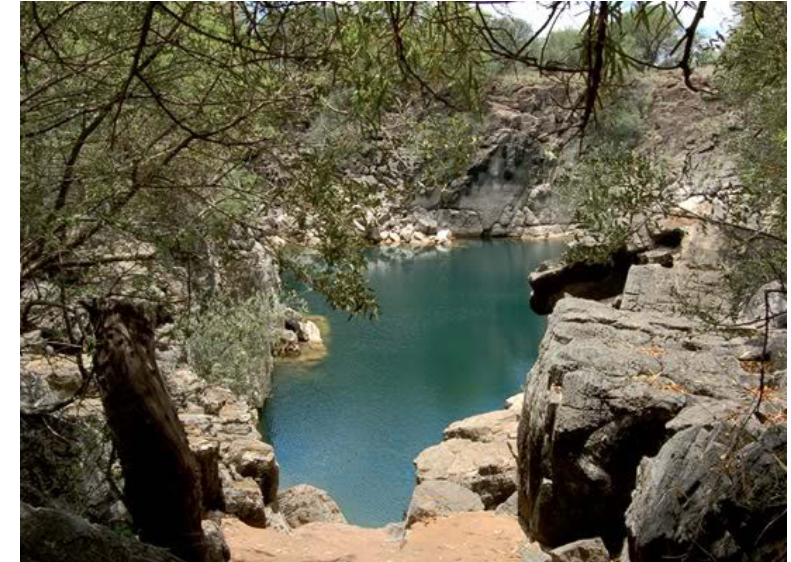
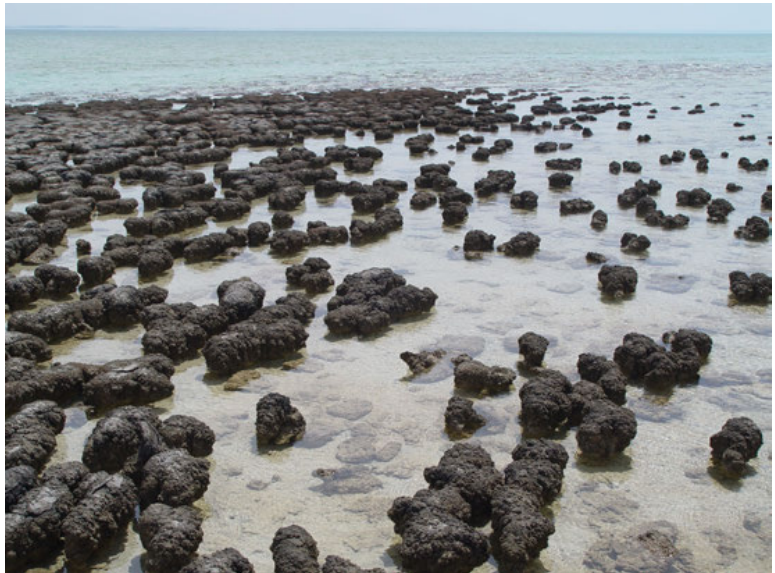
Stromatolites formation: Early single-celled organisms lived together in colonies in water. These colonies trapped sediments and minerals, and the bacteria produced a sticky mucus that held everything together. Over time, these formed curved, layered structures called stromatolites that were designed to capture as much sunlight as possible for photosynthesis.
Note
These ancient structures can still be found in places like Wondergat in the Northwest Province of South Africa, making them some of our most important evidence of early life. Stromatolites represent some of the earliest evidence of life on Earth and show us how organisms began working together in communities over 3 billion years ago.
Proterozoic aeon (2.5 billion-541 million years ago)
Over the next 800 million years, life became much more complex and diverse. This period saw several major evolutionary breakthroughs:
- Sexual reproduction developed, greatly increasing the diversity of organisms
- First multicellular organisms appeared, with cells that specialised for different functions
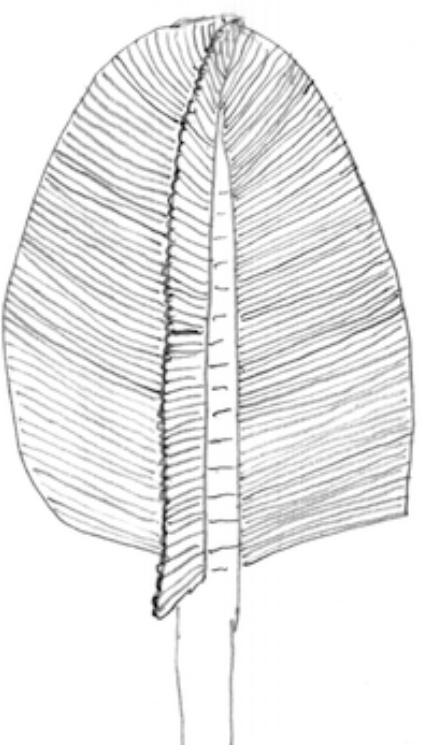
- Swartpuntia fossils appeared around 600 million years ago - these are some of the earliest soft-bodied animals in the fossil record
Important
The "Snowball Earth" event occurred between 850-630 million years ago, when much of the Earth's surface was covered in ice. This global glaciation event would have caused any light-dependent life forms to go extinct, creating a major evolutionary bottleneck that may have spurred the development of more complex life forms.
Paleozoic era (542-251 million years ago)
Cambrian explosion
Around 580-500 million years ago, something remarkable happened - a huge variety of new life forms appeared in a relatively short time. This event is called the Cambrian Explosion because almost all the major animal groups we know today can trace their origins back to this period.
During the Cambrian period:
- Life was still confined to the oceans - there was no life on land yet
- Oxygen levels increased, allowing the formation of the ozone layer
- The ozone layer protected Earth from harmful ultraviolet radiation, making it possible for life to eventually colonise land
Major developments during the Paleozoic
The Paleozoic era saw many important evolutionary milestones:
In the oceans:
- First fish (chordates) appeared over 500 million years ago - these are the ancestors of all vertebrates including humans
- Animals with shells like trilobites were abundant early in the period but declined later
- Marine invertebrates like ammonoids flourished
On land:
- Plants colonised land approximately 430 million years ago, evolving from algae
- Primitive forests developed, increasing oxygen levels and decreasing carbon dioxide
- First insects appeared and later some species developed wings
- Amphibians became common and started moving from water to land
- Early reptiles evolved and colonised land environments
- Gymnosperms (seed-producing plants) replaced many earlier plant types
Important
The Paleozoic ended with a massive extinction event called the Permian-Triassic extinction, which eliminated most marine life but had less impact on land species. This was the most severe extinction event in Earth's history, wiping out approximately 90% of marine species and 70% of terrestrial species.
South African fossil record from the Paleozoic
Note
South African Paleozoic Evidence
South Africa has provided important evidence of Paleozoic life:
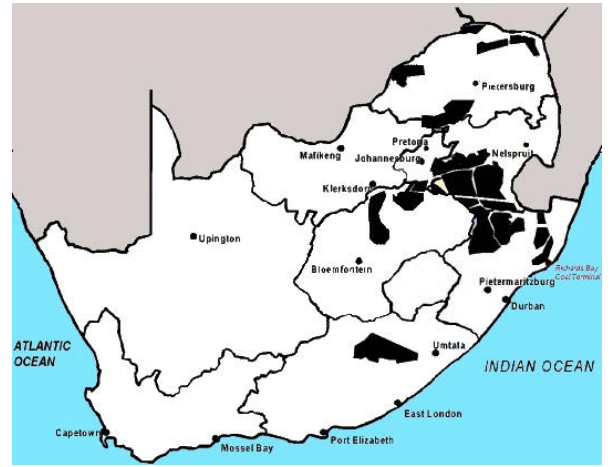
- Early land plants have been found near Grahamstown and Port Alfred
- Glossopteris flora was widespread across the ancient supercontinent Gondwanaland
- Coal deposits throughout the country contain fossilised remains of ancient plants
- Marine fossils like ammonoids have been found in KwaZulu-Natal
"Living fossils" in South Africa
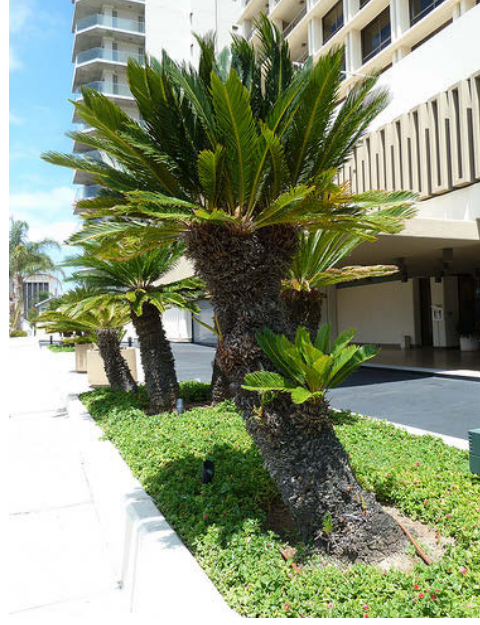
Cycads are remarkable plants that have existed for over 280 million years, making them true "living fossils." South Africa is home to several rare cycad species that:
- Grow very slowly and can live up to 1000 years
- Are found across subtropical and tropical regions
- Are protected by law - it's illegal to collect them without special permits
Important
Cycads are critically endangered due to illegal collecting and habitat destruction. Their protection is essential for maintaining these ancient lineages that have survived multiple mass extinctions.
Mesozoic era (251-72 million years ago)
The Mesozoic is often called the "Age of Reptiles" because reptiles, especially dinosaurs, dominated both marine and terrestrial environments during this time.
Major changes during the Mesozoic
Geological changes:
- Climate fluctuated dramatically between cooling and warming periods
- Pangaea supercontinent broke apart and continents began drifting towards their current positions
- Continental drift separated previously connected landmasses
Biological developments:
- Mass extinction at the end of the Paleozoic led to rapid evolution of new life forms
- Dinosaurs appeared and became the dominant land vertebrates for nearly 135 million years
- Flying reptiles (pterosaurs) ruled the skies
- Marine reptiles like ichthyosaurs lived in the oceans
- Archaeopteryx evolved during the Triassic period as a transitional form between reptiles and birds
- Early birds evolved from theropod dinosaurs during the Jurassic period
- Gymnosperms remained the dominant plant group
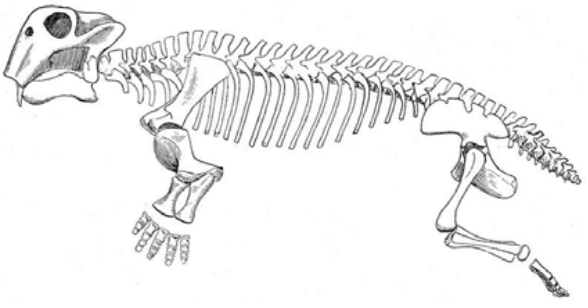
South African Mesozoic fossils
Note
Lystrosaurus was the most dominant land vertebrate during the Early Triassic period. Fossils of this mammal-like reptile have been found in South Africa, India, and China, providing crucial evidence that these continents were once connected as part of Gondwanaland.
Living fossils from the Mesozoic
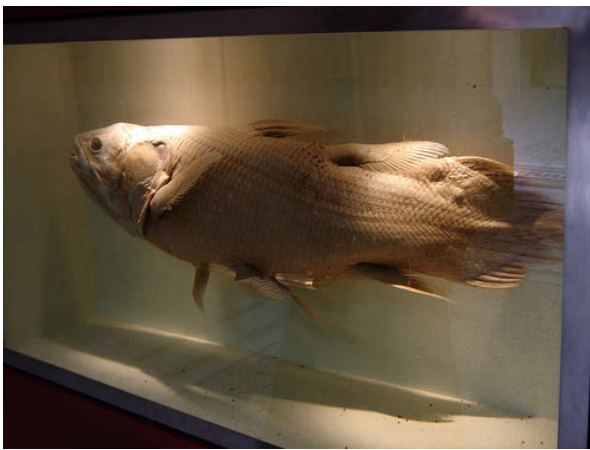
Coelacanths are remarkable fish that were thought to have gone extinct at the end of the Cretaceous period. However, they were rediscovered in 1983 off the coast of KwaZulu-Natal. These "living fossils" are important because they:
- Represent a link between fish and amphibians
- Have lobe-finned structure that evolved into the legs of early land vertebrates
- Have remained relatively unchanged for over 400 million years
Important
The Mesozoic ended with another mass extinction event around 65 million years ago that wiped out the dinosaurs and many other species. This extinction event, likely caused by an asteroid impact, paved the way for the rise of mammals in the following era.
Cenozoic era (65 million years ago to present)
If the Mesozoic was the "age of dinosaurs," then the Cenozoic has been the "Age of Mammals". After the extinction of dinosaurs, mammals diversified rapidly to fill the empty ecological niches.
Major developments in the Cenozoic
Geological changes:
- Continents moved to their current positions
- Climate changes - initial warming until 55 million years ago, followed by long-term cooling
Biological developments:
- Mammals diversified rapidly after dinosaur extinction
- Grass species evolved between 33-24 million years ago
- Grasslands expanded while forests shrank
- Animals adapted to open landscapes, leading to fast-running prey and predator species
- Modern ecosystem structures developed
Human evolution during the Cenozoic
Homo sapiens evolved during the Cenozoic era. Human evolution involved changes in both physical features and behaviour, including:
- Bipedalism (walking on two legs)
- Larger, more complex brains
- Ability to use fire and make tools
- Development of language for communication
The "Out of Africa" theory
Important
The "Out of Africa" Theory
The most widely accepted theory suggests that modern humans evolved in Africa approximately 200,000-150,000 years ago and then migrated to other continents in a series of waves. This theory is supported by both fossil evidence and genetic studies that trace human ancestry back to African populations.
South African evidence for human evolution
South Africa has been crucial in understanding human evolution, earning it the nickname "cradle of humankind". Important fossil discoveries include:
| Fossil Species | Age | Location | Significance |
|---|---|---|---|
| Australopithecus africanus (Taung Child) | 2.5 million years ago | Kimberley | Most direct ancestor of modern humans |
| Australopithecus sediba | 2 million years ago | Malapa Nature Reserve, Johannesburg | First evidence of transition to tool-making |
| Homo sapiens | 75,000 years ago | Klasies River Caves, Eastern Cape | Discovery of earliest anatomically modern humans |
Mass extinctions
Important
Mass Extinction Events
Throughout Earth's history, there have been five major mass extinction events - periods when large numbers of species died out in a relatively short time. These events have shaped the course of evolution by:
- Eliminating dominant species and creating opportunities for others
- Accelerating evolutionary change as surviving species adapted to new conditions
- Reshaping entire ecosystems and food webs
Mass extinctions have occurred at the end of several geological periods and have been caused by various factors including climate change, volcanic activity, and asteroid impacts.
Summary
Summary
Key Points to Remember:
-
Life on Earth began approximately 4.6 billion years ago during the Hadean aeon when conditions first allowed complex chemical reactions to occur
-
Oxygen in our atmosphere came from cyanobacteria during the Archean aeon, which caused the extinction of many early anaerobic organisms but allowed oxygen-dependent life to flourish
-
The Cambrian Explosion saw the rapid appearance of most major animal groups in the fossil record around 580-500 million years ago
-
South Africa has provided crucial evidence for understanding both early life (stromatolites) and human evolution (numerous hominid fossils), earning it recognition as the "cradle of humankind"
-
Mass extinction events have occurred five times throughout Earth's history and have dramatically shaped the course of evolution by eliminating dominant species and creating opportunities for others to diversify