Ecosystems (Grade 10 NSC Matric Life Sciences): Revision Notes
📚Revision Notes
Ecosystems
What is an ecosystem?
Important
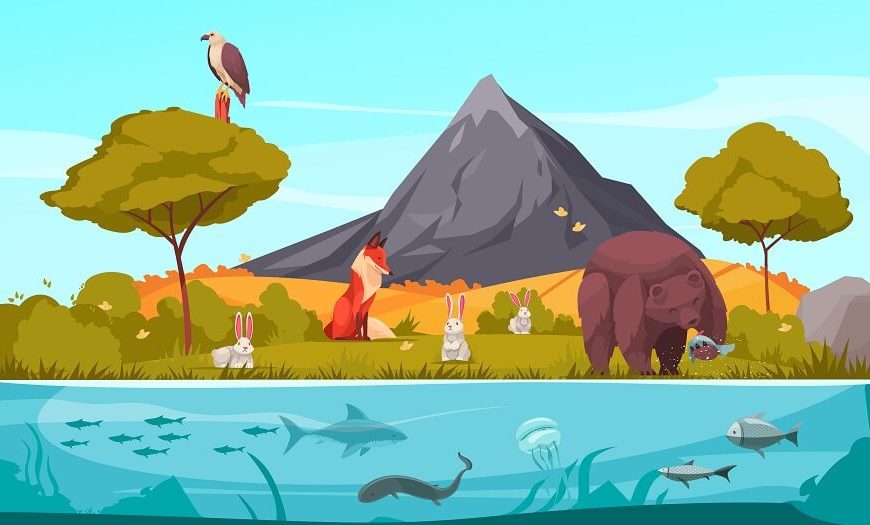
An ecosystem is a complex system made up of all the living organisms in a particular area, along with the environment they live in and interact with. Think of it as a community where all the living things (like plants and animals) work together with non-living things (like soil, water, and climate) to maintain a natural balance.
Ecosystems are made up of two main types of components that work together: biotic components (living things) and abiotic components (non-living things). Understanding how these components interact helps us understand how nature maintains its balance.
Biotic components
Biotic components are all the living things that help shape an ecosystem. Every living organism needs energy to survive and grow, so they either make their own food or get it by eating other organisms. There are three main types of biotic components:
Producers
Producers are also called autotrophs, and they include all green plants. These amazing organisms can make their own food using chemicals and energy from their environment. Land plants, water plants, algae, and tiny organisms called phytoplankton in the ocean are all producers.
Plants use a process called photosynthesis to create sugar (glucose) from carbon dioxide and water. They absorb nutrients like nitrogen and phosphorus through their roots and use these materials to make starches, lipids, proteins, and nucleic acids - everything they need to grow and survive.
Consumers
Consumers are also known as heterotrophs. Unlike producers, they cannot make their own food, so they must eat other organisms (either living or dead) to survive. Consumers are grouped based on what they eat:
Example
Consumer Types and Examples:
Primary Level:
- Herbivores (like buck) eat only plants and are called primary consumers
Secondary Level:
- Carnivores (like lions, hawks, and killer whales) eat other animals and are classified as secondary consumers when they eat primary consumers
Tertiary Level:
- Tertiary consumers are carnivores that eat other carnivores
Mixed Feeders:
- Omnivores (like crocodiles, rats, and humans) eat both plants and animals
- Scavengers (like vultures, ants, and flies) feed on dead animals
- Detritivores (like earthworms, termites, and crabs) eat organic waste or fragments of dead organisms
Decomposers
Decomposers (like bacteria and fungi) also feed on organic waste and dead organisms, but they have a special ability - they can digest materials outside their bodies. This makes them incredibly important for recycling nutrients in ecosystems. They break down complex organic matter into simple inorganic nutrients that can be used again by producers. When decomposers can break down an organic substance, we call it biodegradable.
Note
Decomposers are nature's recyclers! Without them, dead organic matter would pile up and nutrients would never return to the soil for plants to use again.
Abiotic components
Abiotic components are all the non-living chemical and physical factors that affect ecosystems. These factors play a crucial role in determining which organisms can live in a particular area. Abiotic factors are grouped into four main categories:
Physiographic factors
These factors relate to the physical features of the land. The main ones that affect ecosystems are:
Slope refers to how steep or gentle a surface is. Steep slopes cause water to run off quickly, which can lead to soil erosion. This results in shallow, less fertile soil with fewer plants and animals. Gentle slopes allow water to flow slowly, reducing erosion and providing more water for plants. The steepness and direction of slopes also affect soil temperature.
Altitude is the height of land above sea level. At high altitudes, temperatures are lower, wind speeds are greater, and rainfall is less. Higher areas are more likely to experience snow. Plants at high altitudes often show stunted growth, while plants at sea level tend to be more abundant.
Aspect refers to the direction a slope faces (North, East, South, or West). In South Africa, rain is more common on south-eastern slopes, so these areas tend to be forested or rich in vegetation. Slopes facing the other directions (north-west) tend to be drier.
Edaphic factors
Edaphic factors are related to soil characteristics. The qualities of soil - including drainage, texture, and chemical properties like pH - affect which organisms can live in an ecosystem.
Note
Understanding pH Scale:
The pH scale measures how acidic or alkaline a substance is:
- Scale range: to
- Neutral = 7
- Acidic < 7
- Alkaline > 7
You can test soil pH using litmus paper or universal indicator.
Soil structure refers to the decomposed organic matter called humus, which gives topsoil its dark colour. Humus provides plants with nutrients and helps soil retain water, making soils more fertile. Different soil types have different particle sizes and water retention abilities:
- Sand has very large particles and retains very little water
- Clay has very small particles and retains a large amount of water
- Loam has a mixture of particle sizes and retains a moderate amount of water
Example
Natural pH Indicator:
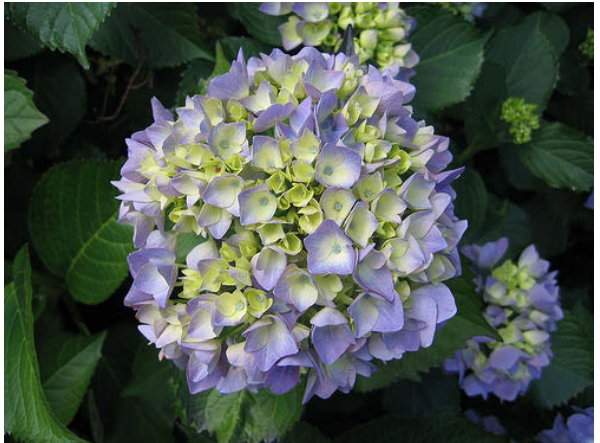
Some hydrangea species are natural pH indicators! Their flowers can change colour depending on soil acidity:
- Blue flowers = acidic soil (pH below 6)
- Pink flowers = alkaline soil (pH above 6)
Climatic factors
Sunlight is essential for photosynthesis. Animals get energy indirectly by eating plants or other animals. All organisms receive the energy they need through the breakdown of sugars and other molecules produced by autotrophs.
Temperature varies greatly across different parts of Earth and throughout the year. It affects evaporation and transpiration rates and causes seasonal changes in weather. Plants and animals have special adaptations for their temperature environments. Temperature affects the rates of photosynthesis, cellular respiration, and decomposition. Like enzymes, these processes work best at optimal temperatures and slow down at lower temperatures.
Water is one of the most important factors in ecosystems. About 80% of the human body and 90% of plant bodies consist of water. Water is not evenly distributed across Earth - it's abundant in aquatic ecosystems but scarce in deserts. Plants have adapted to different water availability:
Example
Plant Water Adaptations:
-
Xerophytes are plants that can live in dry habitats with low annual rainfall. They're resistant to drought and can cope with water shortage, high temperatures, and dry warm winds
-
Mesophytes are plants that need an average, regular supply of water
-
Hydrophytes are plants that can live entirely or partially submerged in water or in very wet soil
Air and gases
Wind speeds up evaporation and helps with plant pollination and seed dispersal.
Note
Air Composition:
Air is composed of:
- nitrogen
- oxygen
- carbon dioxide and water vapour
Each gas plays a vital role: Oxygen is used in cellular respiration, carbon dioxide in photosynthesis, and nitrogen for protein production.
Air contains gases essential for life. Oxygen is used in cellular respiration and is returned to the environment through photosynthesis. Carbon dioxide is produced by cellular respiration and removed from the atmosphere by plants during photosynthesis. Nitrogen is needed by all living organisms to make proteins. Water vapour in air varies greatly from place to place - some areas have high humidity while others have very dry air. Weather is largely caused by water vapour, and clouds are made up of it.
Practical investigations
Understanding ecosystems requires hands-on investigation. Scientists use various methods to study both biotic and abiotic factors:
Soil investigation
You can investigate water retention properties of different soil types using simple equipment like measuring cylinders, philtre funnels, and soil samples. This helps you understand why certain plants grow better in specific soil types.
Example
Water Retention Investigation:
Equipment needed:
- Measuring cylinders
- Philtre funnels
- Different soil samples (sand, clay, loam)
- Water
Method:
- Place equal amounts of each soil type in separate funnels
- Pour the same volume of water onto each sample
- Measure how much water drains through each soil type
- Compare the water retention of different soils
Expected results: Clay retains most water, sand retains least, loam is intermediate
Environmental profiling
This involves identifying abiotic, biotic, and cultural characteristics of natural environments. You would select an undeveloped area, identify landforms and altitude, list plants and animals, and look for evidence of human influence like pollution or introduced species.
Ecosystem studies
Detailed ecosystem studies involve measuring factors like:
- Soil texture and pH using simple field tests
- Temperature patterns using data collection tables
- Light patterns by recording sunrise, sunset, and flower opening times
- Plant and animal distribution using grid sampling methods
These investigations help you understand how abiotic and biotic factors interact to create the unique characteristics of different ecosystems.
Important
Always follow safety procedures during field investigations and minimise disturbance to natural habitats. Remember that you're studying delicate ecological relationships that can be easily disrupted.
Energy flow preview
Energy flow in ecosystems refers to how energy moves through food chains. Each organism belongs to a 'trophic level' based on its position in the food chain. Energy is passed from one level to the next, but about 90% is lost as heat or incomplete digestion at each transfer. This explains why there are fewer top predators than producers in ecosystems.
Summary
Key Points to Remember:
- Ecosystems consist of biotic (living) and abiotic (non-living) components that interact to maintain balance
- Producers make their own food through photosynthesis, while consumers must eat other organisms
- Abiotic factors like climate, soil, and topography determine which organisms can survive in an area
- Soil pH affects plant growth - neutral = 7, acidic < 7, alkaline > 7
- Practical investigations help us understand how ecosystem components interact and function together
- Energy flow through ecosystems follows predictable patterns with 90% energy loss at each trophic level